The European Academy of Optometry and Optics (EAOO) has awarded a Fellowship to UJ Optometry lecturer Mr Sanele Buthelezi. He received the title at the Academy’s yearly conference in Riga, Latvia.
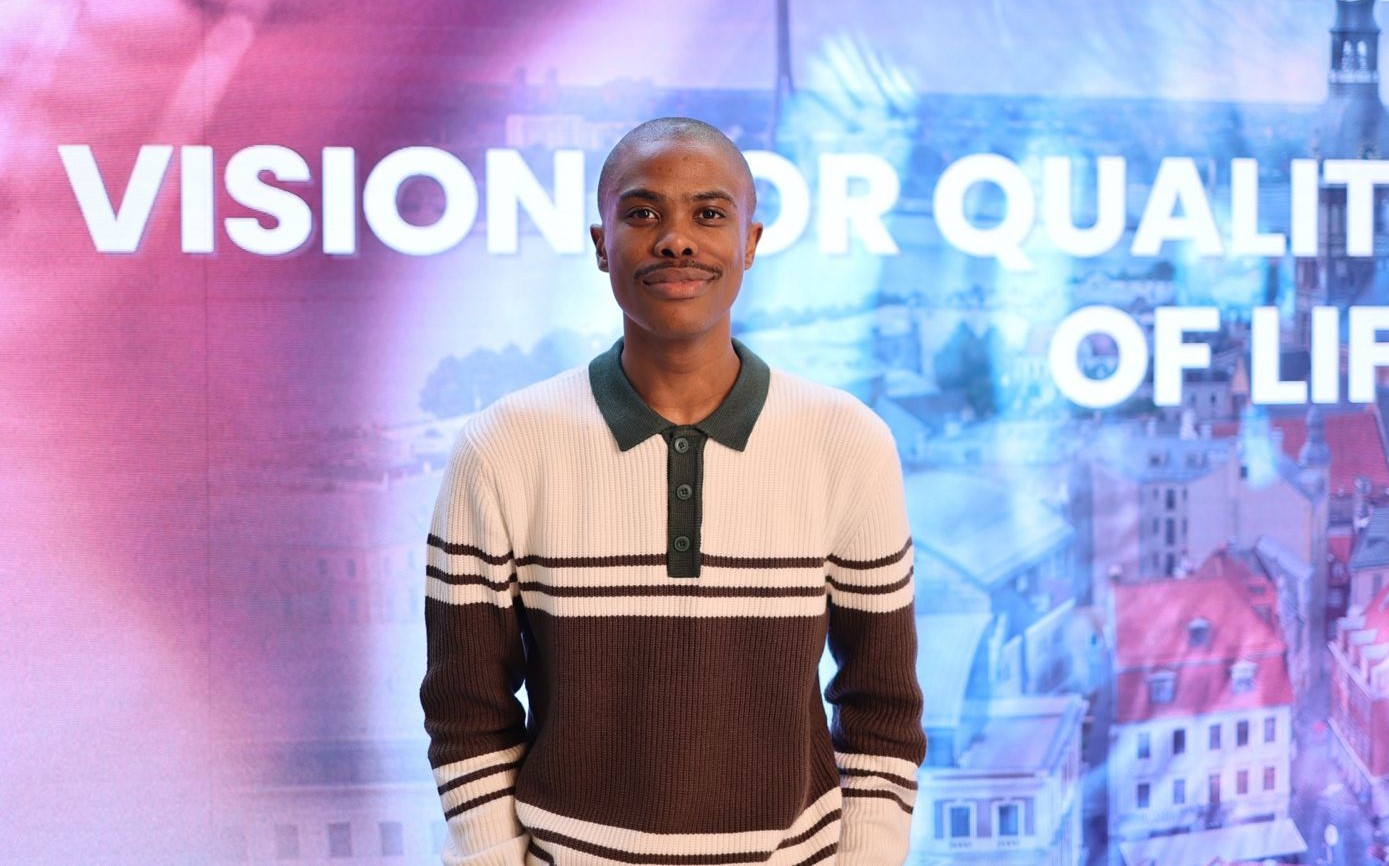
Buthelezi’s research focuses on training optometry students to provide eye care while respecting the person’s culture and identity.
“Imagine a doctor who is excellent with machines and medicines but does not really listen to you,” says Buthelezi. “Maybe they do not understand your language, or they make assumptions about you. You might not tell them what’s really worrying you. You might not come back.”
The EAOO was established in 2009. It supports good research, shares new knowledge, and helps optometrists and opticians keep learning throughout their careers.
This year, 14 people from across the world became lifelong Fellows at the conference in Riga in May. Buthelezi was the only one representing Africa.
“The problems we face in South Africa, like getting good eye care to rural areas and training students well, are discussed by people all over the world,” he says.
When there are no words
At the conference, he gave a talk called ‘Teaching cultural safety through spectacle design’. He shared how something as ordinary as helping a person choose a frame for a pair of glasses can teach students about respect.
After Buthelezi qualified as an optometrist, he worked in private practice in Worcester, a small Afrikaans-speaking town in the Western Cape. For a time, he was the only Black optometrist in town.
“Many of my patients spoke Afrikaans, and I didn’t,” he says. “Sometimes a patient would try to explain what was wrong with their eyes, and I could see they were struggling to find the words in English. When someone can’t explain their problem properly, you might miss something important. And they might leave feeling they were not really heard.”
As Buthelezi recalls, his undergraduate training was good. He could test eyes, prescribe glasses and diagnose eye disease. But the real-world experience in Worcester identified a gap.
“Nobody had prepared me to care for people whose language, culture and life experience were different from mine,” Mr Buthelezi adds.
“I asked myself: if I wasn’t prepared, how many other young optometrists are not prepared either?”
Smoky vision, sliding glasses and trust
“Think of an elderly gogo in a rural clinic who speaks only isiZulu,” he says. “She says her eyes ‘burn’ and her vision is ‘smoky.’ If the optometrist rushes and doesn’t really understand, they might just give her eye drops and miss a cataract or glaucoma.”
In contrast, a student trained in cultural safety learns to slow down, use an interpreter or a family member properly, and check what the patient means.
Many African patients have a lower, flatter nose bridge, so their glasses keep sliding down, and people stop wearing them, especially children at school.
“When students learn to notice this, and choose or adjust frames that fit, the glasses get worn, and that child can see the board in the classroom,” adds Buthelezi.
Some patients won’t say they can’t afford the glasses they need; they just never come back to collect them. A culturally safe optometrist learns to have that conversation gently and offer options, so the patient doesn’t walk away with nothing.
Some patients believe their eye problem has a spiritual cause. They may be using traditional remedies.
“Instead of dismissing them, students learn to listen respectfully and explain clearly,” says Buthelezi. “That builds trust, and trust is what brings people back for follow-up care.”
Training optometrists who patients feel safe with
Currently, Buthelezi is completing his PhD, titled ‘Developing a curriculum framework towards culturally safe optometry practice in South Africa.’
Cultural safety means patients feel respected and safe in the consulting room, he says. This holds whatever their language, culture, religion, background or how much money they have. “Importantly, it is the patient who decides whether they felt safe, not the optometrist,” says Buthelezi.
His research asks how to build this kind of respect into optometry training, from first year through to final year. He conducted the research at the UJ eye clinic at the Doornfontein campus, speaking to optometry students, their lecturers and patients.
The UJ Optometry clinic in Doornfontein, students are guided to practice these principles every day, he says. After they graduate, they take this approach to townships, small towns and rural areas.
“Most of all, I want my students to leave UJ as excellent clinicians who also see the person behind the eyes,” says Mr Buthelezi. “If I can do that, I’ll feel the Fellowship was well deserved.”