Climate misinformation and greenwashing can weaken climate action across Africa. To combat this, it is important to build media literacy and accountability, especially among young people, and support independent journalism.
These were some of the issues that emerged from a conference on climate change and media, held at the University of Johannesburg (UJ) on Thursday, 05 November 2026. Hosted by the UJ Department of Communication and Media in partnership with the Centre for Data and Digital Communications, the conference was held under the theme Youth, Media and Climate Action: Reclaiming Narrative Power for Transformative Climate Futures in Southern Africa. It sought to position youth as active knowledge producers and key voices in climate justice debates, foregrounding narrative, culture, and ethics in climate change communication, adaptation, and mitigation.

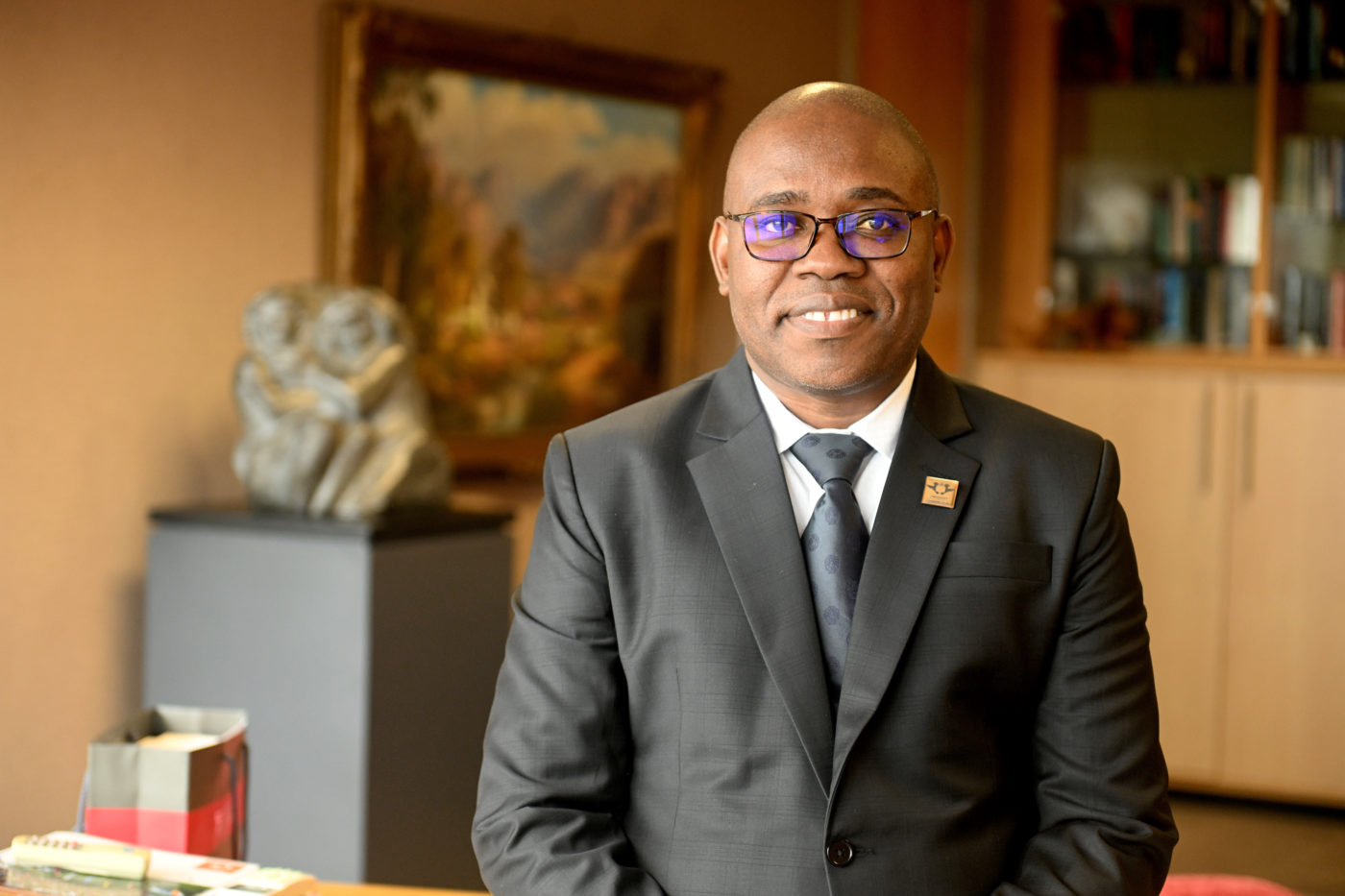
Prof Admire Mare, Principal Investigator for the Gendered Electoral Disinformation in East and Southern Africa project (GEDESA), reflected on the importance of fighting climate disinformation in Africa. He explored how climate misinformation and greenwashing can weaken climate action across Africa, and how communities, especially young people, can help counter them. He described how climate disinformation was organised and often built around real grievances, which can make misleading claims persuasive.
Greenwashing – in particular projects branded as “green” or climate-friendly without meaningful changes – adds to the problem by presenting polluting activities as environmentally responsible. He proposed reaching young people through familiar formats and local languages, empowering them to create and investigate stories, improving media literacy, supporting independent journalism, and encouraging platforms and governments to protect access to reliable information. “Africa has contributed less than 4% to global emissions, while the global north has contributed more. Disinformation often takes advantage of these cracks. It checks the truth and it twists it into a reason to do nothing about it.”
Prof Mare encouraged building media literacy and accountability by helping people question who created a claim and who benefits; support investigative journalism, open data, and citizen monitoring. His central message was that climate communication should be locally led, grounded in trust, and focused on both accountability and solutions.
Dr Sanele Gamede, a lecturer in the Department of Communication and Media and convener of the conference, presented some of the findings from the research report on “Effectively communicating climate change to young people in the Southern African Development Community (SADC)”. The study drew on group interviews with over 400 young people across eight countries, supplemented by online questionnaires. Its central question was how to make climate information meaningful and turn knowledge into action.
Some of the key findings include:
- Climate concerns compete with immediate needs: Young people care about climate change, but work, income, food, water, health, and safety are often more urgent.
- Messages need local meaning: Global climate information can feel distant unless it relates to familiar places, visible local effects, livelihoods, and community knowledge.
- Jargon and inaccessible channels exclude people: Communication should use clear language and reach young people through channels they can access, including digital platforms and traditional media.
- Stories and emotion shape responses: Local and indigenous-language stories can make climate science relatable. Fear may attract attention, but it should be paired with practical ways to respond.
- Young people want influence, not just an audience role: They want to help set priorities, shape messages and channels, create content, and assess whether communication is useful.
The study recommends training young climate communication activists using issues they care about, using plain and local languages; combining scientific evidence with community knowledge, and connecting risks to practical action.

Other recommendations were:
- Building a hybrid communication approach using social media and short-form content alongside radio, schools, community organisations, entertainment, and face-to-face engagement.
- Share decision-making with young people and show how their input changes outcomes.
- Make communication inclusive of rural youth, young women, people with disabilities, and people with limited connectivity or literacy.
- Measure understanding, relevance, trust, and follow-through and strengthen skills in climate explanation, storytelling, verification, and dialogue.
- Expand the research to cover all 16 Southern African countries.
These recommendations were reiterated in the main panel discussion that featured guests from various platforms including the Southern African Regional Youth Environment Network, South African Weather Service, the SABC and Disaster Management. The speakers highlighted strategies for improving climate communication through simplified language, indigenous translation and multi-sector collaboration.

Ms Thandiwe Gumede, Regional Manager and meteorologist (SAWS) mentioned initiatives to make scientific data accessible to non-scientists. These include shifting focus to actual impacts severe weather will have on the public, developing a specialised dictionary to translate complex scientific terms into local languages and using relatable analogies to aid understanding in remote areas.
Ms Lebogang Mosotho, Disaster Management Officer, emphasised that language remained a primary barrier in disaster management, noting that English-only warnings were often ignored or misunderstood.
SABC Group CEO Ms Nomsa Chabeli added to this explaining the importance of leveraging SABC’s multilingual broadcasting capabilities and utilising storytelling to connect scientific evidence with lived experiences.
Ms Sibongile Mavimbela from SARYEN highlighted the need to bridge the gap between technical research and public messaging through platforms like the youth climate dialogues and the SADC Communication Awareness and Visibility Strategy that aims for inclusive outreach across various demographics and digital platforms.
The panelists concluded that active partnership between academic institutions, media entities, government departments and youth led NGOs was essential. A research panel discussion featuring UJ GEDESA students discussed climate-change disinformation in Africa, with a focus on how false or misleading narratives affect climate communication and policy.
The conference brought together scholars, students, media practitioners, the private sector, civil society, and youth-led organisations to explore how radio, social media, poetry, music, film, photography and digital storytelling can shape a more just and transformative climate future in Southern Africa.