The Faculty of Law’s AI and the Law Institute, in partnership with the Baldy Center for Law and Social Policy at the University at Buffalo, hosted leading international scholars for the Baldy Center–UJ Faculty of Law Academic Workshop on 30 June 2026 at Ubuntu Chambers, University of Johannesburg.
The workshop was held under the theme “Boundaries Unbound: Private International Law of Employment in the Age of Artificial Intelligence,” and created an important international platform to interrogate one of the most rapidly evolving and underexplored areas of legal scholarship; how private international law must respond to artificial intelligence, digital labour and increasingly borderless employment relationships.
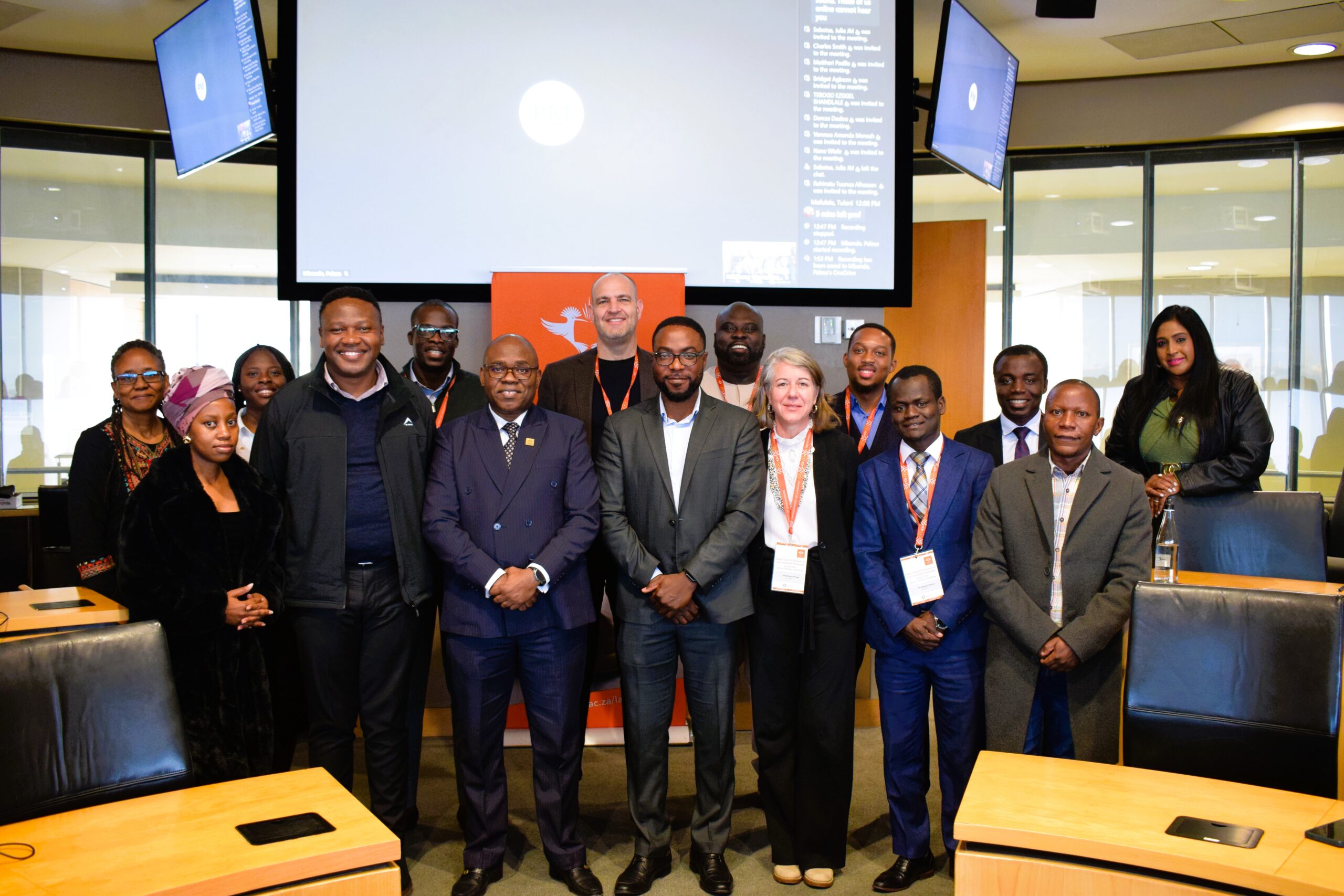
Bringing together renowned academics and emerging scholars from South Africa, the United States, Japan, Spain, Nigeria, Ghana and beyond, the workshop explored how technological transformation is reshaping employment law, jurisdiction, worker protection and access to justice across national borders.
Opening the workshop, Executive Dean of the Faculty of Law, Professor Charles Maimela, welcomed delegates and reaffirmed the Faculty’s commitment to leading scholarly conversations on emerging legal challenges.
“Artificial intelligence is fundamentally changing the way people live and work, and the law cannot afford to remain reactive. As a Faculty, we are committed to creating spaces where scholars from across the world can collaboratively interrogate these emerging legal questions, develop African-centred solutions, and contribute meaningfully to the evolution of global legal scholarship. This workshop demonstrates UJ Law’s commitment to advancing research that responds to the realities of a rapidly changing world.”
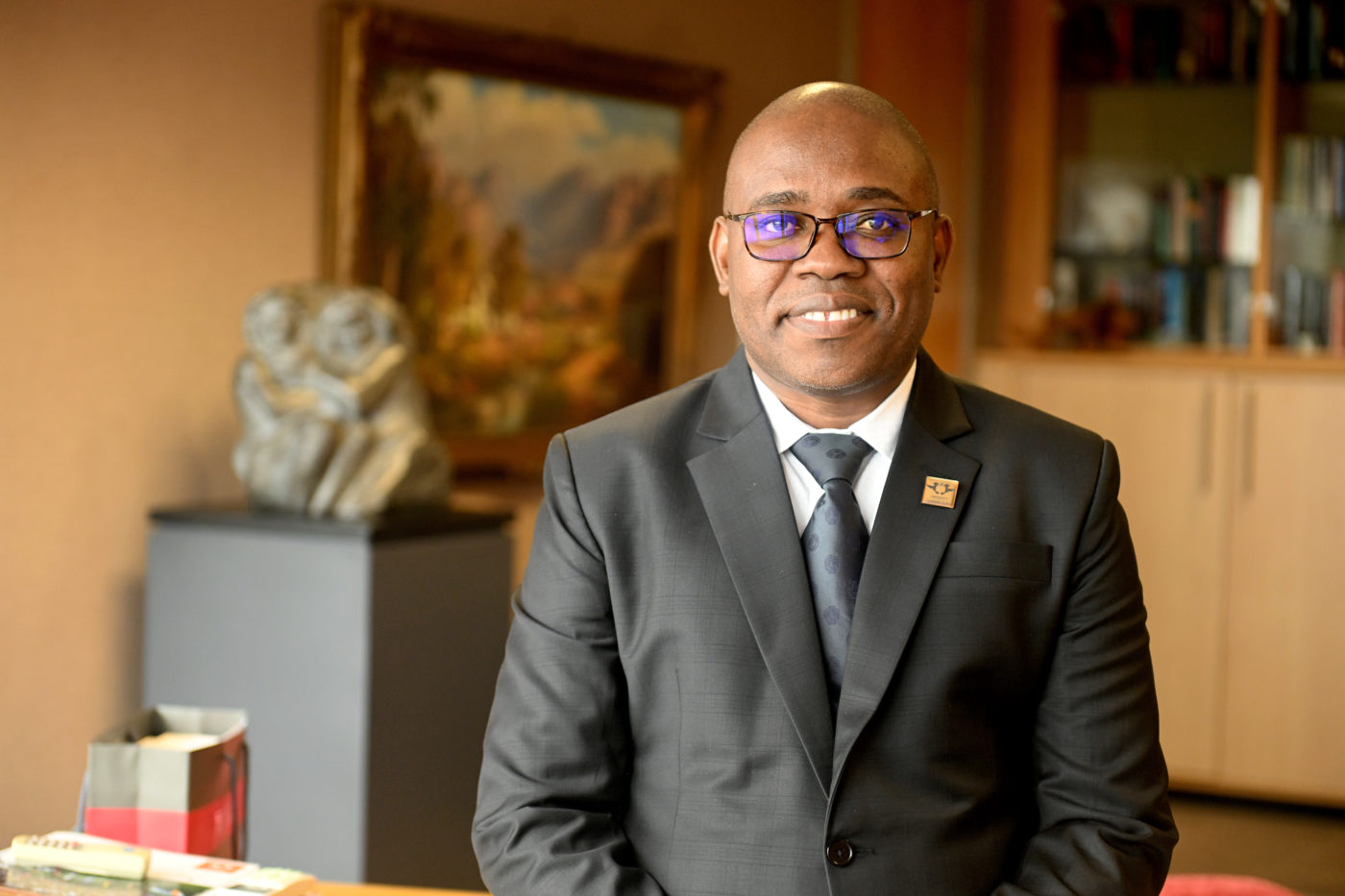
Delivering the keynote address, UJ Vice-Chancellor and Principal, Prof Letlhokwa Mpedi, challenged delegates to confront the legal complexities created by AI-driven employment and digital labour, noting that traditional legal frameworks are increasingly being tested by technology that transcends geographical boundaries.
Prof Mpedi emphasised that although artificial intelligence presents unprecedented opportunities, it also requires urgent legal innovation to protect workers’ rights across jurisdictions.
“Artificial intelligence, digital labour and private international law cannot continue to be examined in isolation. As work becomes increasingly digital, decentralised and global, we must develop legal frameworks that embrace technological advancement while safeguarding fairness, justice and the protection of workers everywhere. This is not a challenge for the future; it is a responsibility that demands our attention today.”
“One of the strengths of this collaboration is that it brings together scholars from different legal systems to examine problems that are inherently global. The intersection of AI, labour and private international law demands exactly this kind of multidisciplinary and international exchange if we are to develop legal responses that are both rigorous and socially relevant,” said Prof Matthew Dimick, Director: Baldy Centre.
Throughout the day, delegates examined critical questions surrounding the legal recognition of digital labour, AI-enabled workplaces, cross-border employment disputes, jurisdictional challenges, worker misclassification and access to justice in an increasingly digital economy. Comparative perspectives from Africa, Europe, Asia and the Middle East enriched discussions on how different legal systems are responding to the rapid expansion of platform work and artificial intelligence.
A highlight of the workshop was the roundtable discussion on Building a Global Research Agenda on Private International Law of Employment in the Age of Artificial Intelligence, where scholars reflected on future research priorities, collaboration and the need to develop legal responses that are both globally informed and locally relevant. The workshop concluded with a publication planning session aimed at producing an edited scholarly volume that will contribute to this niche field to develop the legal jurisprudence.
“Our objective was not simply to discuss emerging legal challenges, but to begin building a global research agenda in this field,” said Prof Theophilus Coleman, Baldy Center. “By bringing together leading international scholars and young researchers, we are creating a collaborative platform that will contribute to future scholarship, policy development and legal reform on artificial intelligence and private international law.”