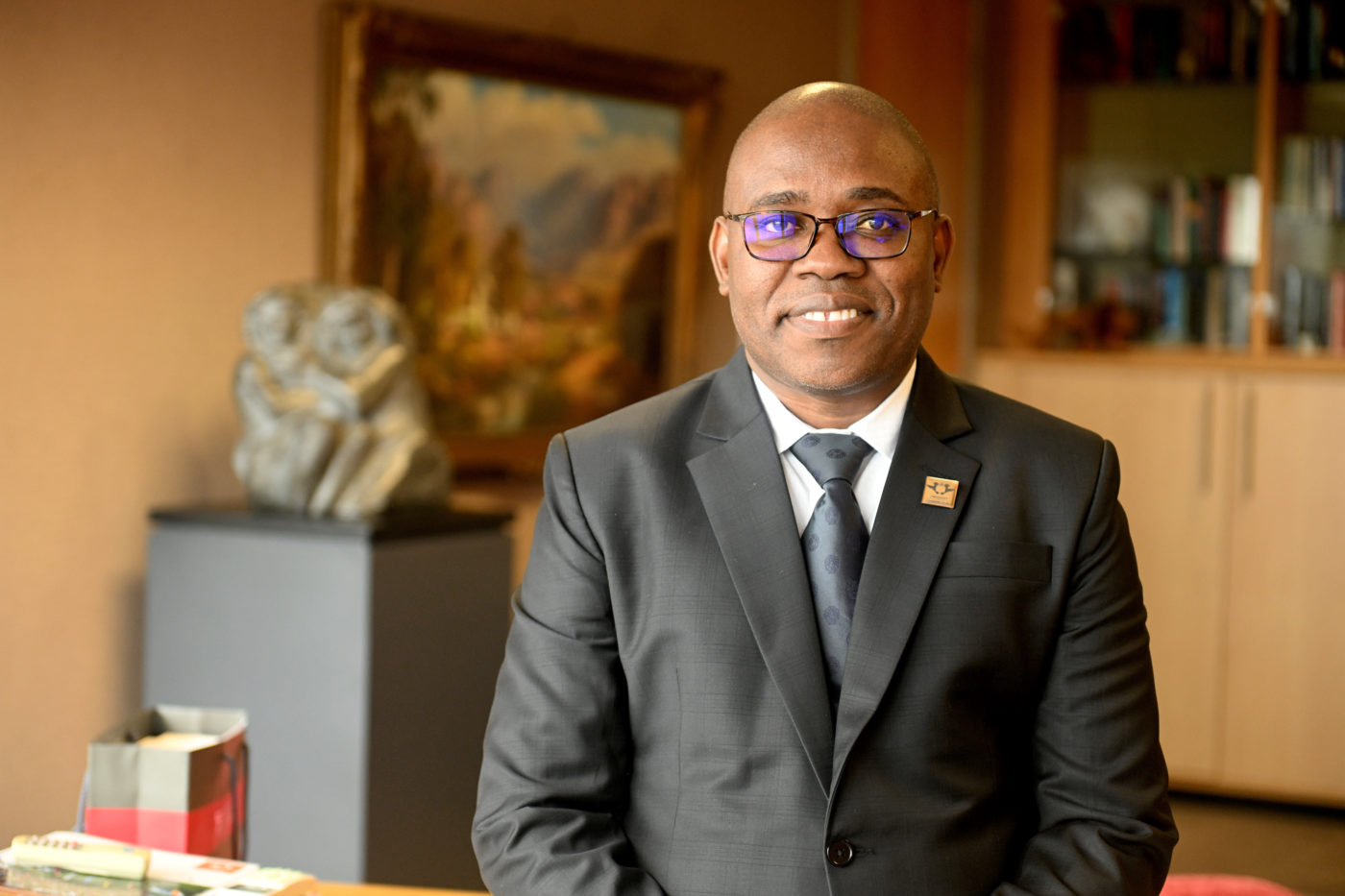
Two University of Johannesburg (UJ) students have been selected to join the South African Presidential Artificial Intelligence (AI) Student Cohort heading to Silicon Valley in the United States. Donnell Naidoo, who is studying towards an Advanced Diploma in Business Information Technology, and Mufhumudzi Muthivhi, a PhD candidate in Computer Science, will represent the university on the high-level learning trip from 15 to 20 November 2026. Joining them in the official delegation led by President Cyril Ramaphosa is Professor Tankiso Moloi, the Executive Dean of the College of Business and Economics at UJ.
The study visit aims to explore what artificial intelligence can mean for South Africa’s economy, technology sector, and capacity for innovation. The national cohort includes representatives from higher education institutions, Technical and Vocational Education and Training (TVET) colleges, government, and business. Together, they will engage with world-leading technology companies, researchers, venture capitalists, and academic institutions in Silicon Valley. Key stops include the Stanford Graduate School of Business and the Google, Alphabet, and Google DeepMind campus, providing exposure to cutting-edge research, entrepreneurship, and superintelligence development.
For South Africa, the trip is an opportunity to help shape emerging technologies rather than simply keeping up with them. AI is already reshaping healthcare, education, finance, manufacturing, agriculture, and public administration. The delegation will look at ways to tie technological advances directly to national priorities such as job creation, skills development, public sector reform, and entrepreneurship, while protecting digital sovereignty.
Professor Moloi highlighted the importance of South Africa taking an active role in this global shift. “Artificial intelligence is fundamentally reshaping the global economic landscape, and South Africa cannot afford to remain on the periphery of this transformation. Being part of President Ramaphosa’s delegation presents an important opportunity to engage with global leaders in AI, explore strategic partnerships and identify pathways through which these technologies can advance our national and continental development priorities,” says Moloi.
He further noted that universities must evolve beyond traditional teaching to drive real societal impact. “As universities, we have a responsibility not only to prepare graduates for an AI-driven future, but also to generate new knowledge, strengthen research and innovation capabilities, and translate technological advances into meaningful economic and societal impact. For Africa, the ambition must extend beyond adopting technologies developed elsewhere to becoming an active contributor to global AI innovation. Ultimately, the success of this engagement must be measured by our ability to translate the knowledge gained and relationships established into sustainable research collaborations, skills development, innovation, commercialisation opportunities and inclusive economic growth,” Moloi adds.
The inclusion of both students and university leadership reflects UJ’s commitment to research excellence, international collaboration, and preparing its academic community for an AI-driven future.