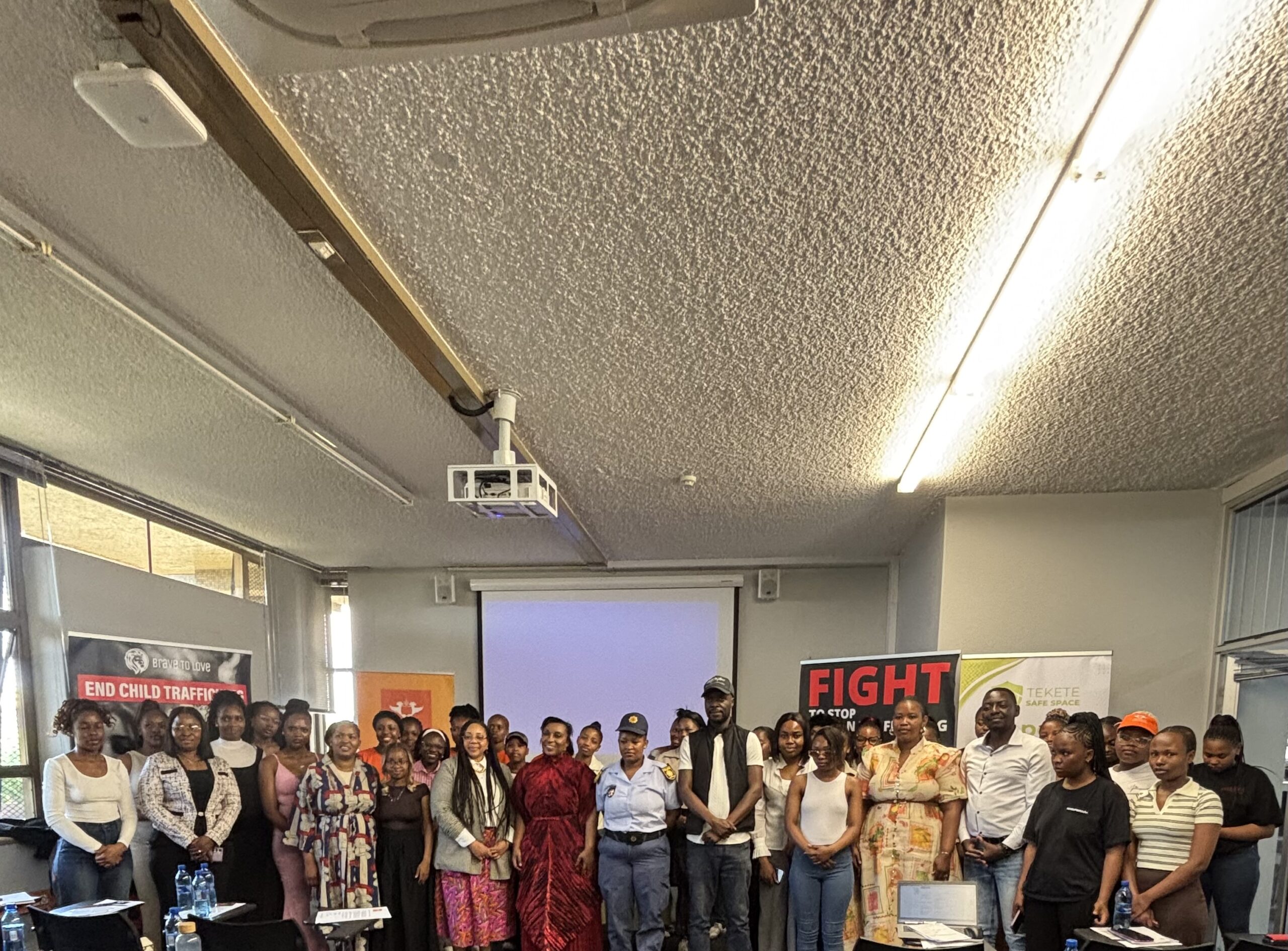
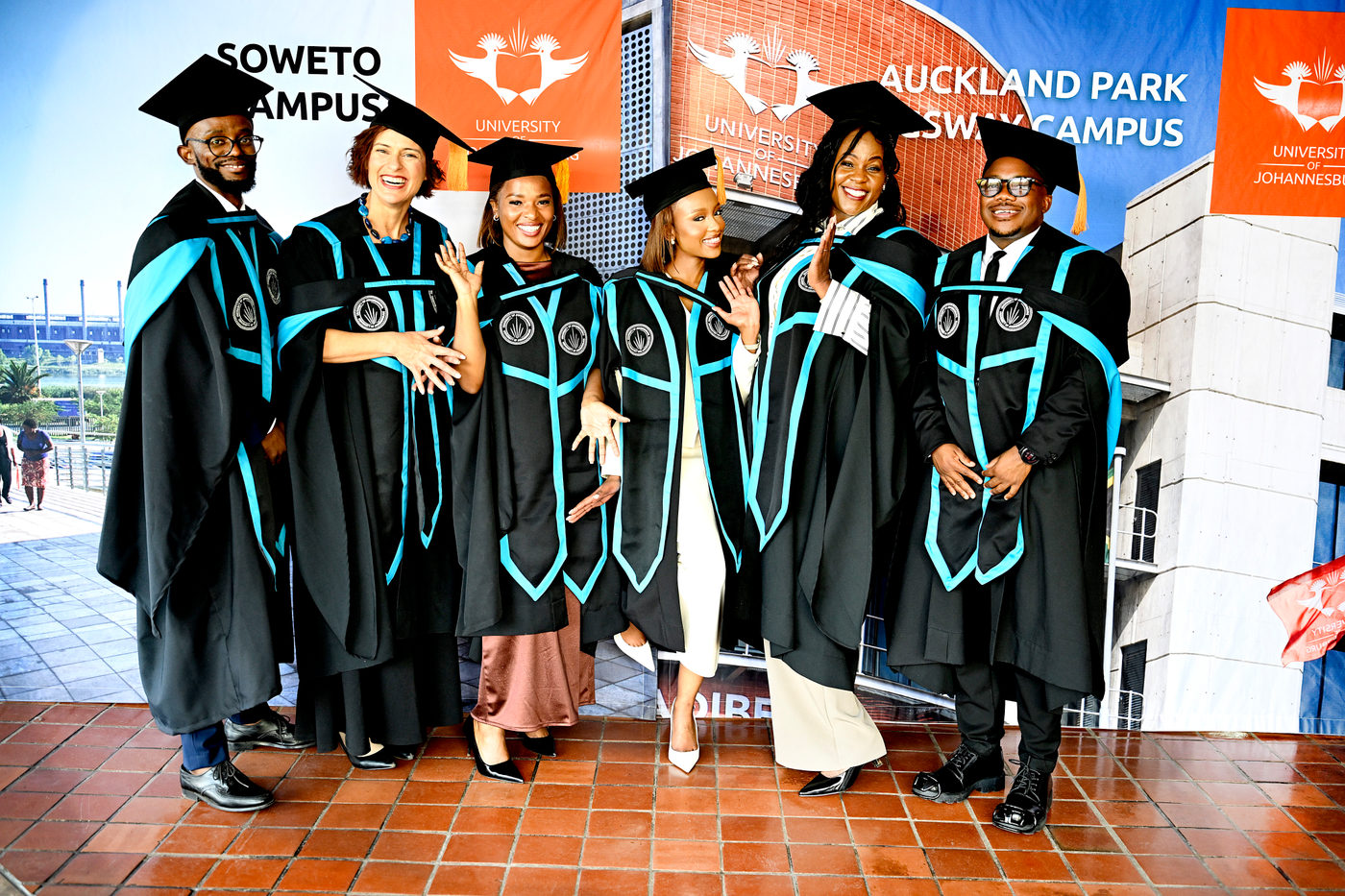
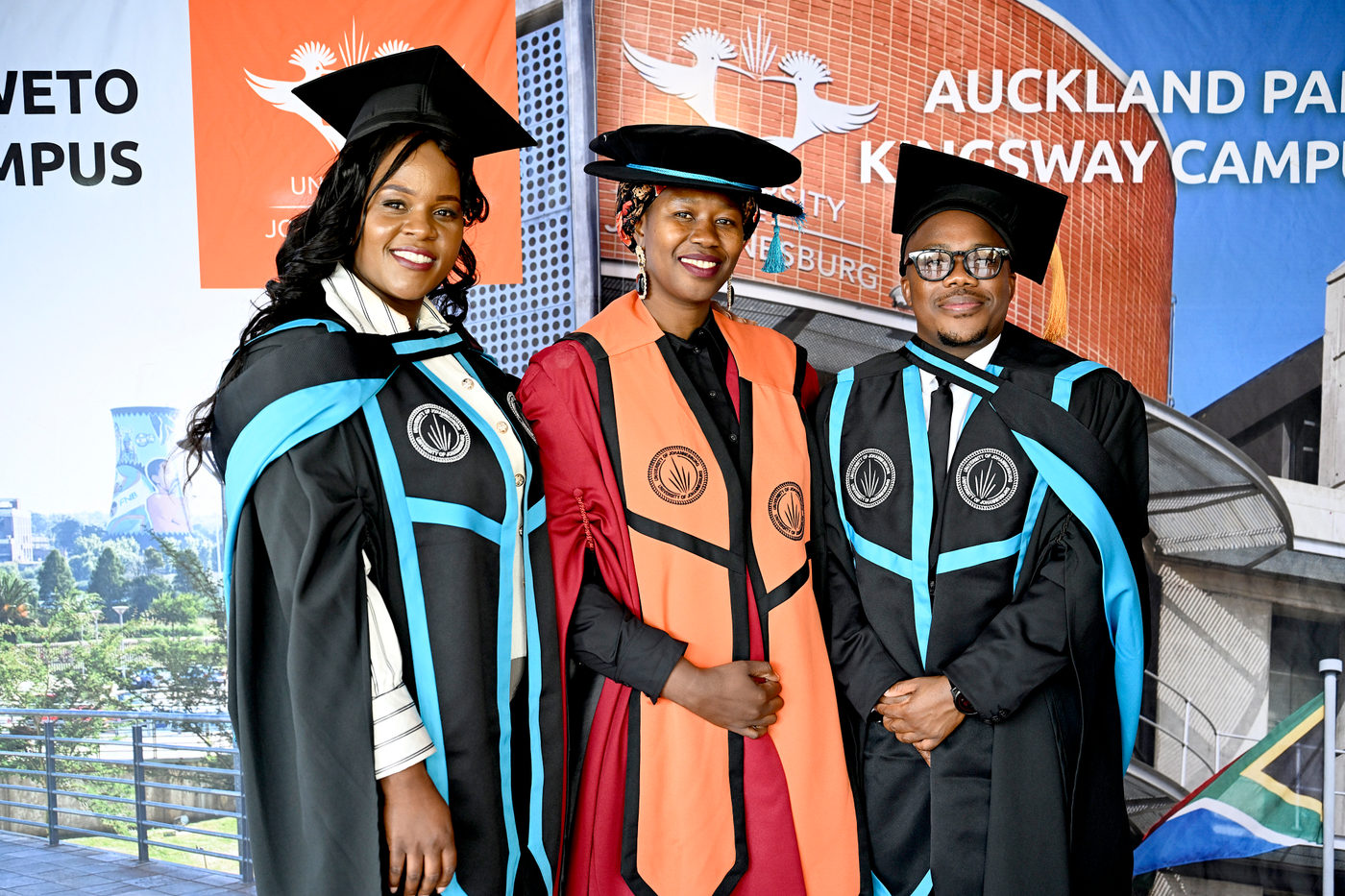
On Monday, 20 July, 2026, the second cohort of the Mpedi Family Scholarship for Neurodiversity Studies took to the stage at the University of Johannesburg (UJ) to graduate.
Launched in March 2024, the Mpedi Family Scholarship was created to support Master’s-level postgraduate students in the Faculty of Education, with a focus on research in neurodiversity and inclusive education. The scholarship reflects UJ’s commitment to fostering inclusive, socially responsive research, and to addressing the unique challenges faced by individuals with neurodiverse conditions.
The scholarship recipients were Eloise Leher, Promise Mashele, Matthews Motsaanaka, Lutho Ngcikiza and Kelebogile Thaba, who received their Master’s in Education.
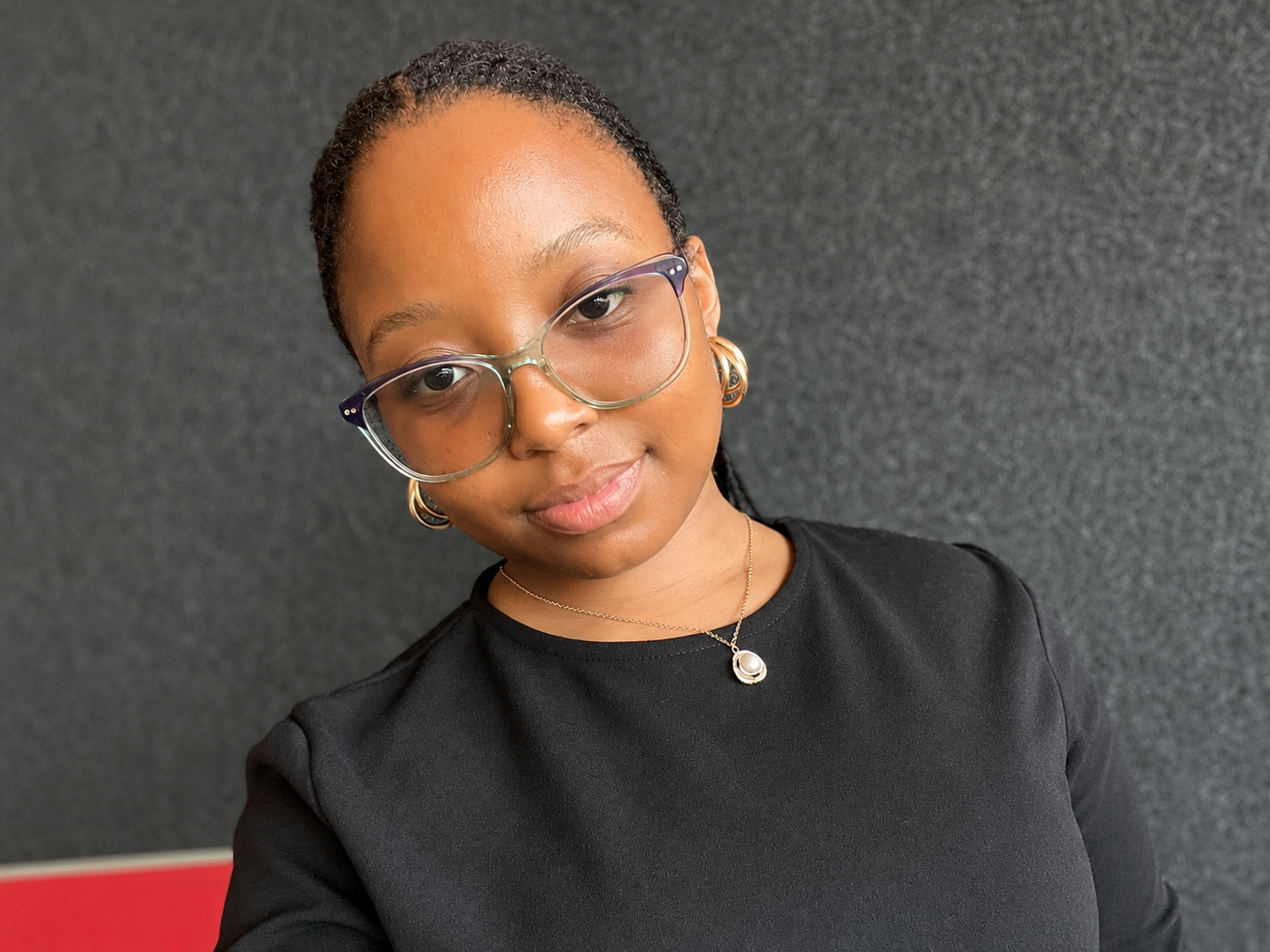
Working with learners on the autism spectrum first drew Kelebogile Thaba into the field of neurodiversity studies.
“My journey into inclusive education began when I worked as an ABA tutor supporting learners on the autism spectrum. That experience completely changed how I viewed neurodiversity. It opened my eyes to how little awareness there is about neurodivergent individuals and taught me to see learners’ differences as strengths rather than limitations.”
Later, as a mainstream school teacher, Kelebogile saw the realities of inclusive education from a different perspective. She realised that many learners who needed additional support were not being failed because teachers did not care but rather because schools were often expected to do more with very limited resources.
“Large class sizes, limited specialist services, long waiting periods for assessments, inadequate infrastructure, insufficient teacher training and inconsistent collaboration between schools, families and support services all make it difficult for learners to receive the support they need. These experiences inspired me to pursue research in inclusive education. I hope to contribute practical, evidence-based solutions that strengthen support for neurodivergent learners and help create education systems where every learner feels understood, valued and able to thrive.”
Receiving the Mpedi Family Scholarship allowed Kelebogile to focus on her studies without the financial pressure that many postgraduate students face.
“It meant the world to me to receive it. More importantly, it made me feel part of a community that genuinely believes in the importance of inclusive education and neurodiversity.”
Her Master’s dissertation, Support Strategies for Learners with Autism Spectrum Disorder in Gauteng Special Schools: A Comparative Case Study, explored the strategies teachers use to meet the educational needs of learners with Autism Spectrum Disorder (ASD). By comparing practices across different special schools, the study identified effective approaches while highlighting the challenges educators face in implementing them. Ultimately, the research aims to contribute to improving educational experiences and outcomes for autistic learners.
Her goal for the future is to build a career that combines education, research and advocacy.
For Matthews Motsaanaka, who passed with distinction for his Master’s, graduating in front of family and friends was a beautiful experience.
“My family was very happy and I was glad to be celebrating our accomplishment with my fellow scholars. We all worked so hard. I am thankful for the opportunity and for the Mpedi Family for funding my studies so I can bring the change to communities.
For his dissertation, Parental risk and resilience in raising children with Down Syndrome in LSEN schools, Matthews wanted to understand the challenges parents experience and the strength they develop while navigating the educational, social, and emotional demands of raising their children. Some of the findings showed that parents developed more resilience from support groups and schools.
“From community organisations to occupational therapists and social workers. These are some of the systems that help parents develop resilience. Faith was also a common factor. Those who believed in something, from different cultural backgrounds, that there is a higher power – that actually assisted the parents to develop resilience.”
Matthews added that it was quite a challenge for him to work and study at the same time, but he managed to make the sacrifices to get through it.
“It was a lot of sleepless nights and sacrifice. On weekends, I had to put in extra time to do everything. As someone who works full-time, I really had to put in the effort, and it all paid off. Once you put your mind to something and put in the work, it is possible to achieve anything. I also want to thank my supervisors for all the support.”
Matthews works as a district official for the Department of Education as a senior educational specialist in inclusion and special schools.
Having already published before on dyslexia, Matthews has now submitted his journal article for his dissertation.
He said that the biggest misconception about neurodivergent learners was that they are defined by limitations rather than their strengths and potential. This, he said, could be dismantled through education, awareness campaigns and meaningful inclusion in society.
He plans to continue to do his PhD and be a researcher in the neurodivergent field.
Promise Mashele graduated with distinction for her work on Parental risk and resilience in raising children with Spastic Cerebral Palsy in an LSEN School. She was supervised by Professor Daphne Mawila- Chauke.
Lutho Ngcikiza’s dissertation Teachers’ perceptions on the progress of their school in implementing SDG 4 for learners with dysgraphia was supervised by Professor Lucia Munongi. He also passed with distinction.
Eloise Leher was inspired by her own children to explore the field of neurodiversity.
She started the podcast Wonderfully Wired five years ago, with the mission to help Southern African parents and teachers to see, support and celebrate difference.
“I realised that many children, like mine, weren’t struggling because they lacked ability but because the environments around them weren’t designed with different ways of thinking in mind. On the podcast, I interview specialists in neurodiversity from across the globe – my job is to simplify expert information to equip parents and teachers.”
Receiving the Mpedi Family Scholarship, she said, has been an extraordinary privilege. “Beyond the financial support, which enabled the work at Wonderfully Wired to continue alongside the research, it represented belief; belief that this research matters and that African scholars can contribute meaningfully to the global conversation on neurodiversity.”
Her dissertation, Parental hope for neurodivergent children’s academic achievement in Zimbabwean private schools, explored parental hope for the academic achievement of neurodivergent learners attending mainstream independent schools in Zimbabwe.
“While much research focuses on barriers, I wanted to understand what sustains parents as they navigate diagnosis, schooling and uncertain futures.
Using Snyder’s Hope Theory as a framework, I found that parents consistently demonstrated remarkably high levels of determination and optimism. Their challenge was rarely a lack of hope; it was a lack of clear pathways. They were asking, “We believe in our children. Just show us how to help them succeed.”
The study highlights the critical role that schools, teachers and professionals play in providing practical guidance that transforms hope into meaningful educational outcomes.
She hopes her research will contribute to developing African models of neuro-inclusive education that are both evidence-based and culturally meaningful.
“I plan to continue building bridges between research and practice. Through Wonderfully Wired, I work alongside schools, educators and families to translate neuroscience into practical strategies that can be implemented immediately.
Academically, I hope to continue this work through doctoral research focusing on executive functioning as a pathway towards more inclusive education within African school contexts.”