The University of Johannesburg (UJ) Faculty of Law, through its Centre for Banking Law, successfully hosted the Annual Banking Law Update (ABLU) 2026 on 20 and 21 October at Deneys in Sandton. The conference brought together leading academics, legal practitioners, regulators and banking professionals to explore developments shaping the future of banking and financial regulation.
This year’s conference marked a significant milestone: 10 years of collaboration between UJ’s Centre for Banking Law and Juta, a partnership that continues to advance banking law scholarship through academic publications and engagement between academia and industry.
Over two days, discussions explored digital finance, artificial intelligence (AI), consumer protection, financial inclusion, financial crime, virtual assets, central bank digital currencies (CBDCs) and bank resolution.
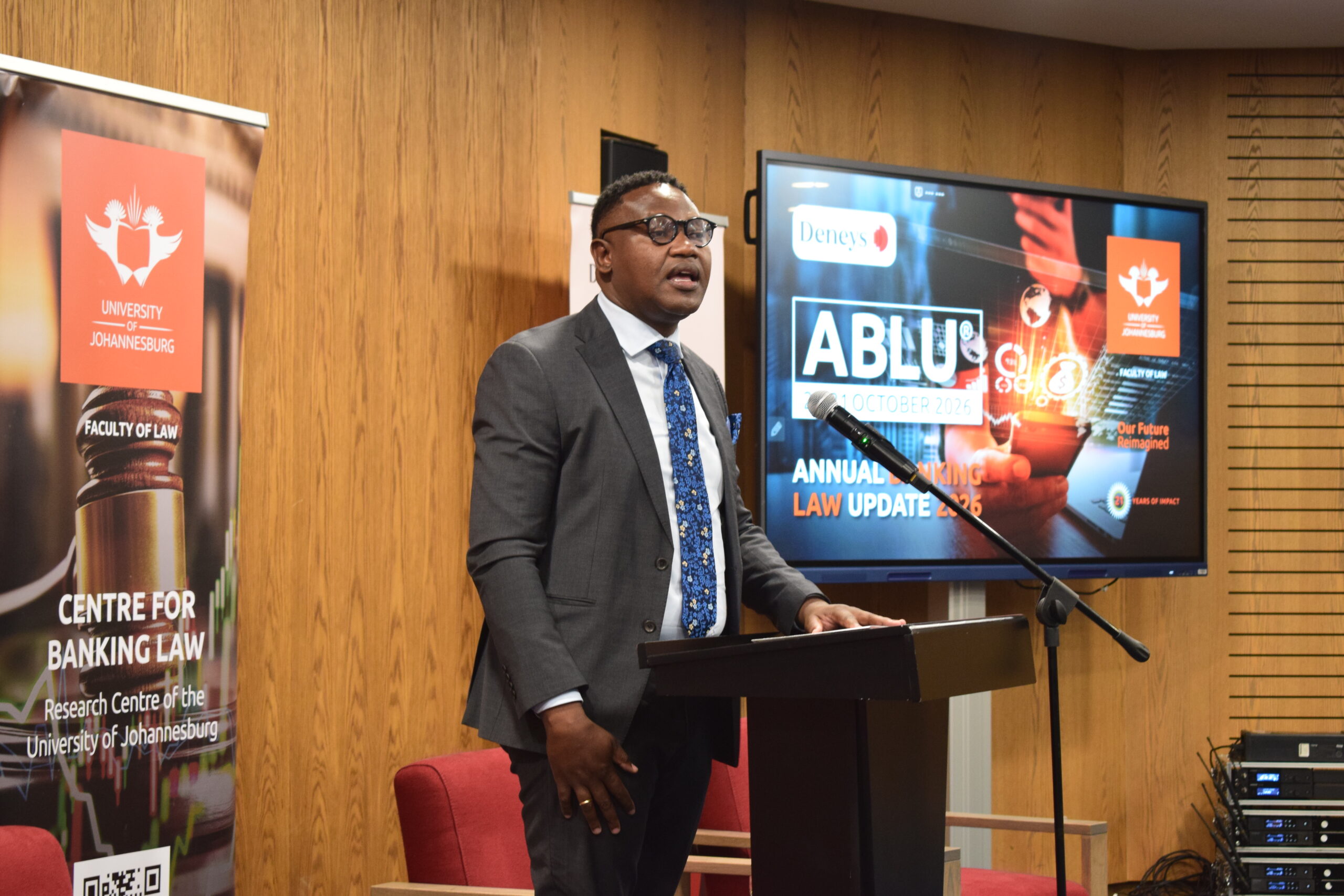
Opening the conference, Professor Charles Maimela, Executive Dean of UJ’s Faculty of Law, emphasised the importance of collaboration between academia, industry, regulators and students in advancing banking law and promoting a fairer financial system.
He described delegates as “the torchbearers of the direction where the country must head, especially in the area of banking law.” Professor Maimela encouraged students to engage with leading scholars and industry professionals, highlighting the importance of these interactions in helping to “grow legal jurisprudence in this important field of banking.”
He also acknowledged the contributions of Prof Charl Hugo, Prof Cayle Lupton and Prof Philip Stoop to the Centre’s continued growth and success. Celebrating 10 years of collaboration between UJ’s Centre for Banking Law and Juta, he expressed his appreciation for the longstanding partnership.
“We are wishing for more decades and decades to come, and that this relationship must grow from strength to strength,” he said.
Prof Maimela also paid tribute to the late Sir Roy Goode, recognising his contribution to commercial law, before encouraging delegates to use the conference as an opportunity for meaningful engagement and knowledge-sharing.
Delivering the welcome address, Ms Michelle David, Chairperson and Director at Deneys, highlighted the importance of continuous learning and engagement in an evolving financial environment.
“Staying abreast of legal developments is not merely desirable. It’s essential to decision-making, effective risk management, and the sustainable growth of our financial institutions,” she said.

A highlight of the first day was the keynote address by Professor Douglas Arner, Sir Roy Goode Chair at the Centre for Commercial Law Studies and Kerry Holdings Professor in Law at the University of Hong Kong. Presenting on “The Future of Digital Finance: Finance, Technology, Regulation and Sustainable Development,” Professor Arner examined how technological innovation is transforming financial systems and creating opportunities for economic growth, financial inclusion and sustainable development.
His address explored five developments shaping digital finance: digital assets, cross-border payments, digital financial infrastructure, artificial intelligence and sustainability. “There is now almost a universal consensus that the future of digital assets is as a regulated industry,” he observed.
Prof Arner emphasised the importance of effective regulatory frameworks in managing emerging risks, including financial crime, cyber threats and the misuse of AI, while supporting innovation and financial inclusion.
The day’s discussions further examined developments in credit law, consumer protection, AI in tax administration, payments regulation, international trade finance and open banking in Africa.
The second day opened with a welcome address by Ms Jackie Midlane, Head of Banking and Finance and Director at Deneys, who encouraged delegates to connect academic scholarship with the practical realities of the financial services sector. “We must anticipate where commercial innovation is taking us, recognise where legal frameworks are under strain, and help shape responses that are principled, practical, and trusted,” she said.
The day’s keynote was delivered by Prof Michelle Kelly-Louw from the University of Cape Town, under the theme “From Voluntary Commitment to Legal Obligation: Banks’ Role in Financial Education and Inclusion.” Prof Kelly-Louw challenged the understanding of financial inclusion as simply providing access to banking services, arguing that meaningful inclusion requires consumers to have the knowledge and skills to make informed financial decisions. “We need to move from this just disclosing everything to capability,” she emphasised.
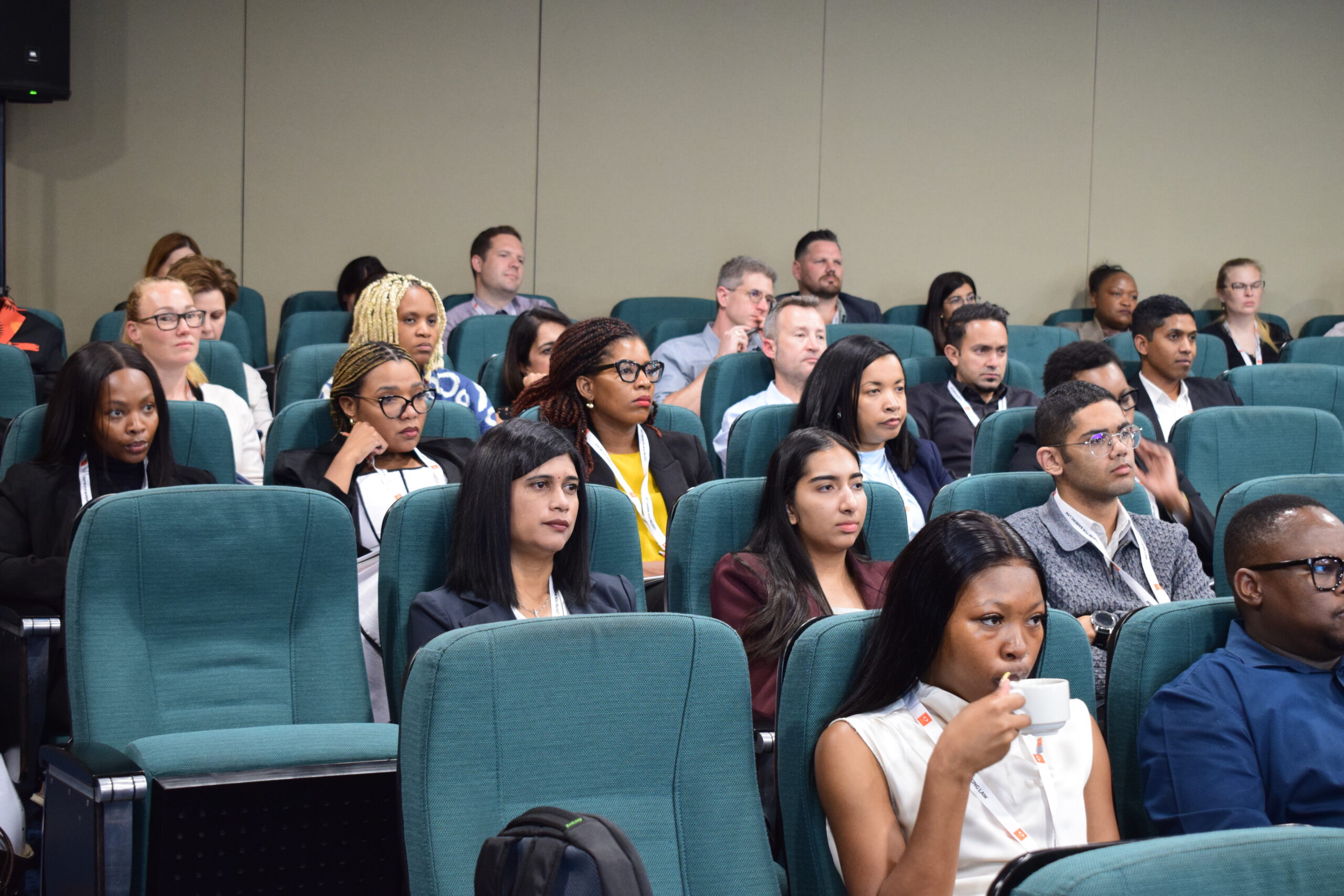
Drawing on South Africa’s regulatory framework and international approaches in Brazil and Indonesia, she examined whether banks should assume greater legal responsibility for promoting financial education. She proposed a balanced approach that strengthens consumer protection without imposing disproportionate compliance burdens on financial institutions, suggesting that financial education could be particularly valuable when consumers enter into complex financial agreements.
The day’s discussions also addressed unexplained wealth, digital banking fraud, financial sanctions, crypto assets, CBDCs, virtual asset regulation and bank resolution.
Beyond the conference discussions, ABLU 2026 celebrated a decade of collaboration between the Centre for Banking Law and Juta, marked by the launch of two scholarly publications:
- Annual Banking Law Update 2026: Recent Legal Developments of Special Interest to Banks
- Annual Banking Law Update 2026: Perspectives on Trends, Challenges and Developments in the Financial Services Sector
Edited by Prof Cayle Lupton, with editorial assistance from Dr Loice Takaedza, the publications reflect the Centre’s commitment to producing relevant scholarship that contributes to legal research and professional practice.

Reflecting on the milestone, Prof Cayle Lupton, Director of the Centre for Banking Law, highlighted the value of collaboration between academia and industry. “ABLU has always been about bringing academic scholarship and professional practice into meaningful conversation. As we celebrate 10 years of collaboration with Juta, we are reminded of the importance of producing research that not only advances legal knowledge but also responds to the practical challenges facing the banking and financial services sector.”
The successful conclusion of ABLU 2026 reaffirmed the importance of collaboration in addressing emerging legal and regulatory challenges in the financial sector.