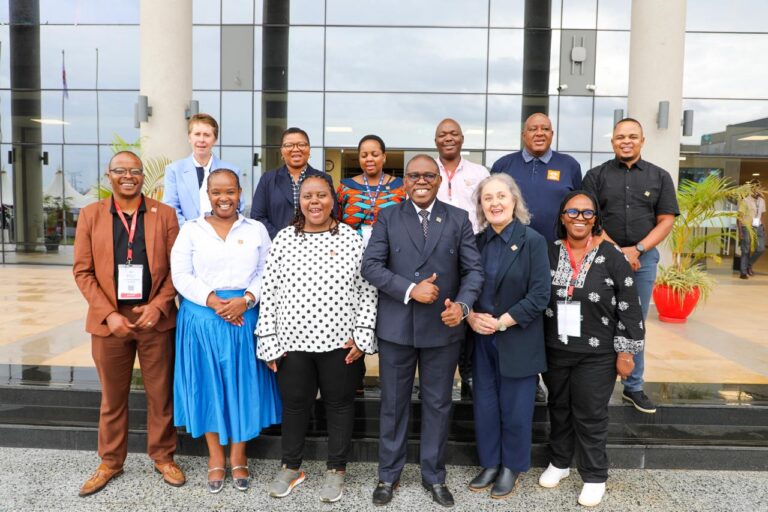
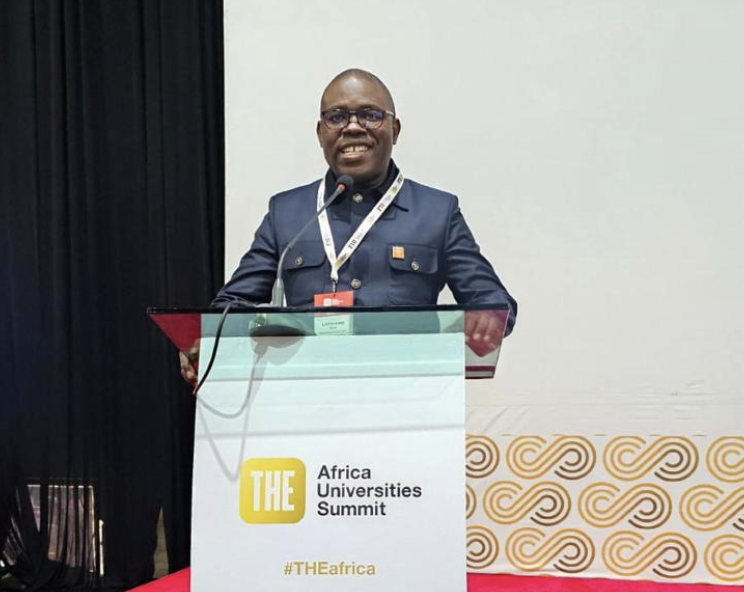
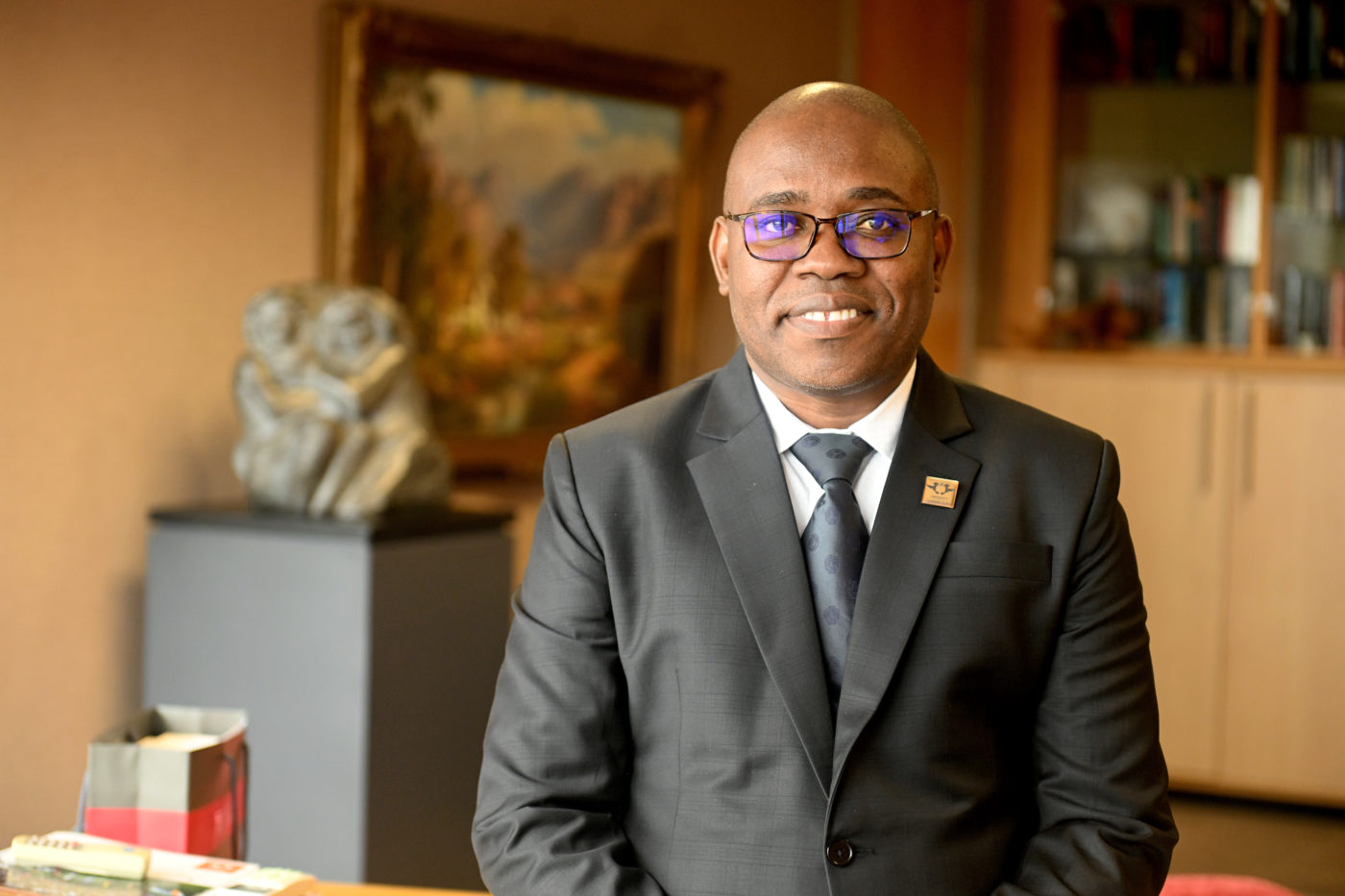
University of Johannesburg (UJ) Vice-Chancellor and Principal, Professor Letlhokwa George Mpedi, delivered the seventh Lameck Goma Lecture in Lusaka, Zambia, on Friday, 17 July 2026, honouring the legacy of Professor Lameck Goma, the first indigenous Vice-Chancellor of the University of Zambia, who went on to also become Minister of General Education.
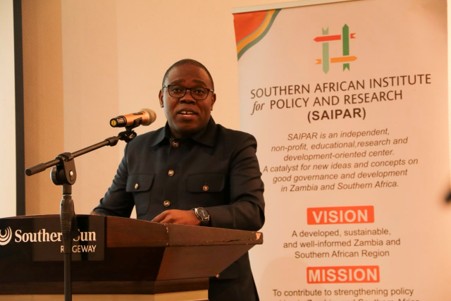
The Lameck Goma Lecture is a prestigious annual address hosted by Zambia’s Southern African Institute for Policy and Research (SAIPAR) at UNZA, reserved for figures of stature in African scholarship. Its inaugural address was delivered by Justice Albie Sachs, the retired South African Constitutional Court judge and anti-apartheid icon, and past speakers include economist Professor Thandika Mkandawire.
The VC was introduced by Professor Muna Ndulo, SAIPAR Board Chairman and Professor of Law at Cornell University, as “a teacher and researcher at heart,” who exemplified “learning while leading” throughout his tenure heading the University of Johannesburg.
Speaking under the theme ‘The Role and Place of an African University in the Intelligent Age,’ Prof Mpedi argued that African universities hold knowledge systems essential to artificial intelligence (AI). Opening with the proverb “when an elder dies, a library burns to the ground”, he framed indigenous knowledge as a rigorous and enduring form of intelligence, rooted in Ubuntu’s relational understanding of people and the land.
Drawing on his recent engagements with World Economic Forum founder Professor Klaus Schwab on the “Intelligent Age,” Prof Mpedi argued that global power hubs are shifting toward the Global South, with Africa’s demographic growth and resource base placing it at an emerging centre of gravity rather than the margins of global innovation. As he said: “The challenge before higher education is not simply to respond to technological change, but to help shape a future that remains ethical, inclusive, and human-centred,” adding, “This is a task for the university. And I want to suggest that it is particularly a task for the African university.”
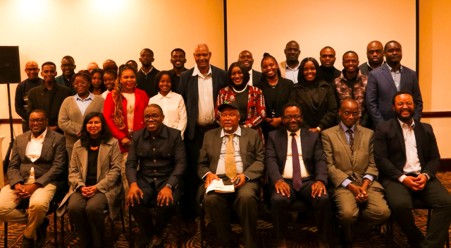
On global rankings, he noted that while African universities are increasingly competitive even on conventional metrics, rankings measuring societal and sustainability impact (where UJ has ranked first in Africa on the Times Higher Education Impact Rankings) better reflect the continent’s comparative strength.
He credited Goma as one of the earliest African academic leaders to insist that African universities could not operate as outposts of a European template, a conviction Prof Mpedi said has lost none of its relevance.
The lecture linked Pan-Africanism and sustainability as a single argument for African self-determination over land and resources, echoing themes in UJ’s own Strategic Plan 2035, and closed with a call for African universities: “It is in this way that we will build the kind of university the Intelligent Age actually requires. As Goma understood, to be African and to be internationalist have never been in tension,” he said.