World Economic Forum founder Professor Klaus Schwab said during a public lecture at the University of Johannesburg (UJ) on Friday (29 May 2026) that universities would need to radically rethink how they prepare students for an economy being reshaped by artificial intelligence.
Speaking at UJ’s Bunting Road Campus, Prof Schwab said higher education systems worldwide were failing to keep pace with technological disruption, warning that traditional models of teaching and learning were no longer sufficient for what he described as the “Intelligent Age”.
“The future is no longer something that simply happens to us,” Prof Schwab told the audience. “It is something we must consciously shape.”
Addressing an audience of academics, students, policymakers and business leaders, Schwab argued that artificial intelligence, automation and quantum computing are transforming society at a pace that governments, businesses and universities are failing to match.
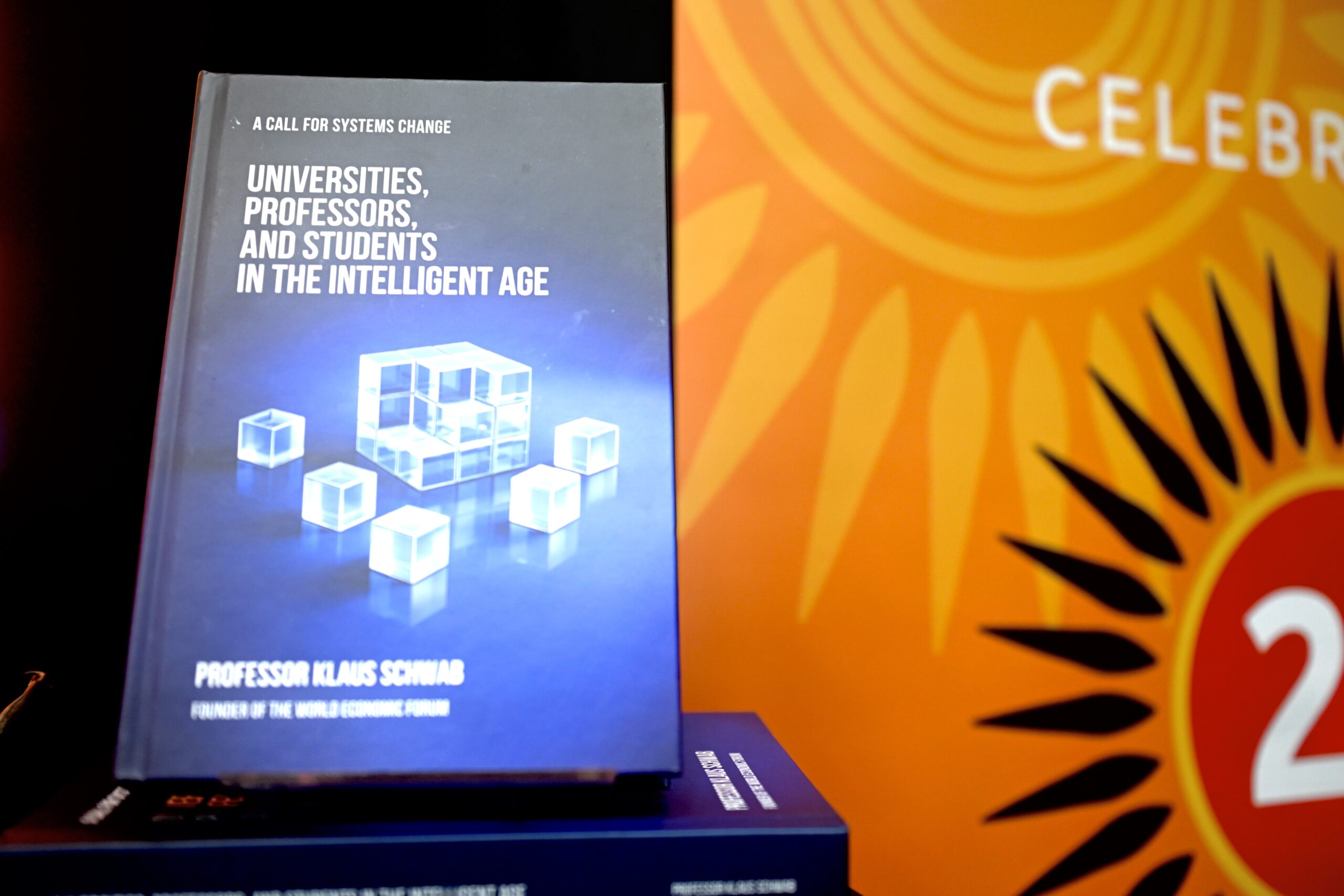
Drawing on themes from his latest book, Universities, Professors, and Students in the Intelligent Age, Prof Schwab said universities could no longer function merely as institutions that transfer knowledge.
“Education can no longer be preparation for life,” he said. “Education must become a continuous condition of life.”
He argued that universities would need to evolve into lifelong learning ecosystems focused on adaptability, ethics, critical thinking and the responsible use of AI.
Prof Schwab warned that the global economy was entering a period of profound disruption in which entire industries, professions and social systems would be reshaped faster than most institutions are currently prepared for.
In a wide-ranging discussion, he also addressed what he described as a growing global crisis of trust fuelled by misinformation, political polarisation and widening inequality.
“Truth and trust have become the defining fault lines of our time,” Prof Schwab said, cautioning that societies unable to rebuild social cohesion would struggle to navigate the disruptions associated with emerging technologies.
The discussion expanded beyond higher education into the future of globalisation, stakeholder capitalism and leadership in a world increasingly shaped by intelligent technologies. Prof Schwab argued that leaders would need to place greater emphasis on ethics, social responsibility and long-term human outcomes as AI becomes more deeply integrated into economic and political systems.
Reflecting on South Africa’s economic future, Prof Schwab said the country continued to possess significant long-term potential despite structural challenges including unemployment, inequality and energy insecurity. He pointed to South Africa’s young population, sophisticated financial sector and emerging technology ecosystem as important strategic advantages.
The lecture comes as universities worldwide face mounting pressure to respond to artificial intelligence, changing labour markets and growing concern over the societal impact of emerging technologies.
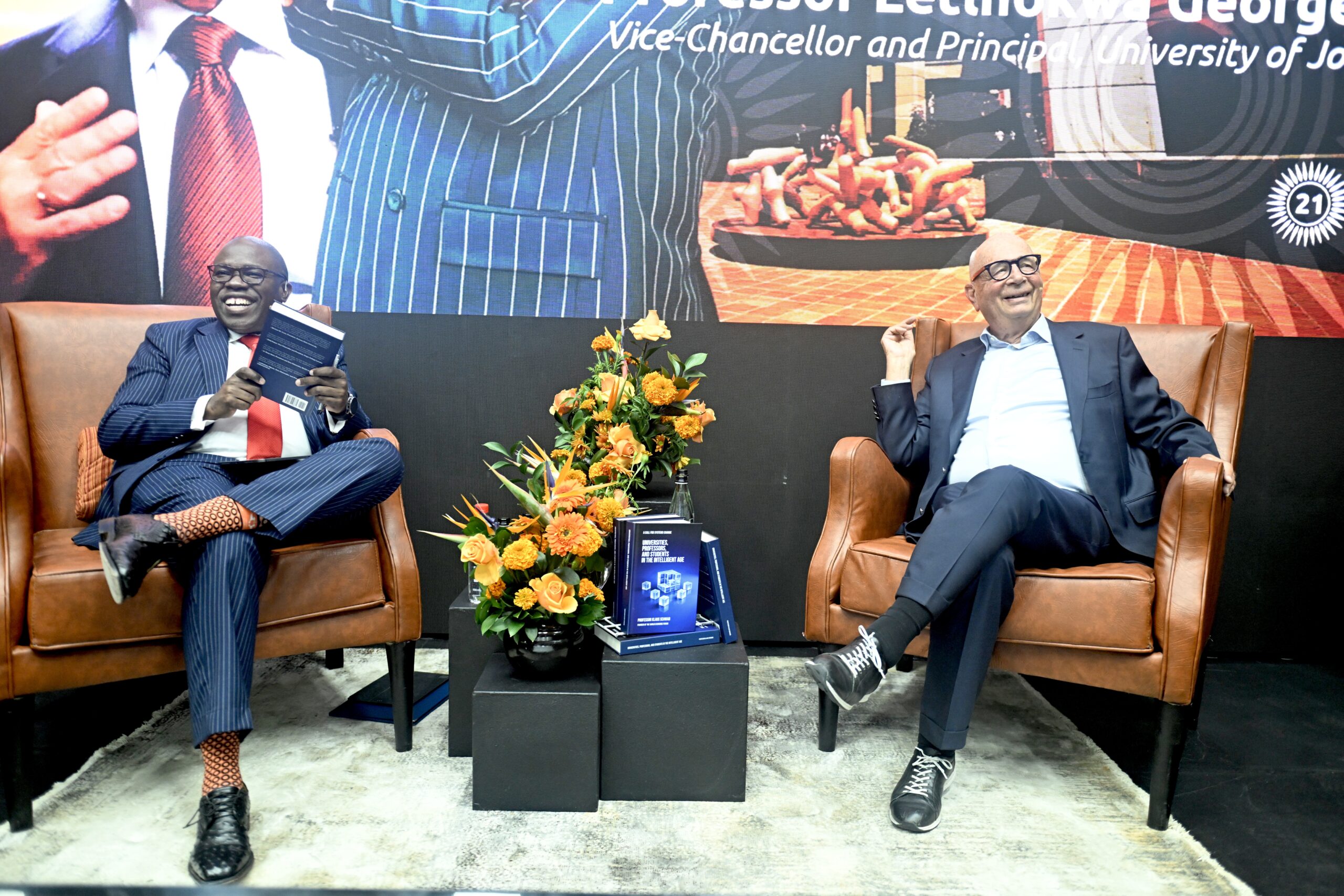
UJ Vice-Chancellor and Principal, Professor Letlhokwa Mpedi said the lecture highlighted the growing responsibility of universities to ensure technological progress remains grounded in human values and social impact.
“At a moment when artificial intelligence is reshaping economies, institutions and everyday life, universities cannot afford to stand still,” said Prof Mpedi. “The challenge before higher education is not simply to respond to technological change, but to help shape a future that remains ethical, inclusive and human-centred.”
Prof Mpedi said the discussion reflected the importance of creating spaces where global ideas and African perspectives could engage meaningfully on the defining issues of the modern era.
The public lecture drew strong interest from academia, business and the media amid growing global concern over how artificial intelligence will reshape education, economies and governance in the years ahead.