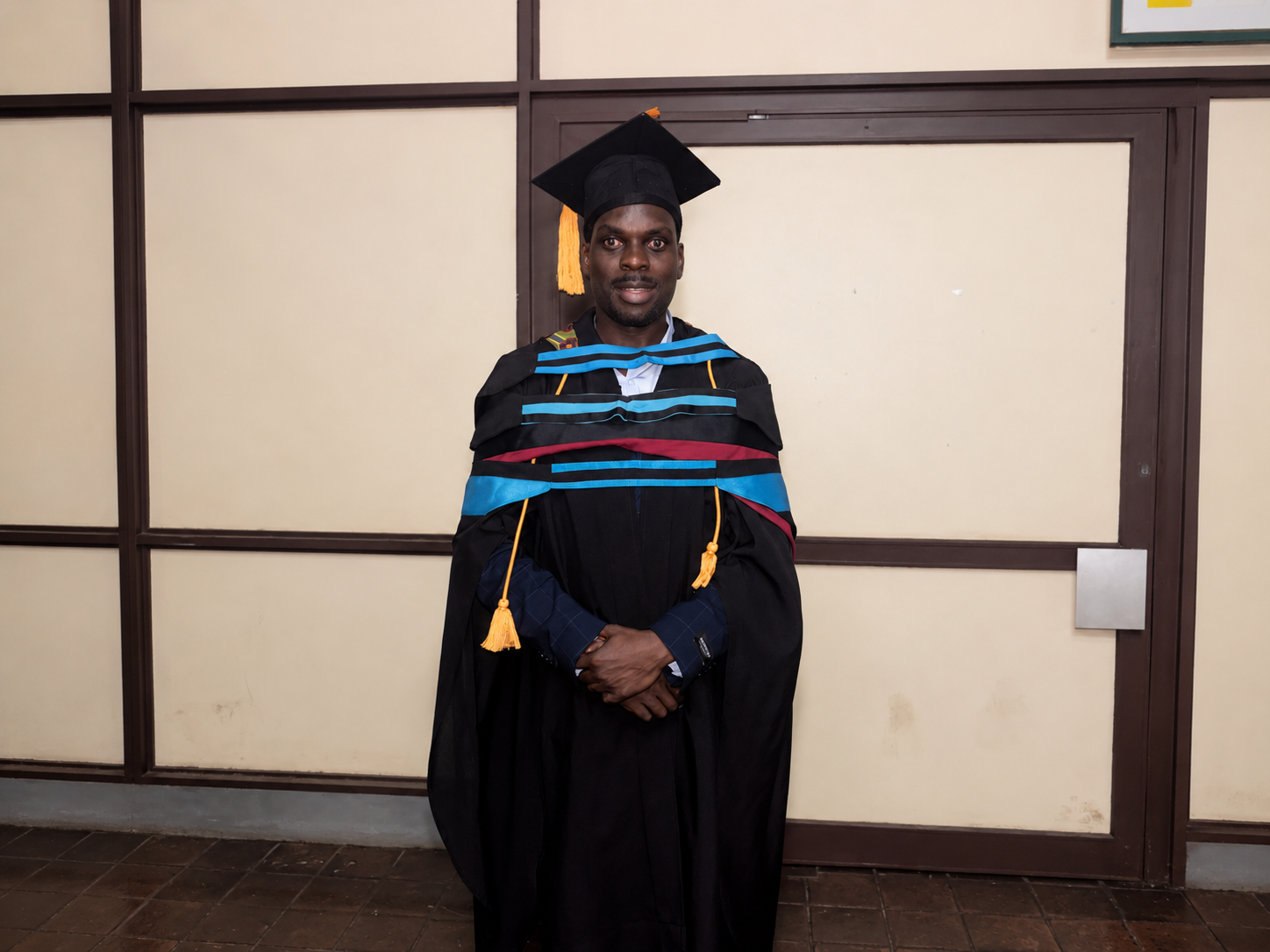
Sandile Dlamini is proof that a medical condition does not define a person’s path in life.
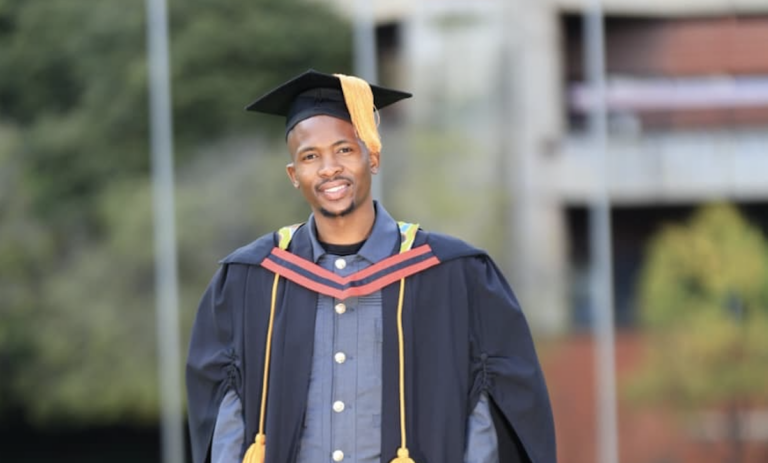
Born in Hazyview, Mpumalanga, the 40-year-old educator is currently teaching at a mainstream school despite being blind. He walked across the stage at the University of Johannesburg (UJ) to graduate with a Postgraduate Diploma in Inclusive Education.
This marks his fourth qualification, following a Post Graduate Certificate in Education (PGCE) and a Diploma in Language Practice.
Dlamini was born sighted but was later diagnosed with glaucoma, which led to his blindness. Instead of letting this stop him, he turned to technology to empower himself and others.
He chose to become a professional English teacher because the subject aligns perfectly with assistive digital tools.
“I chose English subject, because I have a Diploma in Language Practice. It was also a better option because I can use the screen reader Job Access With Speech (JAWS) while teaching,” Dlamini explained.
His journey into teaching was driven by a deep love for sharing knowledge and a desire to fix gaps in the schooling system. However, his journey through higher education also revealed major challenges that students with visual impairments face.
“Universities don’t do orientation on how to navigate various platforms such as Noodle and Blackboard etc. Additionally, some lecturers don’t know how to accommodate students living with visual impairments. A solution to this, could be that in preparation for modules, blind representatives should be consulted to assist with the so when implementation of policies,” he said.
Dlamini also notes that social stigmas still exist for people living with disabilities.
“People feel that blind people cannot study with the sighted or cannot work in various institutions.”
To fight these misconceptions and create meaningful inclusion, Sandile is now pursuing his fifth qualification. He is registered as a Master’s student in UJ’s Department of Educational Psychology, focusing his research on supporting online learning for visually impaired students in higher education.
Dlamini chose UJ because he wanted to empower himself by learning from different academics as well as learning from one of the leading neurodiversity schools. Throughout his postgraduate journey, he found a strong support system. He is currently a recipient of the Mpedi Family Scholarship for Neurodiversity Studies, working under the supervision of Dr Jean Fourie.
“At UJ I have found a very supportive environment and the level of lecturing is the best. I would like to thank all my lecturers as well as Professor Mpedi for the scholarship,” Dlamini said.
As he continues his journey towards meaningful inclusive education, Dlamini has a powerful message for other people living with disabilities:
“Now I’m doing fifth qualification, so to everyone; blindness mustn’t determine your journey”.