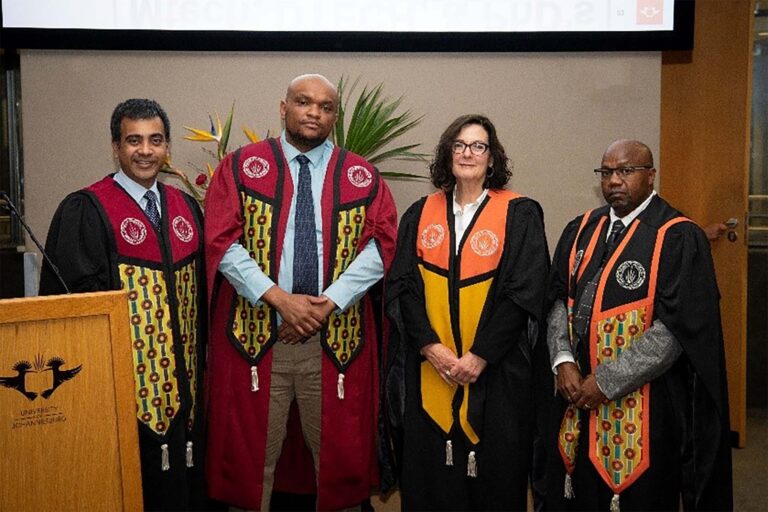
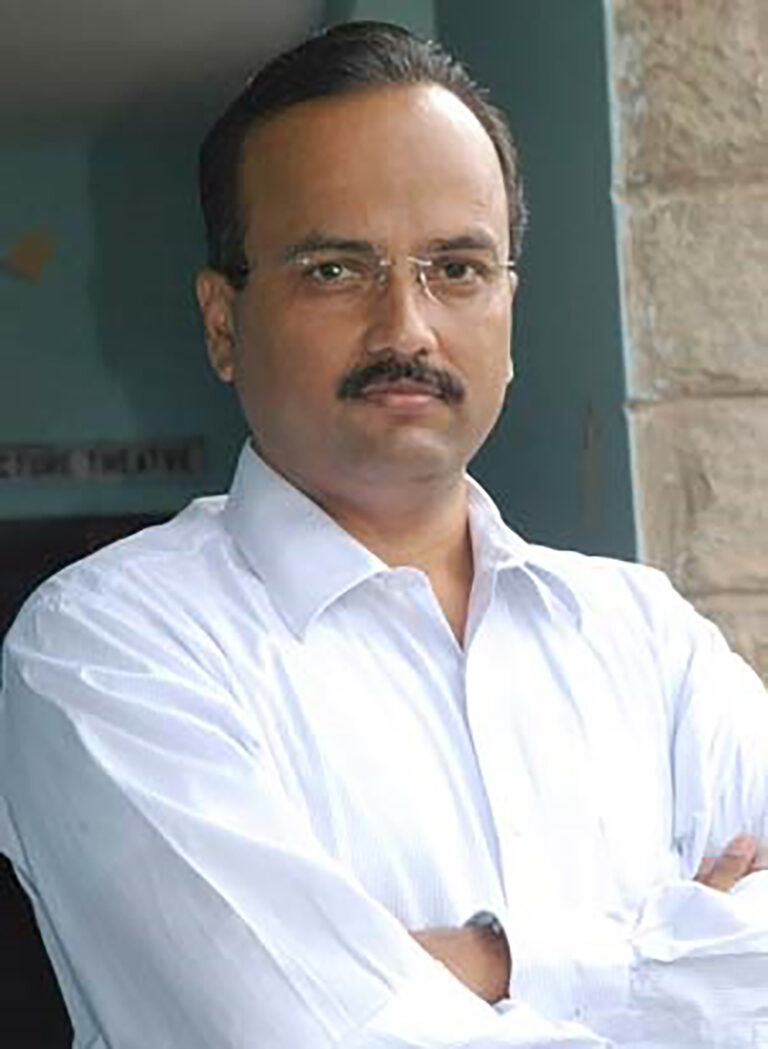
Every year, more pollution impacts the scarce water in South Africa’s rivers, threatening human health, according to Professor Langelihle (Nsika) Dlamini. He was speaking at his professorial inauguration ceremony on Wednesday 15 July 2026 at the University of Johannesburg (UJ).
The grim condition of wastewater treatment systems in the country drives Prof Dlamini’s research. His goal is a more sustainable approach to water treatment using nanotechnology.

In just three years, the percentage of wastewater treatment systems in a critical state of performance went from 39% to 47%. And the systems in excellent or good (above 80%) state of performance declined from 14% to 8%. This is according to the 2022 and 2025 Green Drop reports by the national Department of Water and Sanitation (DWS) about 848 systems in the country, cited by Prof Dlamini at the event.
Prof Dlamini applies nanotechnology to purify water at the UJ Department of Chemical Sciences, where he serves as Head of Department.
Ideally, wastewater plants should do a good job of removing contaminants from water. However, due to infrastructure decay of the country’s wastewater systems, most pollutants are not effectively removed and thus are released to nearby rivers.
The wastewater plants are also meant to remove pollutants of emerging concern, says Prof Dlamini. The emerging pollutants pose a risk to human health and linger in the environment, because they do not decompose easily.
“Nanotechnology allows us to tinker, to design materials that will target and remove contaminants of emerging concern in water,” Prof Dlamini says. These contaminants include forever chemicals found in nonstick saucepans, medication, and cosmetic residues. Also included are hormone mimics that interfere with the way the body’s hormones work, and tiny plastic fragments measuring less than 5mm, called microplastics.
The nanotechnology Prof Dlamini uses is based on nanoscience. This science studies structures and molecules between 1 and 100 nanometres in size.
Something a hundred nanometres in size is far too small for people to see, so he uses this way of explaining the scale of nanotechnology: “The diameter of a nanoparticle is about four nanometres. This is a million times smaller than an ant is long, which is about four millimetres. And the ant is again a million times smaller than a Formula 1 racing track of four kilometres.”
“Nanotechnology has so much potential. It is critical that guardrails are developed, so it is not exploited in harmful ways,” he adds.
Pioneering MXene research
Prof Dlamini’s research group studies MXenes, a new generation of materials with exceptional physical and chemical properties. MXenes are only a few atoms thick. Somehow, they combine the best properties of completely different materials: they conduct electricity like a metal, but can also be dissolved in water and moulded like clay.
“We were the first to attach enzymes to MXenes to break down modern water pollutants,” Prof. Dlamini says. Enzymes are biological catalysts, natural substances that trigger chemical reactions. Prof Dlamini and his team tested these on real water samples in a lab-scale treatment plant. In the research they removed the antiretroviral drug efavirenz better than conventional treatment systems. The project created the foundation for a greener approach in environmental remediation in his research.

Decarbonising cement
Beyond water, his work extends to the carbon footprint of the construction industry. “Cement and concrete accounts for roughly 9–10% of global energy-related CO2 emissions,” Prof. Dlamini says. His group and industry partners experimented with additives and significantly reduced the carbon dioxide released during the industrial process.
The project placed his student, Ms Siphumelele Mzolo, among the Top 20 finalists in South Africa in the Entrepreneurship Development in Higher Education (EDHE) ABSA Innovation Challenge, a national initiative for turning student innovations into viable ventures. A patent has been filed about the mechanism identified in the research.
The Romans used nanotechnology
Long before the field was called nanotechnology, ancient masters used it already, says Prof Dlamini. The colour-changing Lycurgus cup of the Roman era appears jade green in reflected light, but ruby red when light shines through it. The astonishing effect is created by gold and silver particles of 40 to 70 nanometres in size.
The colours in medieval stained church windows in Europe work by a similar mechanism, he adds. And African women have long used the sunscreen properties of libomvu – red ochre mixed with clay and bile – which contains zinc oxide nanoparticles.
Today it is possible to ‘see’ nanoparticles, which the ancients were not able to do. Scanning tunnelling microscopes and electron microscopes make it possible to work at the atomic level. Artificial intelligence (AI) and machine (ML) learning now help predict which materials will have the functions desired by researchers, even before they are chemically created, he adds.
From rural town to Egoli
For Prof Dlamini, the road to high-technology research started at Lobamba primary school. “There I was moulded by great educators and experienced first-hand what it meant to be a teacher,” he says. At high school, his chemistry teacher Mr Richards identified and nurtured his passion for the subject, helping him realize chemistry is where he wanted to go next.
After school, he exchanged rural life for the hustle of Umlazi, south of Durban. Mangosuthu Technikon, now called the Mangosuthu University of Technology (MUT), laid the foundation of the chemist he is today, he says.
“By the time I completed my first qualification, I was empowered, but not scarred,” he recalls. Next, he moved to an even bigger city, training for the next six years at the University of Johannesburg, under the guidance of Prof Rui Krause, Prof Bhekie Mamba, Prof Shane Durbach and Prof Giridhar Kulkarni, all experts in the field. Over this time, his dream of becoming a chemistry researcher became reality.
However, reaching that dream cost him dearly. “By the time I completed my PhD, I was depleted, in the ‘research valley of dry bones’” he says. “I opened a ‘research bakery,’ a place to prepare the next generation by teaching, which was my first love. I immersed myself into it. I was home, comfortable. But I shied away from research, held it at arm’s length.”
Focusing mostly on teaching did not last very long, thanks to his Head of Department, Prof Catherine Ngila. “Because of Prof Ngila’s intervention and guidance the research bug was rekindled, and it drives me to this day,” says Prof Dlamini. Through her support and guidance, he secured his first seed funding of R900 000 from the Water Research Commission (WRC).
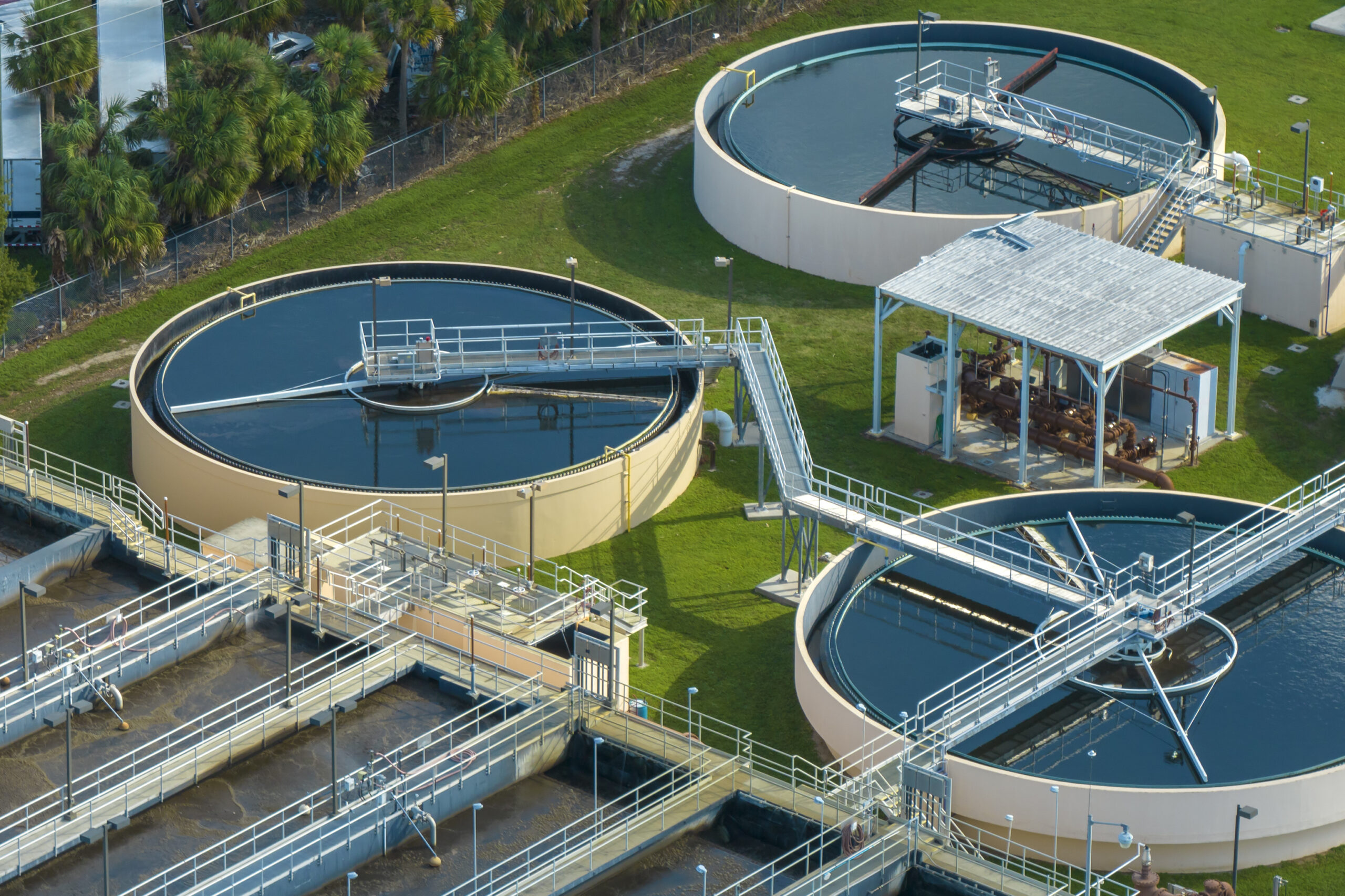
Nanomaterial lifecycle for clean, safe water
With the funding from WRC, Prof Dlamini and his team of students were tasked with understanding the fate and behaviour of nanomaterials in wastewater treatment plants. The material they studied was titanium dioxide, widely used in sunscreen, paint, medicines, and toothpaste. As a first successful milestone they built a lab-scale treatment plant, where about 90% of the particles were retained in the activated sludge and 10% released with the treated effluent.
Students Dr Lwazi Mahlalela, Mr Sandile Simelane and Ms Dineo Majotena from this project extended the work to mixtures of metal oxides. They found that the more complex the metal oxides become, the greater the risk they pose to the efficient operation of a treatment plant.
Armed with this understanding of how nanomaterials interact in wastewater treatment plants, Prof Dlamini now designs materials that target and remove specific pollutants in wastewater without impacting the functionality of the microbes in the plant.
It is part of his research goal for nanotechnology: to make it possible for people, no matter where they live, to have access to clean and safe water.