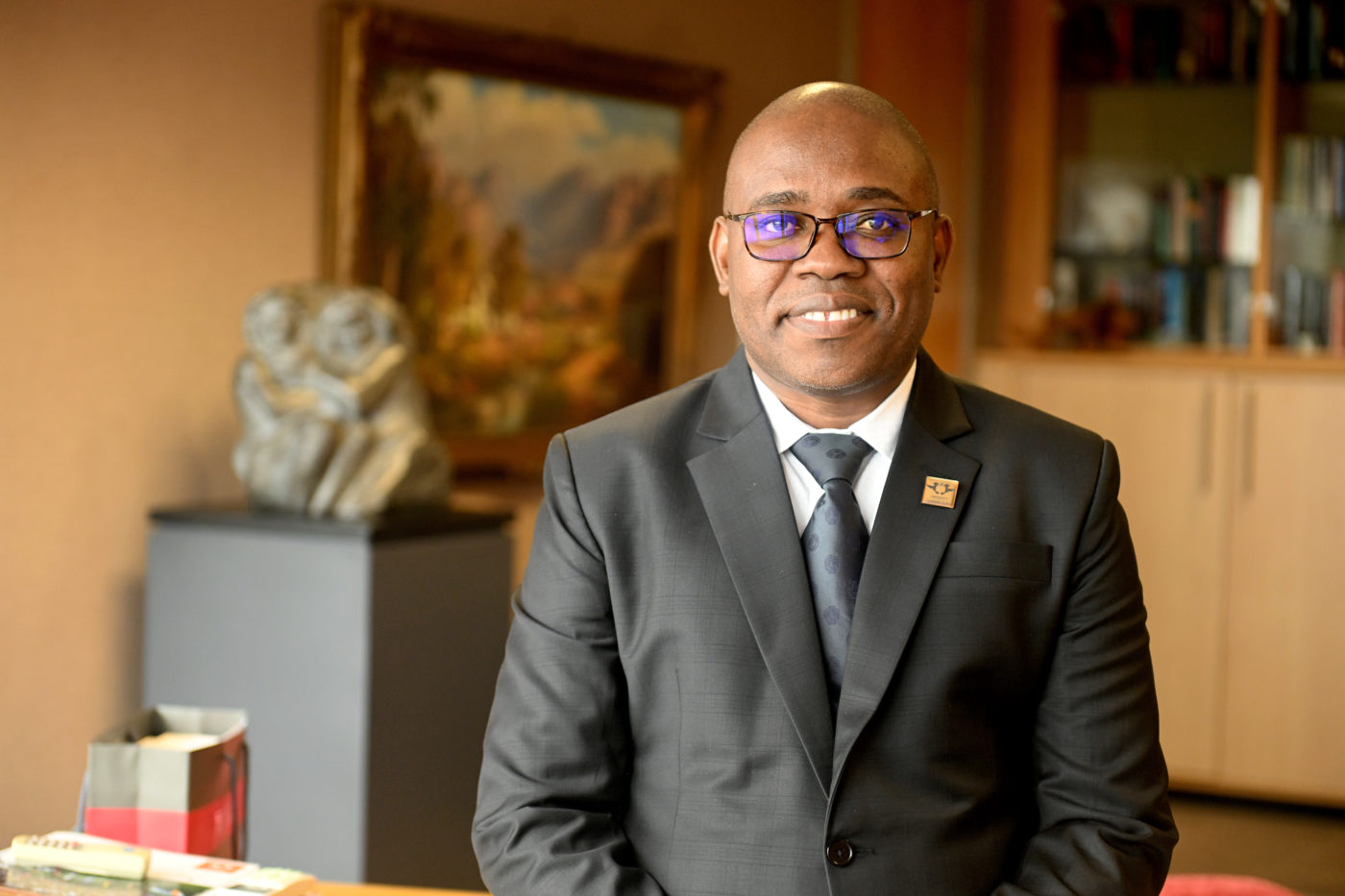
The University of Johannesburg (UJ) has taken a significant step towards strengthening its international partnerships following a high-level engagement between Vice-Chancellor and Principal, Professor Letlhokwa George Mpedi, and the High Commissioner of Canada to South Africa, His Excellency James Christoff.
The meeting, held at the UJ School of Tourism and Hospitality on the University’s Bunting Road Campus on 15 June 2026, explored opportunities to deepen collaboration between UJ and Canadian institutions in areas including research, innovation, commercialisation, student mobility and strategic global engagement.

Joining the discussions were Her Excellency Avril Espinosa-Malpica, First Secretary and Trade Commissioner at the High Commission of Canada, and Professor Refilwe Phaswana-Mafuya, UJ’s Deputy Vice-Chancellor for Research and Innovation.
Welcoming the delegation, Professor Mpedi reflected on UJ’s rapid rise as a leading African university distinguished by academic excellence, research productivity, innovation and societal impact.
“UJ is a relatively young institution that has established itself as a high-performance university with world-class teaching, learning, research and innovation infrastructure,” he said.
Professor Mpedi highlighted the University’s flagship research centres, growing international footprint and commitment to addressing local and global challenges through impactful scholarship and partnerships. He emphasised that sustainable international collaborations are ultimately built on strong people-to-people relationships.
“Arts and culture remain the highest form of diplomacy,” he noted, underscoring the role of universities in fostering mutual understanding and global cooperation.
The Vice-Chancellor also highlighted UJ’s existing collaborations with several Canadian universities, including Carleton University, the University of Toronto, the University of Alberta and the University of Ottawa. These partnerships currently support joint research initiatives, co-supervision of postgraduate students, student exchanges and collaborative funding opportunities.
High Commissioner Christoff reaffirmed Canada’s commitment to strengthening relations with African universities, recognising higher education as a critical driver of innovation, commercialisation and solutions to contemporary global challenges.
He commended UJ’s recent diplomatic engagement with the Haitian Embassy, describing it as an inspiring example of how universities can contribute meaningfully to international relations and cultural diplomacy.

The High Commissioner further emphasised Canada’s growing strategic interest in Africa and acknowledged South Africa’s important role in advancing this engagement.
“South Africa’s leading universities, talent and research capabilities make it a key partner as Canada repositions and expands its engagement across the African continent,” he said.
Discussions also identified opportunities to expand collaboration in mining and critical minerals, innovation commercialisation, governance, and research addressing emerging geopolitical challenges.
Both parties agreed on a number of follow-up actions aimed at formalising and strengthening the relationship. These include reviewing the status of any existing institutional agreements between UJ and the High Commission of Canada, conducting a comprehensive audit of current UJ-Canada partnerships, and identifying opportunities through international networks involving both Canadian and South African institutions.
The High Commission will also explore opportunities to co-host a celebration of UJ-Canada partnerships, involving partner institutions and stakeholders from both countries. In addition, discussions will continue around postgraduate scholarship opportunities, exchange programmes and potential support for doctoral students through Canadian funding initiatives.
The meeting concluded with a shared commitment to strengthening collaboration in ways that unlock new opportunities for joint research, innovation, funding and student mobility while contributing to the development priorities of both countries.