Early in Professor Lia Hewitt’s career, a puzzle presented itself. If two managers sit in the same corporate boardroom, and they have the same degrees, the same budgets, and the same market conditions, which one would be the better leader? Which one’s organisation would perform better?
The factors she could measure would be the same for both. Yet in a crisis, one firm would develop in a formidable organisation, while the other would stumble.

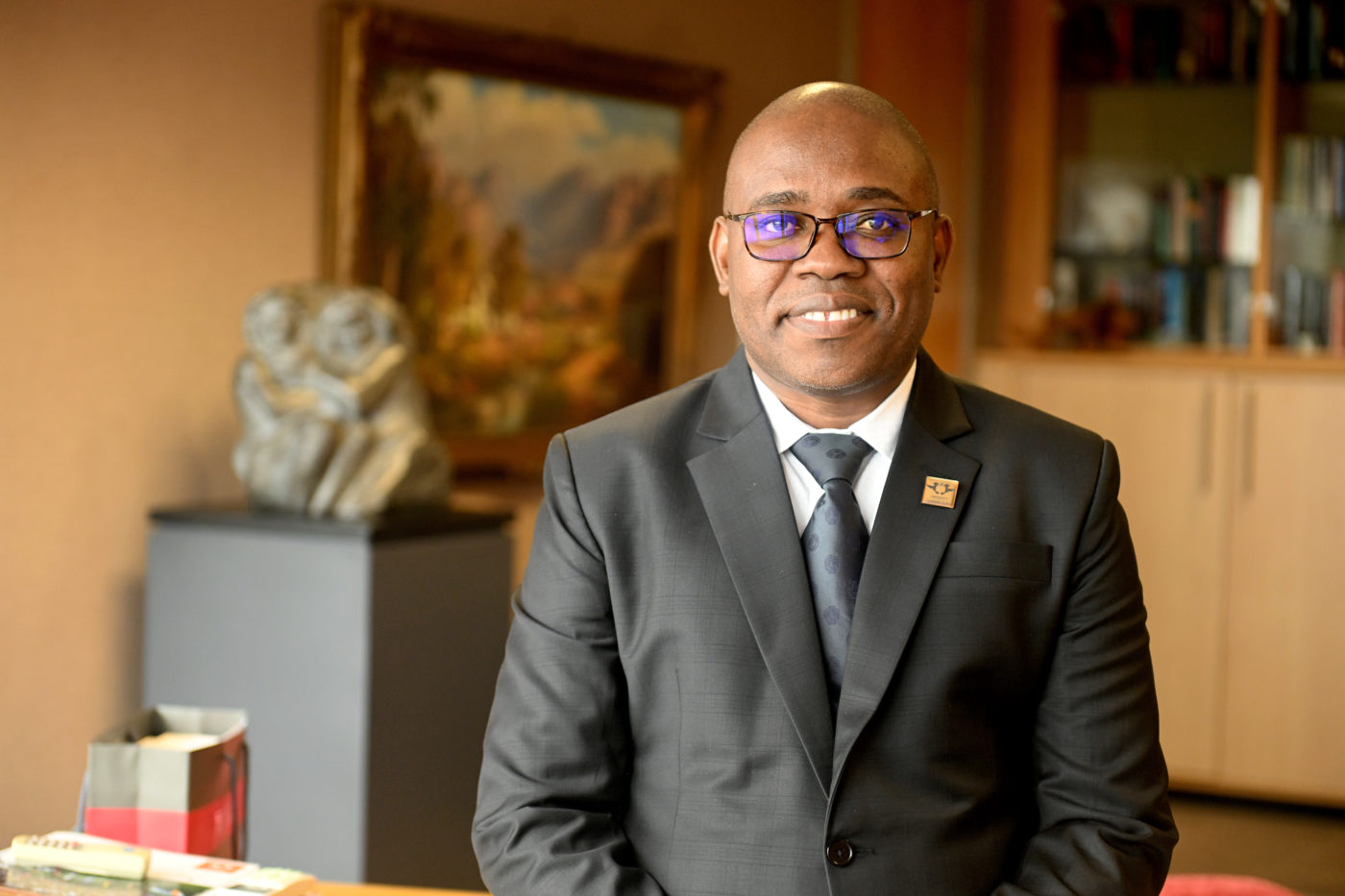
Prof Lia (Magda) Hewitt is a Professor in the Department of Industrial Psychology and People Management in the College of Business and Economics, at the University of Johannesburg.
She went looking for answers in the conventional places. At the time, the dominant model pointed to programmes, competencies, and getting appointments right. Leadership courses, assessments, pipelines, and interventions were the other obvious variables to look at.
She found that all this explained almost nothing about why one person thrives, while another fails. But something else did.
Prof Hewitt was speaking at her professorial inauguration on Wednesday 29 July, at the UJ Kingsway Campus.
“The variable our event-based models keep missing is identity. Leadership development is not a skills-building event, a programme, or a position. It is a lifelong process of identity formation,” she says.
“Leadership is forged under conditions of difficulty. Context shapes it, and it requires regular reflection to be sustained. The leaders in my data were distinguished by who they had become. By what they had been required to withstand in the becoming,” she adds.
Since that early incident, Prof Hewitt’s work has shown that this is not a soft claim. It is a testable, theoretically grounded proposition. It spans her work on entrepreneurial leadership, coaching, Afrocentric models, women’s leadership, and the supervision of 60 master’s and 15 doctoral graduates.
In her doctoral studies published in 2011, Hewitt discovered that how a leader acts, is fundamentally inseparable from how they see themselves. Leaders take initiative and embrace risk not because their external conditions are perfect, but because of who they understand themselves to be.
This stands in stark contrast to popular Western theories, where leaders could be described as ‘serenely experimenting’ with different versions of themselves in safe, well-funded environments, she says.
“In emerging economies like South Africa’s, there is no luxury of safety. Instead, identity is forged in the fires of constraint, scarcity, and risks that are often existential.
“What my data show is that identity is not formed through low-stakes experimentation. It is formed through high-stakes endurance. This is why resilience cannot be separated from identity,” she adds.

Unfortunately, just surviving their on-the-job experiences will not be enough for leaders. To stay grounded in their high-pressure roles, they have to move beyond busywork. They need to learn how to reflect on their experiences on a regular basis. They also need to seek out coaching and community, build resilience, and learn who they really are, she says.
“We know leadership programmes have modest, often short-lived effects. We know on-the-job experience is developmentally powerful but wildly unreliable. Some leaders grow enormously from a hard assignment, while others simply endure it and emerge unchanged,” she says.
In hustle culture, resilience is often reduced to a cliché about bouncing back from a setback. Prof Hewitt proposes a much more demanding definition. Resilience is the sustained capacity to construct meaning from a mess and to stay ‘identity-coherent’ – even when circumstances are about to pull the leader apart.
This brand of resilience is a necessity in Africa, where resources aren’t sitting there waiting to be accessed. In these environments, leaders cannot wait for help. They must generate their own resources through the sheer strength of their relationships.
The reality of professional development is that the most significant growth usually happens when no one is watching, she says. Hewitt remembers that her development took place during long, quiet years with no visible recognition.
“Leadership development is like the lifecycle of a star in many ways. The light of a star can take thousands of years to reach the eye of an observer. When you finally see that star, you are not watching it begin to shine. You are watching light that left it long ago, while no one was looking,” says Hewitt.
“Resilience is not the thing that earns the reward. It is the thing that remains when the reward is uncertain, which, for most of a career, it is,” she adds.
In the end, leadership built on resilience is not the corner office or the fancy title. It is about the person a leader was forced to become while no one was looking, says Prof Hewitt.