Johannesburg – the metropolitan city and the largest economic hub in Africa – turns 140 years this year! For a place that was only “a veld dotted with rocky outcrops, scrubby bush and a network of streams”, it is hard for even those immersed in its history to believe that it has developed into a major commercial and industrial metropolis it is today. Joburg, or Jozi, as it is fondly known, is a popular destination for millions of people from across Africa and parts of the world in search of dreams, jobs, and bright futures, much like a bright light calls to moths at night. It is this pulling power that brings both the city’s vibrant energy.
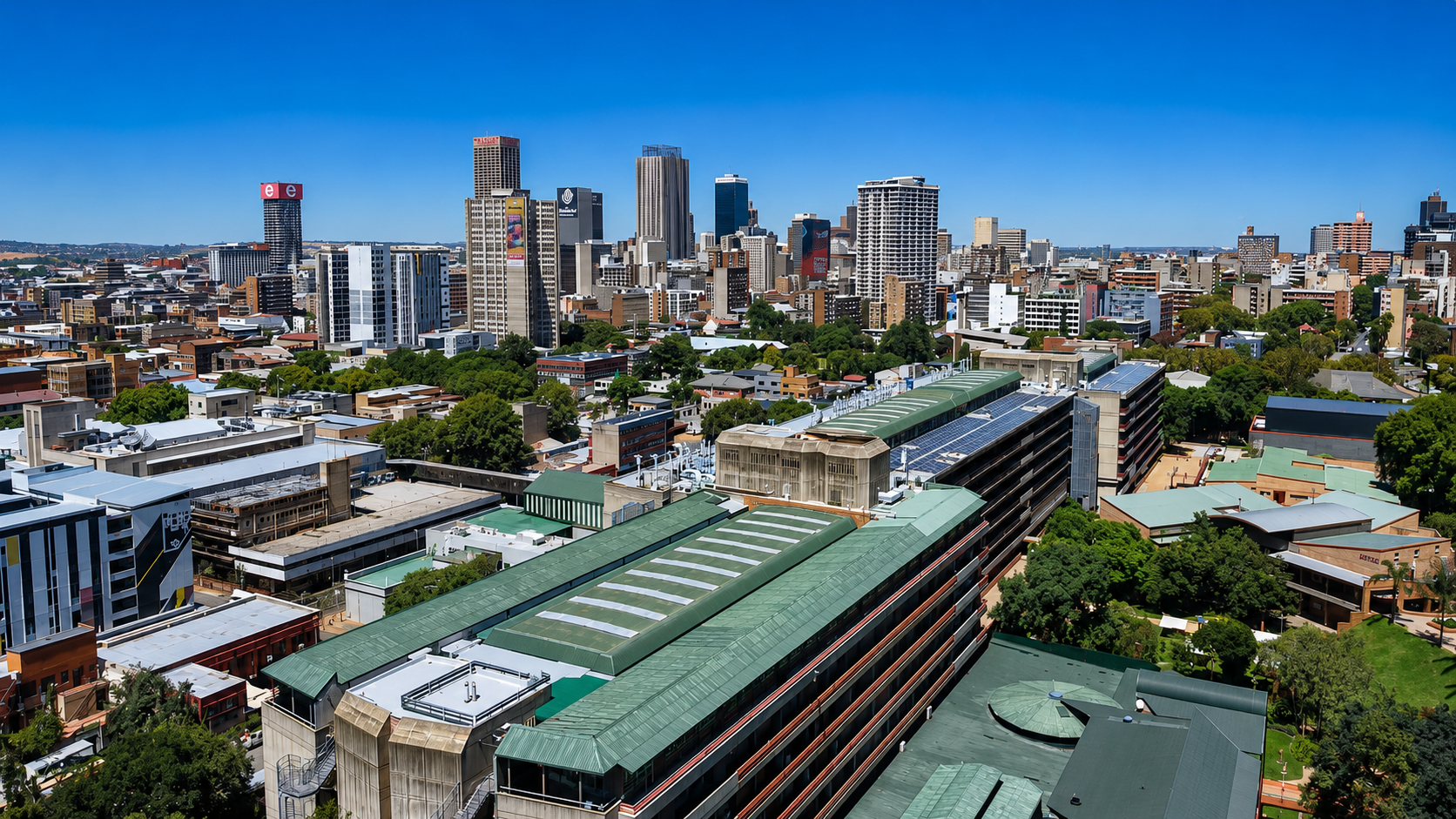
Those credited with the discovery of gold towards the close of the 19th century – first in 1884 and later in 1886, to be precise – would never have imagined the rapid developments that would arise from their sightings. That ushered in a new wave in major developments that would over decades transform the town into a mega city in Africa. While the ‘City of Gold’ still reflects the vestiges of its mining past, because of the mine dumps sprouting across some of its suburbs, it has developed into a dynamic modern city with a distinctive identity.
Johannesburg is not known as the melting pot for nothing. Apart from the economic activities, Johannesburg is a place where arts and cultures converge, featuring key creative spaces like the Joburg Theatre, the University of Johannesburg’s Art Centre, Wits Art Museum, and the Apartheid Museum, to mention a few. In these spaces, residents and tourists can immerse themselves in the city’s artefacts and history, including its gold rush origins and political evolution through the ages. Atop a hill in Braamfontein is the Constitution Hill, the city’s very first prison and the home to the apex court in the country. Each day, tourists flock here to catch glimpses of what is behind its walls, from the prison museum that once housed the dreaded Old Fort, Number Four, and the Women’s Gaol.
All this is testament to the extent to which the discovery of gold led to the development of a new city, and which changed the course of Southern African history in a way that was unimaginable. Of course, it would be remiss to reminisce about the history of Johannesburg without mentioning a university whose name is synonymous with the city. Not far from the inner-city, in the western direction, lies the University of Johannesburg. Now confirmed as the leading University in South Africa and on the African continent by various global rankings, UJ’s development has been just as meteoric as the city it is named after. The similarities are also stark in that UJ is the home to a faculty that offers students training in cutting-edge mining to develop their skills and advance their knowledge.
Few institutions have evolved alongside this changing landscape as closely as the University of Johannesburg’s (UJ) Department of Mining Engineering and Mine Surveying. Through its graduates, research and industry partnerships, the Department has continually adapted to the changing needs of one of the world’s most important industries, helping shape South Africa’s mining sector while contributing to Johannesburg’s evolution from a mining settlement into Africa’s economic powerhouse. The Department’s evolution mirrors that of the city and the mining industry itself. Building on a legacy while embracing the future, it now stands at the forefront of sustainable mining, advancing research, developing future-ready graduates and pioneering technologies that are helping transform mining into an industry where innovation, sustainability and knowledge are as valuable as the minerals beneath the earth.
Extending this legacy of innovation and collaboration, UJ and Sibanye-Stillwater have established the UJ and Sibanye-Stillwater Centre for Sustainable Mining, a collaborative initiative dedicated to advancing sustainable mining through research, technological innovation and capacity development. At the heart of the Centre is the Simulacrum Mining Facility on UJ’s Doornfontein Campus, an advanced underground mining simulation environment that combines a physical mine simulation with cutting-edge virtual reality technologies.
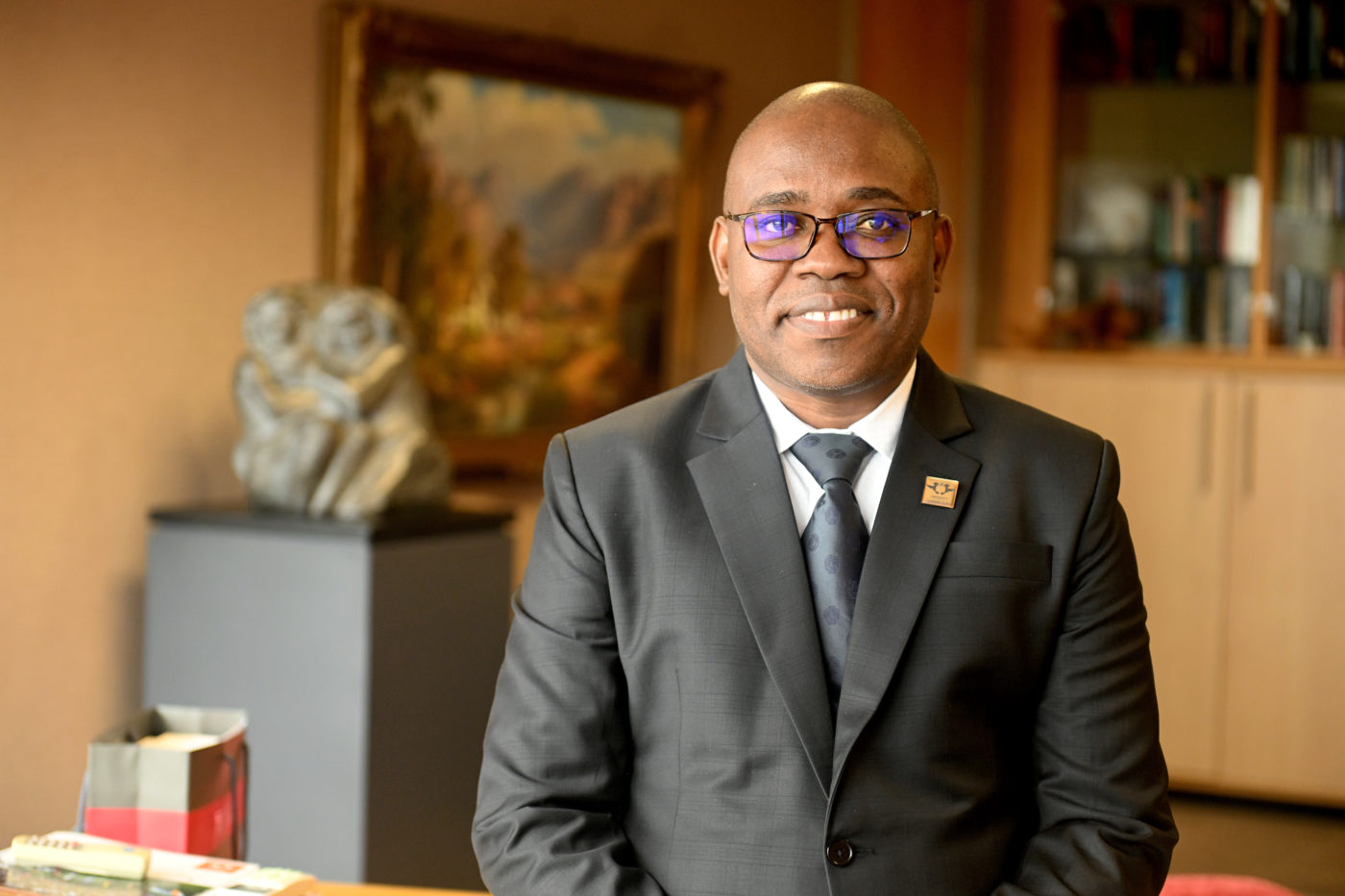
Professor Letlhokwa Mpedi, Vice-Chancellor and Principal of the University of Johannesburg (UJ), draws similarities between Johannesburg and University. “Johannesburg was built on gold, but its future will be driven by knowledge. As we celebrate 140 years of the city and 100 years of mining engineering at UJ, we are reminded that the next chapter of mining will depend not only on the resources beneath the earth, but on the people, technologies and ideas that transform the industry.”
To celebrate the city’s 140th journey, Prof Mpedi sat down with Hoepie, the University’s official mascot, for the latest episode of The Hot Talk. He said what makes Johannesburg truly extraordinary is not only its rich history but, above all, its people.
“Johannesburg is a city where cultures converge, ideas flourish, entrepreneurs innovate, artists inspire, and communities work together to shape a future filled with hope and opportunity. As the University of Johannesburg, our identity is inseparable from the city whose name we proudly bear. Johannesburg is more than our home; it is part of who we are.”
Prof Mpedi added that the city’s entrepreneurial spirit, diversity, innovation and resilience continue to inspire our mission of transforming lives through education, research and meaningful societal impact. “Together, we are preparing graduates and leaders who will not only shape Johannesburg but also contribute to the advancement of Africa and the world. As we commemorate this significant milestone, we honour the rich history that has brought us to this moment while looking ahead with confidence and optimism to the opportunities of the future.”
Happy 140th Anniversary, Johannesburg! May your next chapter be even more prosperous, inclusive and impactful. Here’s to the city that continues to inspire dreams, ignite innovation, and remind us that anything is possible!