The Gauteng Department of Environment, in collaboration with the University of Johannesburg’s Process, Energy and Environmental Technology Station (UJ PEETS), hosted the 8th Annual Gauteng Environmental Research Symposium (GERS VIII) on 16–17 September 2026, bringing together government, academia, industry, researchers and civil society to explore practical pathways towards the realization of sustainability and resilience in the province.
Held under the theme “Advancing Sustainability Transitions and Resilience in Gauteng Through Adaptive Governance,” the two-day symposium provided a platform for stakeholders to share best practices, reflect on progress made since previous engagements, interrogate emerging and lived environmental challenges and, importantly, consider how research, policy and innovation can translate into feasible actions to spearhead Gauteng province as a sustainable and resilient province.
From conversation to implementation
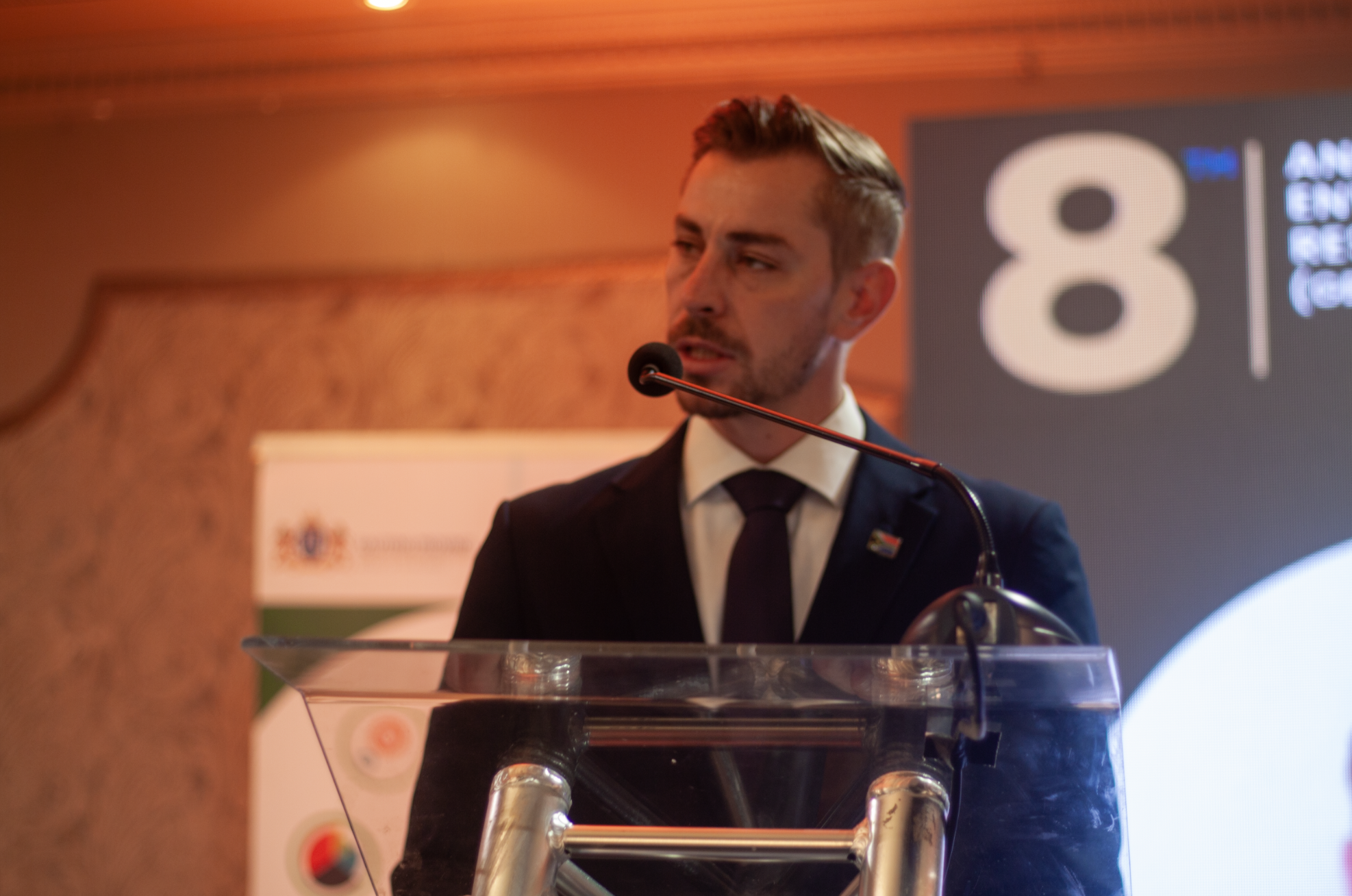
Opening the symposium, MEC for Environment Ewan Botha urged environmental stakeholders to move beyond repeated discussion and focus on meaningful implementation strategies.
He acknowledged the value of the symposium’s unified voice, while emphasising that existing efforts must be expanded to deliver tangible outcomes. He called for stronger collaboration through the quadruple helix, bringing together government, academia, industry and civil society. These sectors, he stressed, cannot continue operating in silos. Their key performance indicators should be coordinated to maximise collective impact.
This call for cross-sector collaboration was reinforced throughout the symposium’s discussions on adaptive governance.
The underlying message was clear: if Gauteng is to respond effectively to complex and interconnected environmental challenges, the people and institutions holding different pieces of the solution need to be brought together around the same table. As discussions around the Transformative Theory of Change highlighted, a theory is only meaningful when it results in actual change. The focus therefore needs to extend beyond developing plans and frameworks and move towards creating mechanisms that allow those plans to be implemented, tested and adapted.
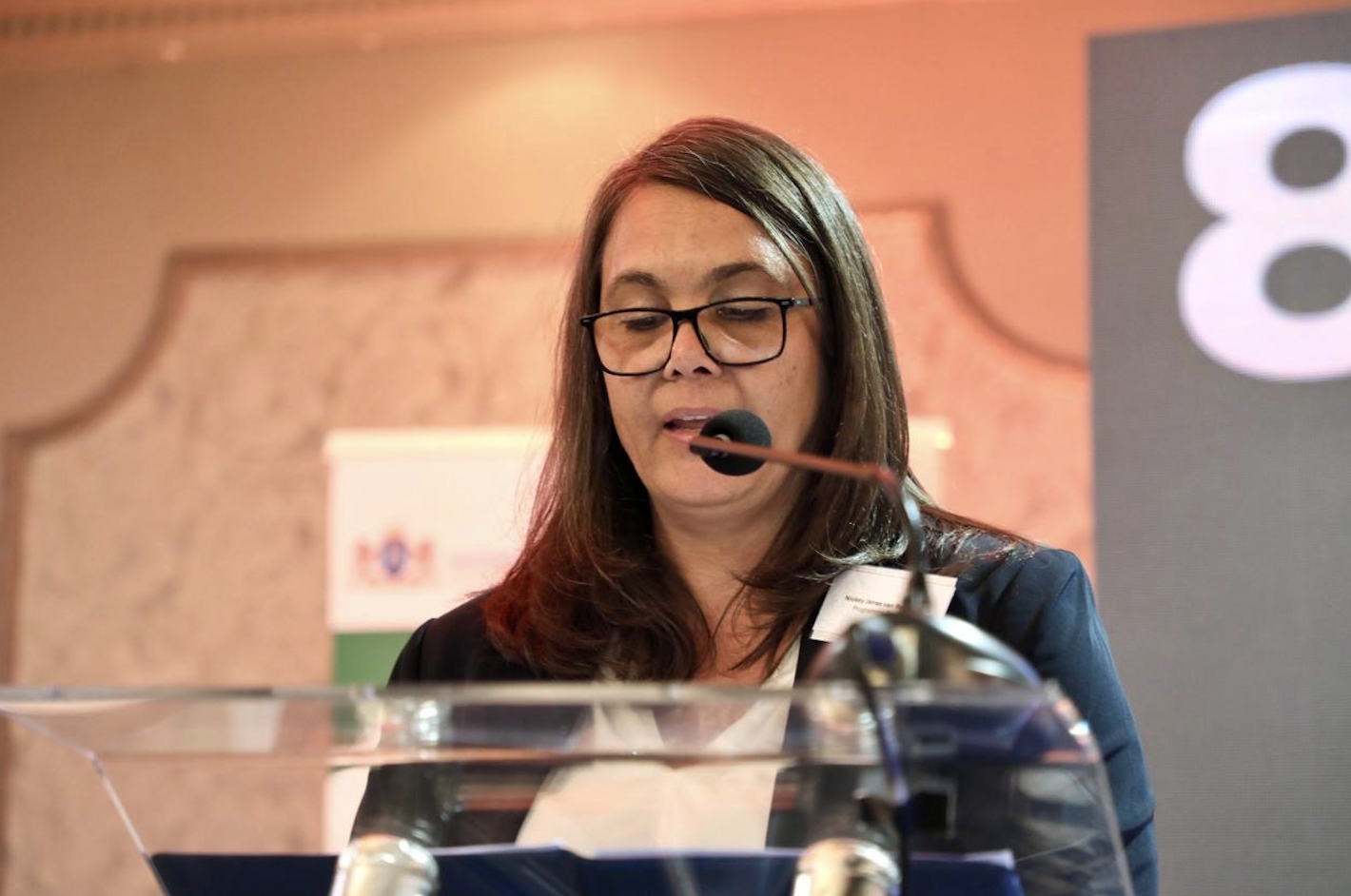
Ms Nickey Janse van Rensburg, UJ PEETS Technology Station Manager, reinforced this message by urging participants to assess progress and identify practical actions that could be implemented.
She encouraged participants to engage actively, test proposed solutions, and use the symposium to identify the next steps required.
How quickly can institutions adapt?
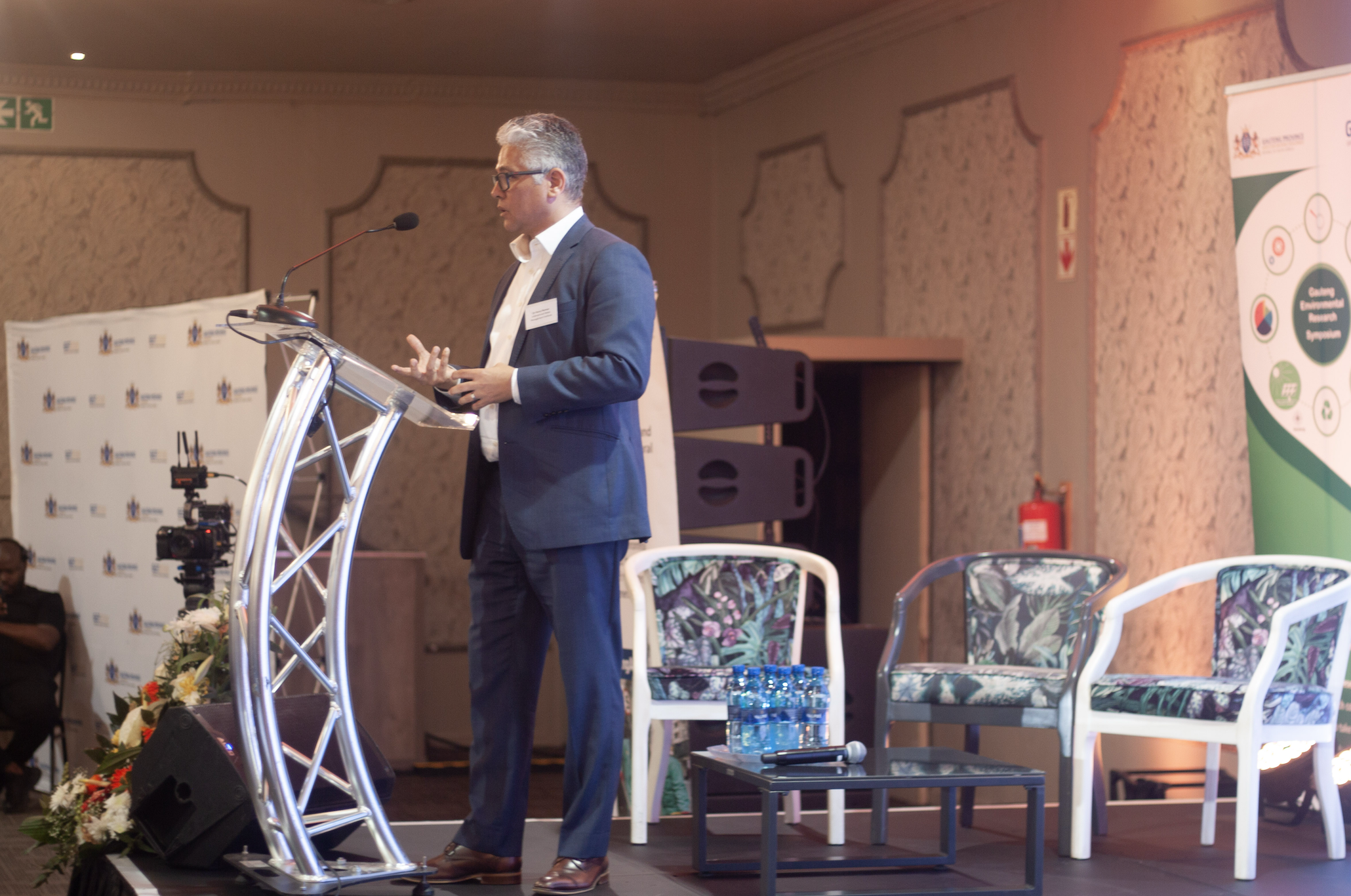
Delivering the keynote address, Dr Henry Roman, Regional Representative of the International Water Management Institute (IWMI), challenged participants to reconsider how institutional success is measured.
Rather than focusing solely on the quality of plans and strategies, he posed a more fundamental question: “How quickly can institutions adapt?”
The question speaks directly to adaptive governance, particularly in an environment where climate pressures, environmental degradation, resource constraints, and social needs continue to evolve. An example was presented on how projects fail due to overdependency on funding, where projects barely progress after the drying up of funding from pilot stage to scaling up – a sentiment expressed by other presenters at the symposium.
For Gauteng, institutions’ ability to respond, learn, and adjust will increasingly determine whether sustainability strategies translate into meaningful resilience on the ground.
Building resilience through collaboration
The symposium demonstrated the value of bringing diverse sectors together to examine environmental challenges from different perspectives. Researchers contribute evidence and innovation; government provides policy and institutional frameworks; industry can support implementation and scale; and civil society provides critical insight into community realities.
The challenge now is to strengthen the connections between these contributions and forge more collaborations.
GERS VIII therefore served not only as a platform for presenting research, but as an opportunity to consider how knowledge can inform decisions, how institutions can become more adaptive and how collaboration can translate environmental ambitions into practical outcomes.
As Gauteng navigates climate change, water insecurity, air pollution, biodiversity pressures and the transition towards more sustainable economic systems, resilience will depend not only on the strength of individual plans, but on the ability of institutions and stakeholders to learn, collaborate and adapt.