The University of Johannesburg (UJ) is empowering residents living along the Klip River in the city to address the environmental crisis near their homes.
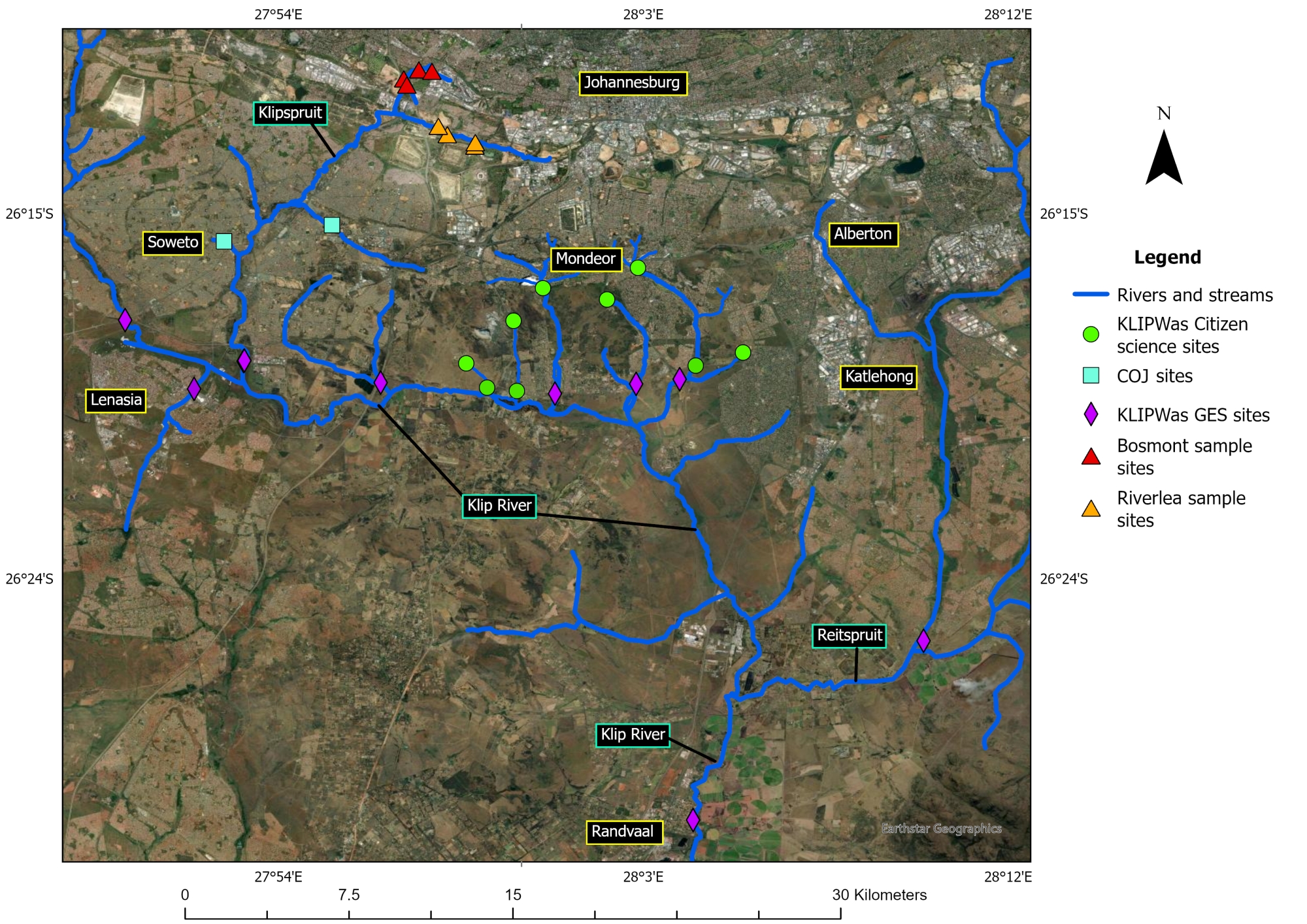
UJ’s Process Energy and Environmental Technology Station (PEETS) is gradually expanding a project along the Klip River, which flows through Bosmont, southern Johannesburg, Riverlea, Soweto, Lenasia, Eikenhof and Midvaal.
PEETS provides enterprises and community organisations along the river and its tributaries with scientific data on local water and air quality. The data can then support community for remedial action from the municipalities involved.
The project started at the Bosmont Spruit.
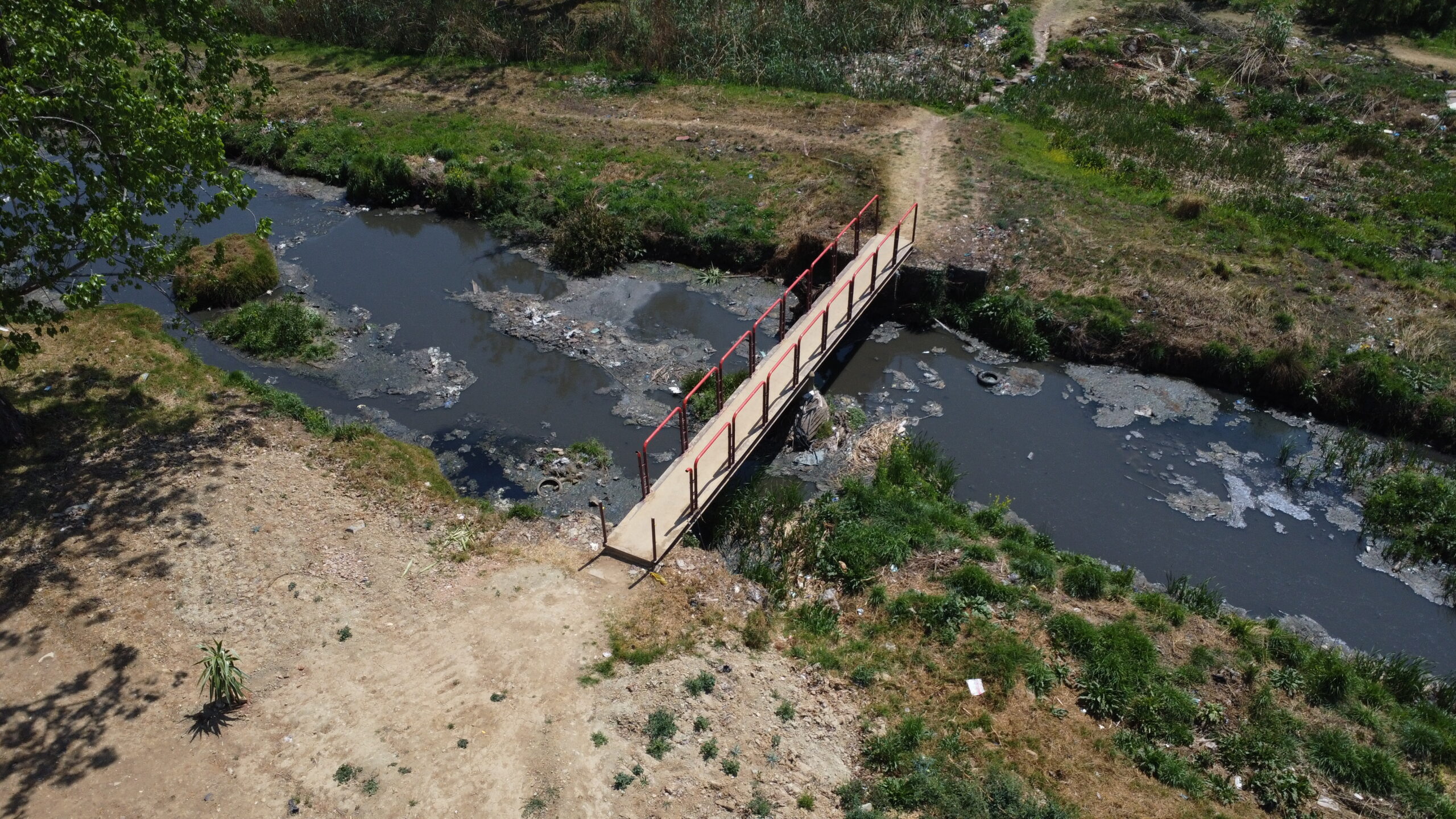
While collecting water samples in Bosmont Spruit, PEETS staff found the waterway in a state of collapse. “We found the spruit water stagnant and stinking at blocked culverts. It was dirty, not suitable for kids to even be close to, to play,” says Mr Pangi Jiyane, PEETS researcher.
Pollution is affecting the daily lives of the Bosmont community and surrounding businesses. Residents cannot play or swim in the spruit. Even the grassy areas around the water are dangerous for children. A soccer field directly behind the spruit floods during the rainy season, with toxic smelly water flowing onto it.
Downstream in the stretch from Soweto to Midvaal, ceremonies such as baptisms and healing rituals are unsafe because of all the bacteria, says Dr Kousar Hoorzook.
Dr Hoorzook is Programme Manager: Water Quality and Management at PEETS.
The people of Bosmont are very aware of the terminal state of their spruit but cannot do much about it, says Dr Hoorzook.
“The Bosmont Spruit is highly polluted and they needed scientific data. They did not have the scientific data to go to the municipality to say we need help,” she adds.
This is where a non-governmental organisation called Community Green Projects (CGP) stepped forward and asked PEETS for evidence-based data. In 2022, Dr Hoorzook took on the project at PEETS.
Water testing confirmed the critical state of the Bosmont Spruit. High Total Organic Carbon levels signal low oxygen, making the stream nearly uninhabitable for fish, frogs, and insects. As a tributary of the Klip River, its pollution impacts the entire downstream ecosystem.
A year-long, four-season collaboration between PEETS and the Bosmont community followed. Dr Hoorzook guided the collection of water samples from several sites on the Bosmont Spruit. She also coordinated the analyses done by the UJ Water and Health Research Centre lab (WHRC) and commercial, accredited laboratories.
The analyses found thousands of microorganisms in the Bosmont Spruit water, including several that the World Health Organization classifies as critical risks. These included the presence of ESKAPE pathogens, which cause disease to spread quickly while being resistant to multiple antibiotics. Among them were Escherichia coli (causes cramps and diarrhoea) and Klebsiella pneumoniae (causes pneumonia).
During the project, the PEETS team identified four primary sources of pollution impacting the Bosmont Spruit. These include wastewater treatment failures that allowed raw sewage into the water, industrial activities along the banks that added chemical waste, and legacy mining from nearby mine dumps (mining slime dams).
“We also found evidence of medical waste, food waste, all of that in the spruit,” says Dr Hoorzook.
Meanwhile, downstream from the Bosmont Spruit and the Klip Spruit, in the Klip River itself, another environmental challenge was unfolding for a Khoisan community living next to the river. Their ancestors used the river for drinking water and grazing livestock for generations. However, that is no longer possible, says Mr Andrew Barker.
“The Klip River is now so poisonous that it is dangerous for humans and animals, and the loss of this clean source of water has changed their way of life, he adds.
Barker is the chairperson of the community organisation Klipriviersberg Sustainability Association (KlipSA) and a former town planner for the southern areas of Johannesburg.
KlipSA requested water analyses from PEETS. The resulting scientific data is making a massive difference, says Barker.
“The facts and figures, the realistic, scientifically based information, means we can focus the KlipSA community projects where we need to focus,” he says. “We can move from reporting the past to becoming managers of the future,” he adds.
Though the Klip River is not a major waterway, the pollution, toxins and disease-causing pathogens in it impact a much larger region than just Gauteng, says Barker.
“The Klip River joins the Vaal below the Vaal Dam, which flows into the Orange River further downstream. This water that we are looking after eventually reaches all the communities, farmers, and municipalities along the way.”
Back at the Bosmont Spruit, the next phase of the PEETS project will join forces with the National Cleaner Production Centre (NCPC) and the City of Johannesburg water task team, says Dr Hoorzook.
The PEETS team plans an industry engagement to present its findings to local business owners. That will be followed up by a survey among businesses near the stream to help them reduce, reuse and recycle their waste. By working directly with sources of pollution, the researchers hope the waterway can in future become clean enough for children to play in once again.