From artificial intelligence and digital learning to student governance and campus inclusion, a delegation of University of Johannesburg (UJ) student leaders has gained first-hand exposure to different approaches to higher education during an international leadership exchange programme in China.
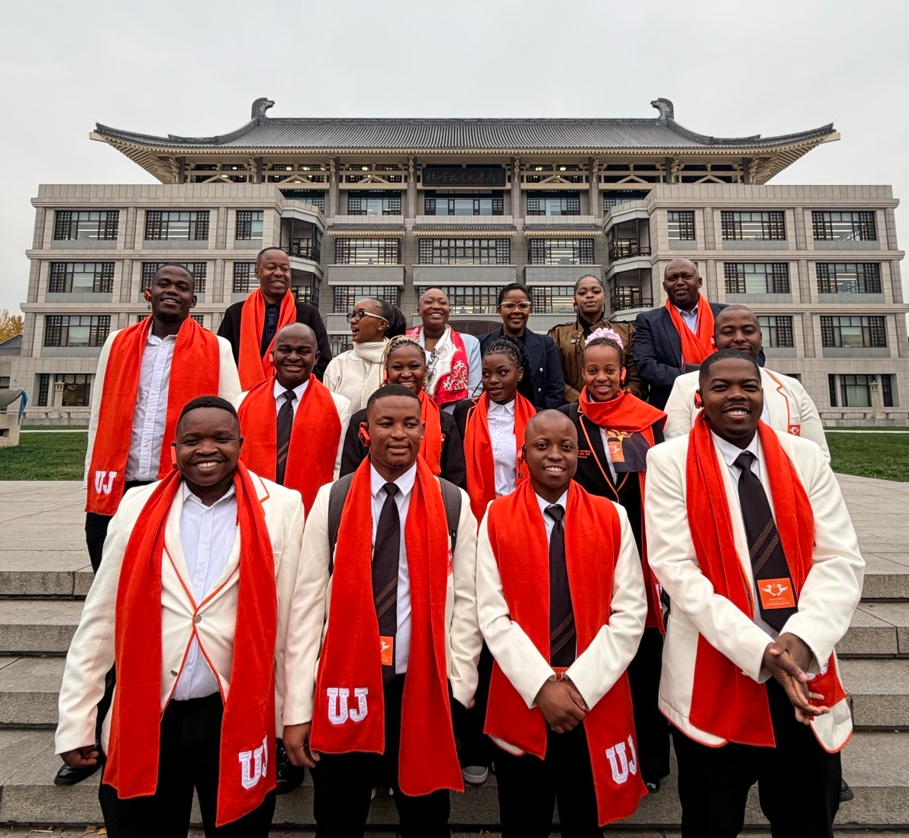
The delegation of 12 student leaders, accompanied by three staff members, travelled to Beijing and Shanghai for the Global Leadership Student Exchange Programme, an annual initiative led by UJ’s Student Affairs division to broaden student leaders’ perspectives through engagement with international universities, leadership structures and innovation ecosystems.
The programme included engagements with three of China’s leading higher education institutions: Peking University, Tsinghua University and Shanghai Jiao Tong University. These engagements provided opportunities to explore how universities are responding to the changing demands of higher education, particularly the integration of technology, artificial intelligence and digitalisation into teaching, learning and the broader student experience.
At Peking University and Tsinghua University in Beijing, the delegation explored different approaches to student governance, representation and campus life. The engagements included exposure to student centres, libraries, innovation hubs, residence facilities and digital learning environments, as well as classroom observations focusing on AI-enabled teaching methods and hybrid learning technologies.
UJ Student Affairs and UJ SRC delegation in China
The students also engaged with student leadership structures, providing an opportunity to compare approaches to student representation, residence leadership and campus participation in China and South Africa. A visit to the South African Embassy further added an international relations dimension to the programme.
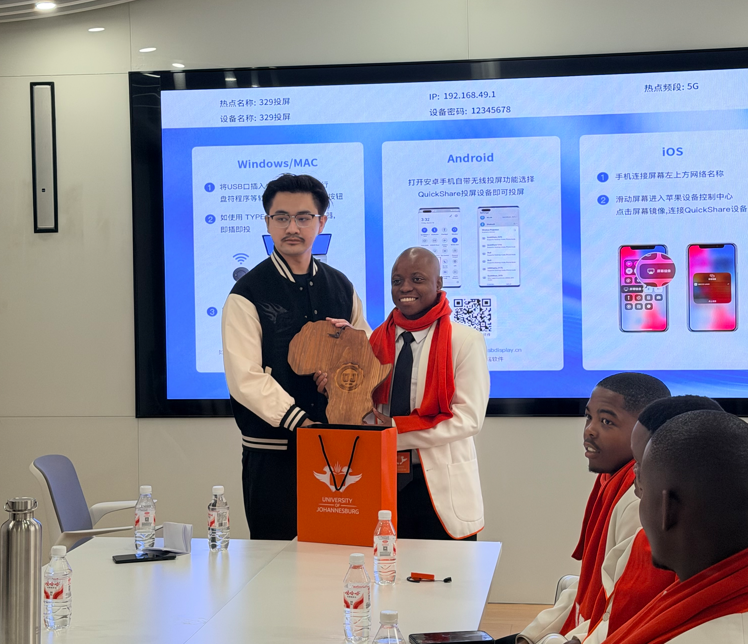
In Shanghai, engagements at Shanghai Jiao Tong University focused on internationalisation, global student mobility, student support systems, inclusion and multicultural engagement. A joint workshop with Chinese student leaders provided a platform to exchange perspectives on common challenges facing universities, including student wellbeing, campus inclusion, student activism and effective student participation.
Beyond the university environment, the delegation gained exposure to China’s innovation and economic landscape, including smart-city infrastructure, technological development and emerging innovation ecosystems. The journey between Beijing and Shanghai by high-speed bullet train also offered an opportunity to experience China’s advanced transport infrastructure.
The China exchange forms part of UJ’s annual Global Leadership Student Exchange Programme, through which destinations are selected to expose student leaders to different international environments and approaches to leadership. In 2024, the programme took participants to the University of Cincinnati in the United States, while the latest exchange provided an opportunity to engage with China’s higher education and technological landscape.
Dr Nell Ledwaba, Senior Director of Student Affairs at UJ, says international exposure is an important investment in developing student leaders who can engage with global perspectives while remaining responsive to the needs of their own university community.
“International exposure is an important part of preparing student leaders for the complexities of contemporary higher education. China offered a particularly valuable learning environment because of its advances in technology, innovation and the transformation of its higher education landscape. Engaging directly with leading Chinese universities and their student leadership structures gave our students an opportunity to examine different approaches to governance, student participation and the use of technology to enhance the university experience.
“The China exchange is centred on Chinese higher education systems, technological innovation and student leadership practices. We want our students to return not simply with memories of an international trip, but with new knowledge, networks and practical ideas that can strengthen student leadership and enrich the broader UJ student experience,” says Dr Ledwaba.
A key objective of the programme is to translate international exposure into practical value for UJ. The experience provided participants with opportunities to develop intercultural communication skills, broaden their understanding of global student leadership and governance, and reflect on approaches that could be adapted to the South African higher education context.
Dr Ledwaba concludes: “Through this annual initiative, UJ continues to strengthen the international dimension of student development, recognising that preparing future leaders requires opportunities to engage beyond national borders, learn from different institutional experiences and develop the confidence to navigate an increasingly interconnected world. Ultimately, the value of the exchange lies not only in the international exposure itself, but in the perspectives, knowledge and relationships that student leaders can bring back to UJ and apply in strengthening student representation, campus inclusion and the overall student experience.”