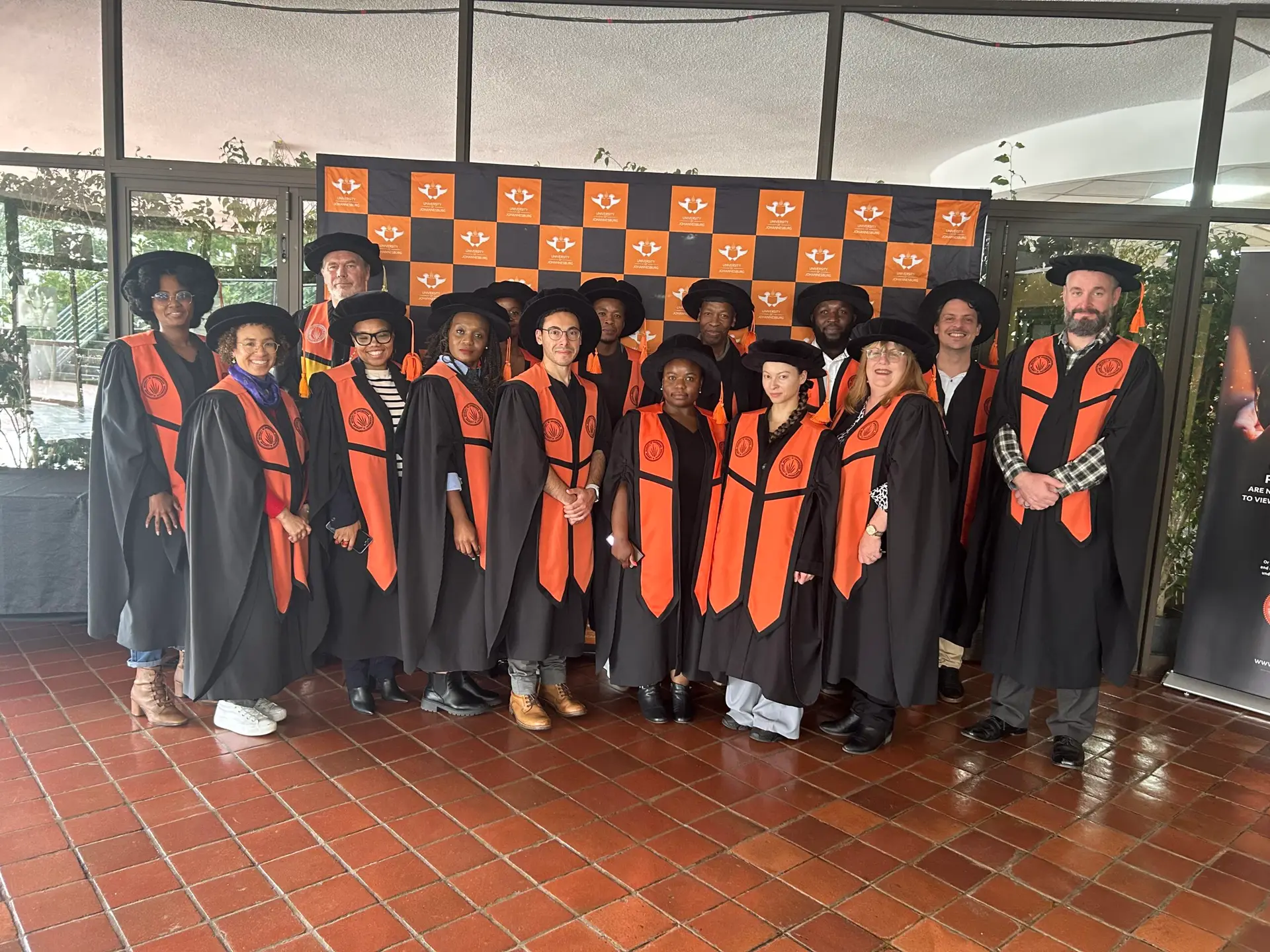
To enhance the professional competencies of secondary school educators, the Department of Geography, Environmental Management & Energy Studies in the Faculty of Science, developed a series of specialized short learning programmes (SLPs). Throughout 2025, four distinct SLPs were successfully offered, focusing on critical pedagogical areas: Mapwork, Geographical Information Systems (GIS), Climatology, and Geomorphology. Participating teachers were awarded their official certificates at a formal graduation ceremony held at the UJ Auditorium.
Addressing National Educational Challenges
The development of these short learning programmes was driven by urgent academic needs highlighted in the National Senior Certificate Examination Diagnostic Reports. These reports consistently indicate that learners continue to experience difficulties in key areas of Geography, including map calculations, map interpretation, and Geographic Information Systems (GIS), as well as foundational concepts in Climatology and Geomorphology. In direct response to these specific challenges, the SLPs were designed to support Geography teachers in upgrading their subject knowledge and to expose them to innovative classroom technologies.
Demonstrating deep dedication to their professional growth, the participating teachers attended rigorous classes on Saturdays and during school holidays directly at the department. Throughout the duration of the programme, educators completed a comprehensive range of intensive assessment tasks, which culminated in a final summative assessment. A total of 142 teachers successfully fulfilled all criteria to complete the SLPs, with over a quarter (25.3%) of the cohort attaining distinctions in their respective fields of study.
Strategic Alignment with UJ Strategy 2035
This extensive teacher upskilling initiative falls directly in line with the UJ Strategy 2035, which places a profound emphasis on generating tangible societal impact. By empowering educators with advanced technological expertise and deeper content mastery, the university translates academic excellence into a practical community benefit.
Dr Thea Schoeman, Head of the Department, emphasized this impact by stating, “As Head of the Department of Geography, Environmental Management & Energy Studies, it has been both a professional responsibility and a personal commitment to lead the development and delivery of programmes that strengthen the competencies of Geography teachers. The training and upskilling of teachers are not merely an academic exercise; it is a critical investment in the quality of education and, ultimately, in the future of our society. Through the short learning programmes (SLPs) we designed and presented, we sought to address persistent challenges identified in national diagnostic reports, particularly in areas such as mapwork, Geographic Information Systems (GIS), Climatology, and Geomorphology. These are not only foundational components of the Geography curriculum but also essential skills for understanding and responding to real-world environmental and spatial challenges.”
Dr Schoeman added that by equipping teachers with the necessary knowledge and tools, this enables them to be an even greater asset to their learners in the classroom.
“By equipping teachers with both deeper content knowledge and exposure to current technologies, we empower them to deliver more effective, engaging, and relevant lessons in their classrooms. What has been especially encouraging is witnessing the transformation in the teachers who participated in these programmes. Many have expressed renewed confidence in teaching complex topics, an increased ability to integrate technology into their pedagogy, and a stronger commitment to fostering critical thinking among their learners. This ripple effect from lecturer to teacher, and from teacher to learner amplifies the impact of our efforts far beyond the university setting.”
Testimonials from Participating Educators
The profound impact of the short learning programmes is best demonstrated through the first-hand experiences and reflections shared by the educators who completed the training.
Reflecting on her personal growth, geography educator Nonceba Mashinini shared, “I am a Geography educator, who has been teaching the subject for the past seven and half years with good Matric results. I have attended a lot of trainings where different teaching approaches were taught. With time I got used to the content and every training started feeling like a broken record on repeat. program has benefited me in ways more ways than words can ever describe. I will forever be grateful for the opportunity of being part of such a beautiful educational community. I previously did not enjoy teaching grade eleven because the content felt far-fetched. Through this program, the resource packs and knowledge shared by our amazing lecturers, I can confidently teach Geography in any Grade.”
Expressing how the course expanded his career horizons, participating teacher Lwando Nino Poyo noted, “The course developed my map work skills and helped me get a more refined and specialized perspective of GIS which I have taken and incorporated into my lessons when I teach. There is a huge gap between geography as a subject in school and geography as a career. The knowledge from this course will help me inform and motivate my learners about all the exciting opportunities doing well in geography can afford them.
Another educator, Ayanda Mavuso, a Geography teacher at Thathulwazi WR High School in Krugersdorp, said the programme is extremely helpful and has improved her understanding of map work. “The content was clear, practical, and useful for teachers who teach map work to learners. One of the best parts of the programme was the practical activities. We worked through map work calculations and map interpretation together. This helped me understand how to teach these skills better in my classroom. After completing the programme, I feel more confident when teaching map work to my learners. The training has helped me improve the way I explain map work calculations and geographical skills. I am proud to say that I completed the programme with distinction.”
Strategic Collaboration and Funding
The successful rollout of these short learning programmes highlights the vital importance of collaborative partnerships in solving systemic educational challenges. Teachers were carefully nominated to participate by the Gauteng Department of Education, ensuring that the training targeted educators who could implement these skills where they are most critically needed. Additionally, the entire training project was fully funded by the Education, Training and Development Practices Sector Education and Training Authority (ETDP SETA), removing financial barriers and demonstrating a shared institutional commitment to raising the standard of provincial Geography education.