Small and medium-sized enterprises (SMEs) have been highlighted as effective drivers of inclusive economic growth and development in South Africa and around the world. According to some analysts, small and medium-sized enterprises account for 91% of established businesses in South Africa, employ approximately 60% of the labour force, and account for roughly 34% of overall economic production. SME’s are viewed as major economic contributors and drivers of unemployment reduction, particularly while the formal sector continues to shed jobs.
Studies have shown that 40% of new business initiatives in South Africa fail during the first year, 60% within the second year, and 90% within the first ten years of operation. South Africa has one of the world’s highest SME failure rates, with five out of every seven failing within the first year. Research has shown a direct and positive link between a lack of marketing abilities and business failure in South Africa. The specific shortcomings discovered were:
- An inability to analyse competition effectively
- Difficulty establishing actual product or service demand
- Ineffective marketing of products and services
- A lack of market knowledge and customer understanding
The marketing skills that SME owners possess and the talents required to grow do not match, and this gap is a significant contributor to poor business performance.
The issue is not simply a lack of finances or resources. There is a marketing knowledge gap. Owners recognise the necessity of marketing their businesses. However, something is missing: the strategic marketing thinking that transforms marketing initiatives into long-term growth. Higher education institutions have a social responsibility function, which holds them accountable for carrying out their civic duties through community engagement. Community engagement is described as actions carried out by university personnel or students with community partners to explore knowledge together and share teaching and learning.
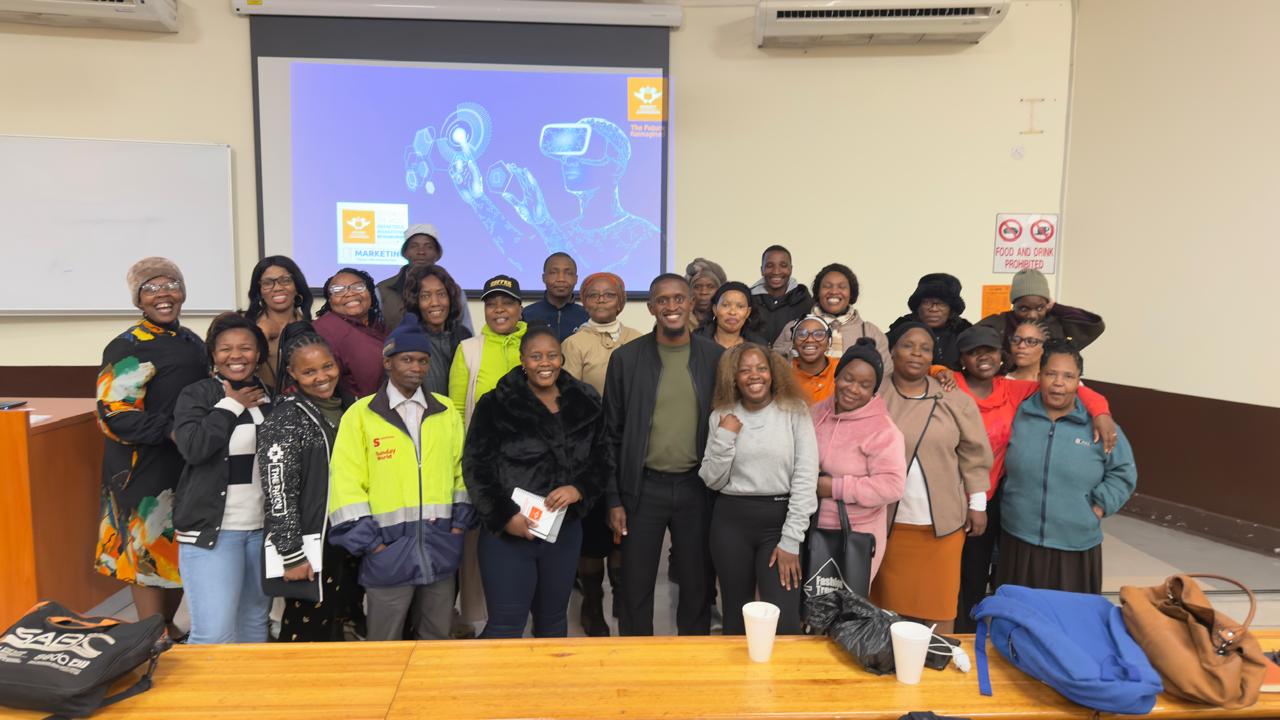
On June 29 and July 1, 2026, the University of Johannesburg hosted a community engagement initiative through the Department of Marketing. Melusi Makhoba, a lecturer and BCOM Honours programme manager in the department, collaborated with the City of Johannesburg through Councillor Sihle Nguse of Ward 60 (Braamfontein Werf, Newtown, Fordsburg, Parktown and the inner city) to invite a number of SMEs, mostly owned by women, to a two-day marketing and digital marketing workshop.
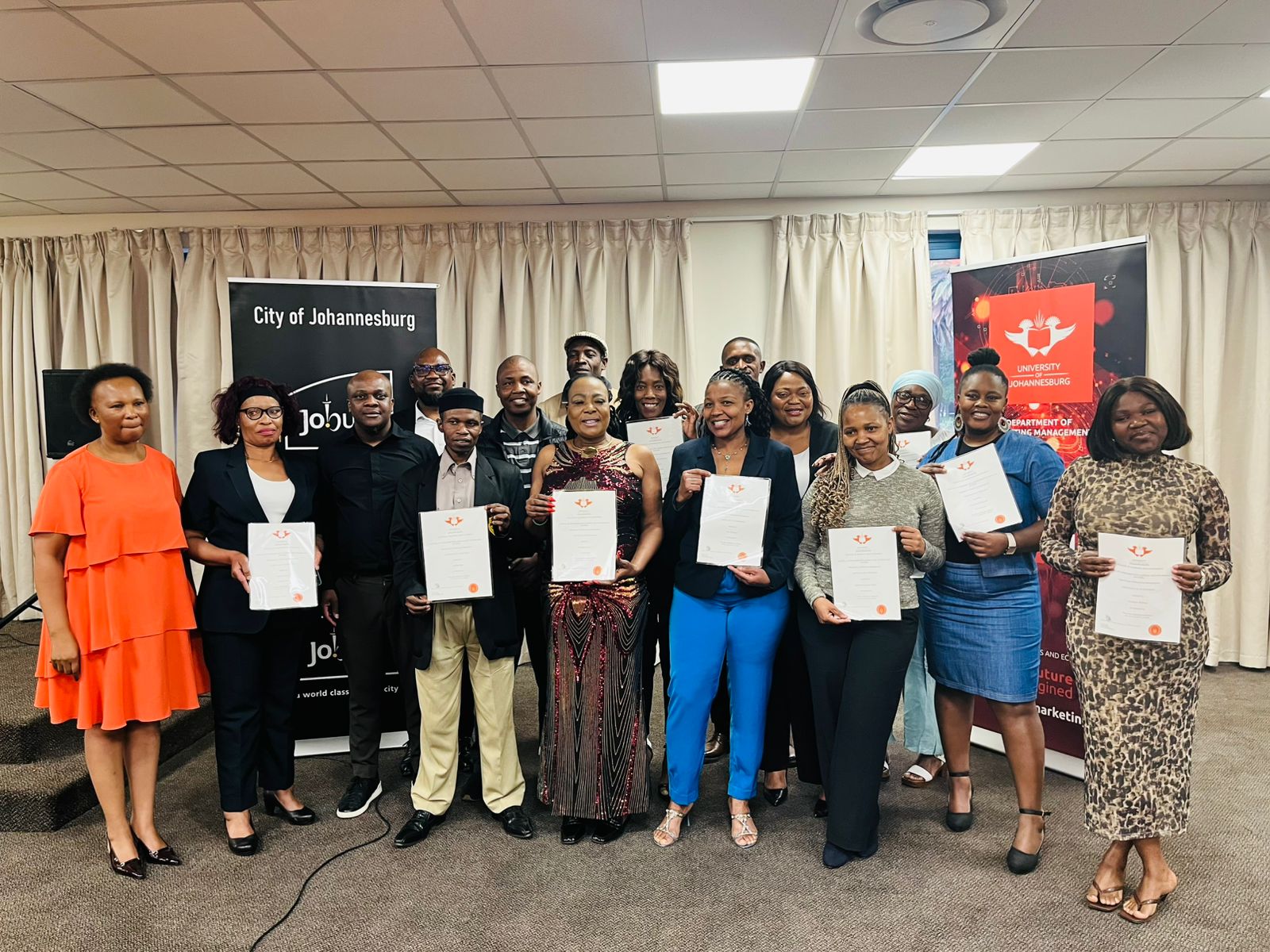
The workshop was held at the UJ Bunting Road campus, and participants learned hands-on practical skills in a variety of areas such as marketing research, competitor intelligence, segmentation, targeting, positioning, marketing strategies, web development, search engine optimisation, content marketing, social media marketing and artificial intelligence, among others. Each delegate was awarded a certificate from the great University of Johannesburg upon the completion of the two-day workshop.
When Melusi Makhoba was asked why the cohorts were largely female he advised that it’s because “in South African the rate at which South African women are closing their businesses is higher than the rate at which they are launching and operating them, suggesting that they require additional assistance in developing start-ups to the established stage of more than 3.5 years. Additionally, the gender disparity between men and women entrepreneurs grows as businesses develop, with nearly twice as many males owning established businesses, showing that women find it more difficult to sustain a business than to start one.”
Councillor Sihle Nguse further added that “promoting women’s entrepreneurship could have a big impact on development because women entrepreneurs tend to devote more of their funds to improving the health, education, and overall well-being of their families and communities. Women are also more likely to start a business with the goal of making a social impact”.
In the words of the Vice Chancellor of University of Johannesburg Prof Letlhokwa Mpedi “for UJ, engagement is more than an initiative—it is the heartbeat of a university that cares deeply about societal progress. Through collaboration, knowledge-sharing, and active participation, we empower communities and drive meaningful change. By bridging academia and society, we ensure that learning translates into real-world impact, fostering equity, opportunity, and shared growth for all.”
Hence, at the University of Johannesburg, community engagement, like research and teaching and learning, remains a vital academic function. Public institutions were founded and entrusted with the mission of serving society and contributing to the country’s social and economic growth. Community engagement is important to the University of Johannesburg’s objective to create strong, resilient, and sustainable communities. Initiatives such as this demonstrate UJ’s passion to serve humanity through innovation, education, and the collaborative pursuit of knowledge.
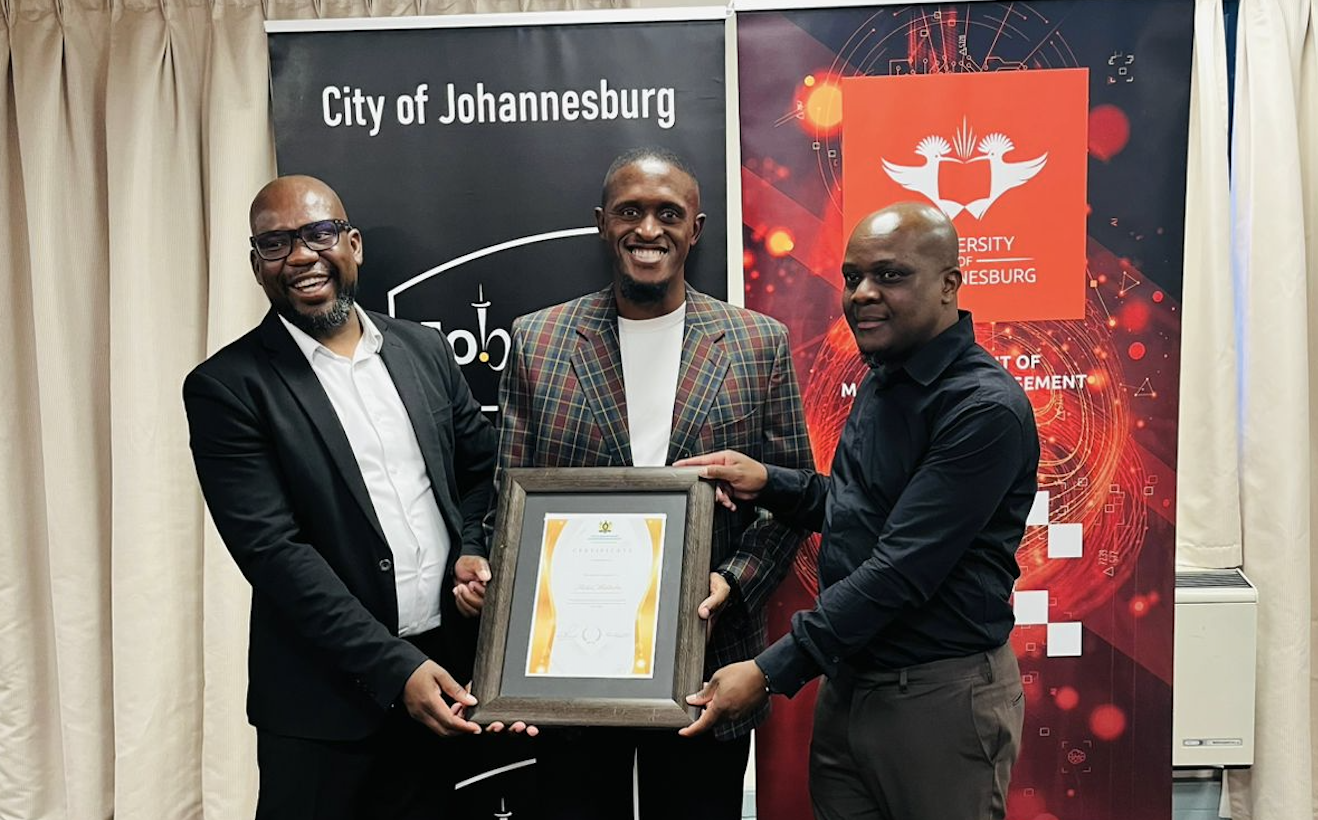
On Tuesday, September 1, 2026, a prestigious certificate presentation ceremony took place at Braampark, during which Councillor Adolph Marema delivered an impactful speech regarding the significance of these initiatives. Councillor Adolph Marema, often referred to as “Son of the Hunter,” is an experienced public official, community advocate, and development activist who presently holds the position of Chair of Chairs in the Johannesburg City Legislature. He praised the University of Johannesburg for not merely providing resources, but also for instilling optimism and a cause to smile in people who require it the most.
He closed by complimenting Melusi Makhoba for having a heart that is always looking out for the well-being of people and how his dedication illustrates that genuine strength lies in uplifting others. “I also applaud Melusi Makhoba for being a role model, for showing us all what it means to be an active caring member of society,” he added these remarks, while presenting him with a certificate of appreciation for the impact the two days workshop has hand on small business owners in the city of Johannesburg.
In the words of the Programme Director on the day, Nelisiwe Baai, Deputy Chairperson of the Housing Development Agency (HDA) Board in South Africa and a Director within Community Development for the Municipality, reflected on the contribution made by Melusi Makhoba, “The time and energy you share demonstrate a genuine commitment to human dignity and kindness. May the remarkable generosity you continue to show be returned to you many times over in joy, peace and fulfilment. Thank you for planting seeds of hope in our beautiful city. We are fortunate to witness them blossom because of your efforts. Your ongoing support enables us to fulfil our goals and demonstrates that no challenge is too great when we stand together.”