At the mention of chemistry most people think of a brightly coloured liquid in a round-bottom glass flask. However, using chemistry to build new kinds of materials -with new ‘abilities’ – happens ‘beyond the round bottom flask’ argues Professor Messai Mamo.
Examples include novel materials that retain ‘memory’ of their electrical states even after power is removed. Other materials may respond to pressure changes or detect toxic gas or mould on food ingredients, he adds.

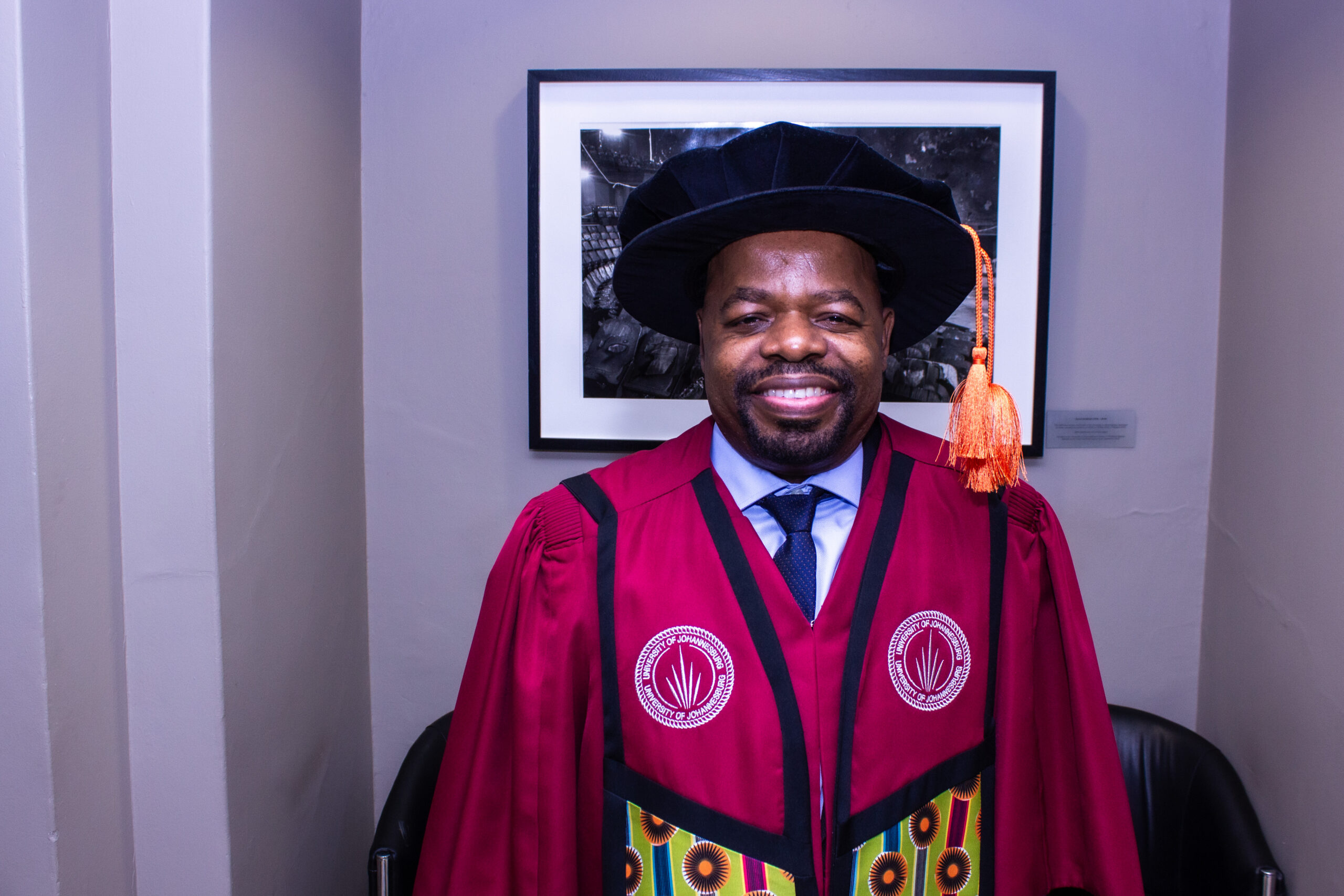
Professor Mamo was speaking at his professorial inauguration at the Kingsway Campus of the University of Johannesburg (UJ) on Thursday 12 November.
“The material itself does not ‘remember,’ or know whether there is a change in pressure, or the presence of a toxic gas. However, we can design the material’s response and measure that,” he says.
Prof Mamo’s research has developed around this possibility. He focuses on understanding how chemical composition, structure and interfaces determine what a material can do. He is a researcher at the Department of Chemical Sciences in the UJ Faculty of Science.
Materials to remember
In electronic devices like smartphones and computers, digital memory represents data using binary code (0s and 1s), that the device ‘remembers’.
A memory device retains a state. At the physical level of the device memory, information must be represented by a distinguishable state that can be assigned as write, read, or erase.
“In resistive memory, which is one of the next-generation memories, we measure the electrical resistance,” says Prof Mamo.
“If the state survives the removal of power, we have the basis of non-volatile storage.”
His work has explored polymer nanocomposites as active materials for such devices.
Detecting events
Chemistry can also build materials which detect events. These are called sensors, which produce measurable responses to their surroundings.
That event might be gas exposure, a change in pressure, the presence of a dissolved ion, or a change in acidity. In each case, the chemistry researcher’s task is to connect a physical or chemical interaction with a measurable signal.
“The central challenge is not simply to obtain a response. A useful sensor must distinguish the event of interest from variations in temperature, humidity, interference compounds, and background composition that are happening all the time,” he adds.
Early food contamination warnings
One of the huge challenges of commercial food production is preventing contamination by toxic chemicals (secondary metabolites) produced by fungal growths. These can occur in bulk storage of the ingredients, or because livestock eat contaminated feed.
This can affect maize flour (corn flour), sorghum, millet, dairy products, tree nuts, peanuts and many more agricultural products.
Where contamination of ingredients is not picked up early enough, a food manufacturer has to recall the product from grocery stores. Multiple recalls of peanut butter in 2024 in South Africa because of aflatoxins are examples.
This challenge has motivated Prof Mamo to build sensors to detect fungal activity earlier in foodstuffs.
“Our work has examined solid-state sensing materials, including polymer composites. Our sensors were able to distinguish contaminated maize from uncontaminated maize on a laboratory scale,” he says.
Next challenges
Storing data; detecting gases or pressure changes; and detecting mouldy food ingredients early – these appear to be completely different tasks. Yet all these rely on the same chemistry: controlling microscopic interfaces to produce a measurable signal, says Prof Mamo.
The next frontier in chemistry is creating integrated smart systems that combine sensing and memory into a single device, he adds.
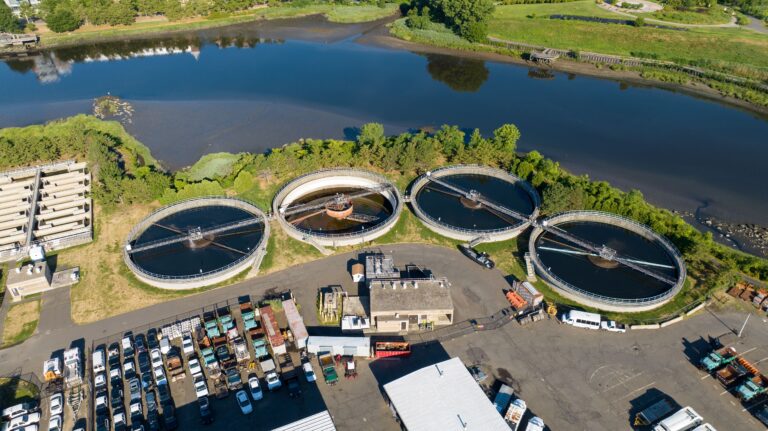
These could result in environmental sensors that detect a toxic spill or sewage spill and instantly record the event in their built-in memory.
Such autonomous devices could monitor remote environments or water quality with minimal electrical power, since they operate at ultra-low energy consumption.