Johannesburg is known as the City of Gold, a place of opportunity, economic activity and possibility. Yet, growing concerns about the City’s financial position raise questions about whether it still lives up to this reputation. For residents who depend on reliable services, well-maintained infrastructure and responsible spending of public money, the City’s financial challenges are more than figures in a budget; they affect everyday life.
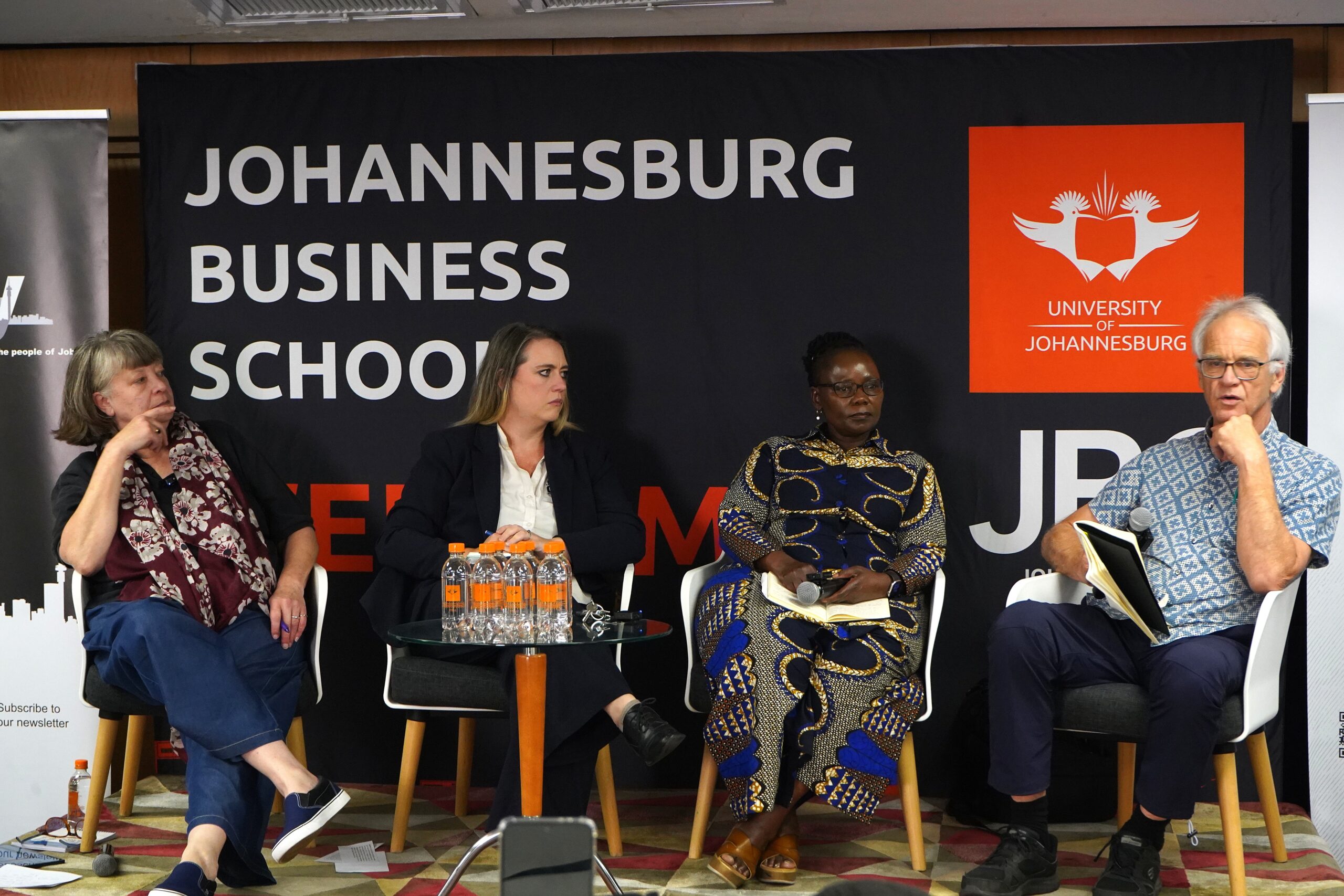
With South Africa’s 2026 local government elections fast approaching, the Johannesburg Business School (JBS), in collaboration with Our City News (OCN), hosted the third Joburg Dialogues on 8 October 2026 at JBS Park. Facilitated by Yvonne Grimbeek, Senior Reporter at OCN, the discussion brought together perspectives from higher education, government and civil society to examine the City’s budget and financial challenges, including how revenue collection, spending decisions and municipal utility management affect service delivery.
Professor Thabang Mokoteli, Professor of Finance at JBS, described the City’s cash position as concerning. She highlighted that the City had budgeted about R1.97 billion in cash for the 2026/27 financial year, which would cover only 9.8 days of operations, compared with the Treasury benchmark of 30 to 90 days. These figures raise questions about whether the City has enough cash available to meet its immediate needs.
She argued that a city’s financial health also depends on its ability to collect money owed to it, manage available cash and ensure that expenditure meets its responsibilities. Weak revenue collection and rising costs can place pressure on municipal finances, even when substantial amounts have been allocated in the budget.
“The assumption of the City is that for everything that they have built, they are going to collect 86%. But when you look at their budget, they are going to collect about 93.8% for City Power, but from Joburg Water and Pikitup, it is way less than that 86%. So, they already know that they are going to provide the service, but they are not going to be to be collecting,” she said.
Looking for a way forward, Mokoteli questioned whether raising municipal service charges would solve the City’s financial problems if the underlying issues remained unresolved. She explained that charging residents more would not be enough without improvements in how the municipality charges for services, collects payments and manages its spending.
Roland Hunter, City finance specialist with the Treasury, highlighted how financial decisions made over many years can affect the City’s finances today. He warned that if financial problems are not addressed, they could worsen over time and cause lasting damage.
Hunter highlighted that years of financial decisions had weakened the City’s ability to maintain infrastructure and provide reliable services. He explained that raising charges for residents was often easier than controlling rising costs, but higher bills could leave more people unable to pay, leading to unpaid accounts that accumulate. He noted that short-term political priorities and weak oversight had contributed to years of underinvestment, leaving the City’s utilities under severe financial pressure.
“If you do that for 25 years, this is an effect of compound arithmetic. Actually, it cannot go on for so long without causing serious damage,” he said.
The discussion also raised concerns about the financial pressures facing electricity and water services. Hunter argued that using utility revenue to support other municipal functions could leave essential services without adequate resources.
Beyond the City’s finances, the dialogue considered the role residents can play in their communities. Julia Fish, managing director at JoburgCAN, called for greater civic participation, encouraging residents to move beyond being passive recipients of services and become more involved in local initiatives.
“At the end of the day, what we need to do as citizens, as residents, is stop giving away our agency to government and expecting a passive recipient of services from them, and step into the cracks of where they are able to provide those services,” she said.
She highlighted the value of residents’ associations and community groups in supporting neighbourhood initiatives and shared spaces. However, community participation does not replace the City’s responsibility to provide essential services and account for its use of public funds.
The discussion stressed the importance of financial accountability, effective municipal management and measurable improvements in service delivery. These are central to assessing whether the City’s budget is translating into meaningful outcomes for residents.
Reflecting on the broader challenge, Mokoteli said, “You can have massive budgets. The City of Joburg has a massive budget, but it doesn’t prove that the city is healthy, financially healthy, or whether the city is sustainable.”
Ultimately, the question facing Johannesburg is not simply how much money the City budgets, but whether it can manage those funds to deliver reliable services and build a financially sustainable city for all.