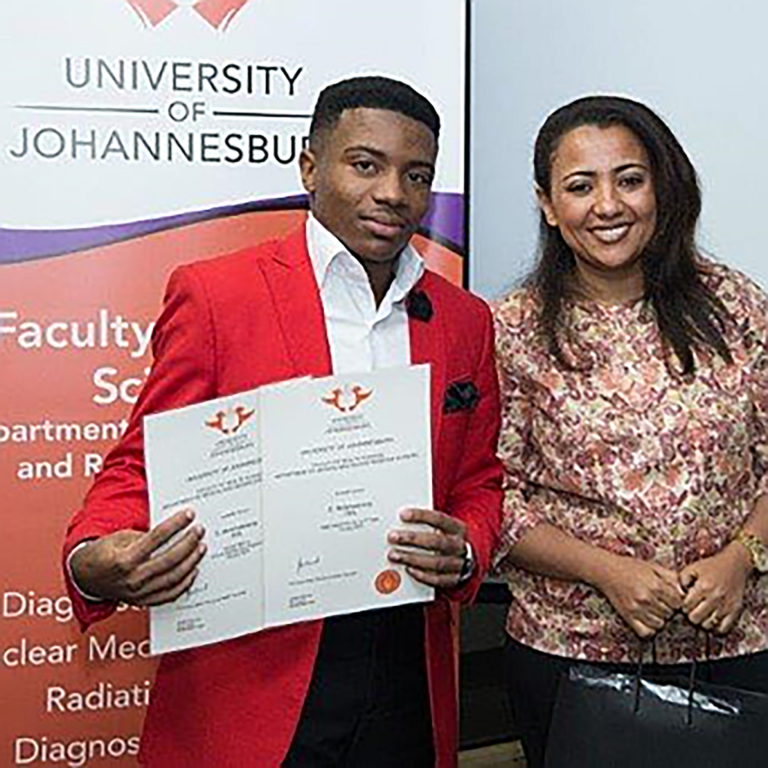
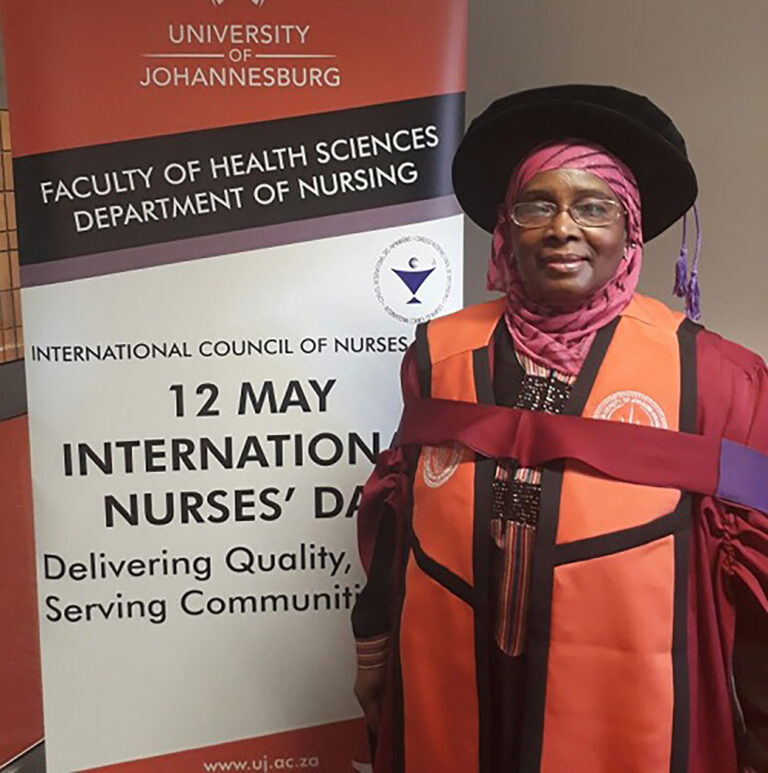
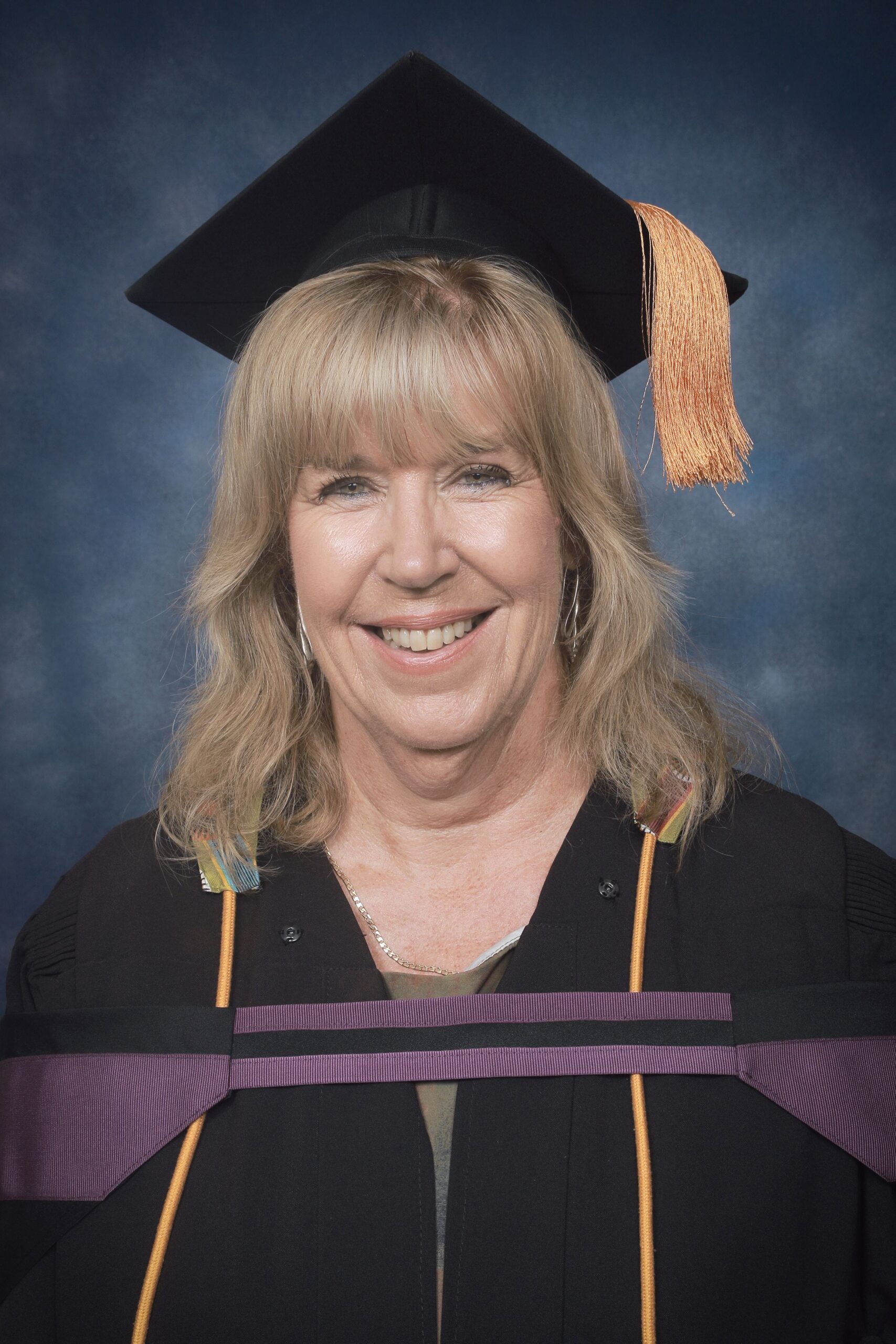
Dr Lynne Janette Hazell, a Senior Lecturer in the Department of Medical Imaging and Radiation Sciences, received a massive ovation during her graduation ceremony.
It was the applause and ululation from her former students cheering her on as she crossed the stage on Monday, 16 March 2026, to receive her Postgraduate Diploma in Clinical Simulation with distinction.
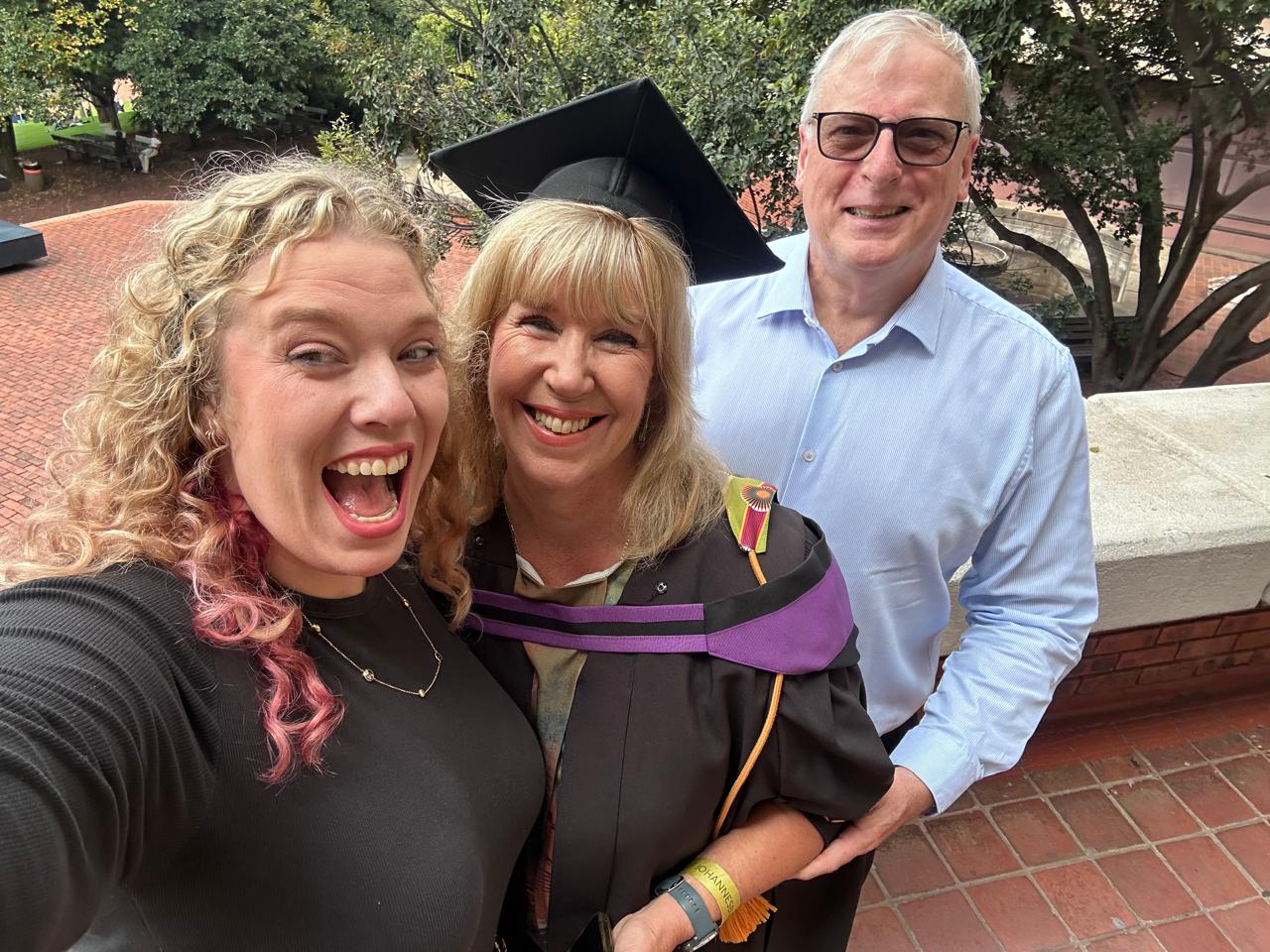
“It was a very special graduation, having my students graduating in the same ceremony. I was the Head of Department during their studies, and I was proud to see them graduate. I always talk to them about lifelong learning, and I think you should demonstrate this as well as talk about it,” said Dr Hazell.
It is all about actions speaking louder than words.
She was overwhelmed by the reaction, but it made her graduation that much more special.
“It was very unexpected and made my day. I have graduated several times, and honestly, I can say that Monday was the very best due to the reaction of the students.”
Dr Hazell’s love for learning and studying made her want to further her qualifications.
“I want to always improve myself as a person and a lecturer. My qualification was in clinical simulation, which was also part of my Doctoral study, and I can implement this learning in the department with my students and other faculty members. Clinical simulation is very important in Health Sciences, as our students need to learn skills and competencies in a safe environment before they go into clinical placement in our hospitals and see patients. We have great clinical simulation facilities at UJ, and it is important to ensure they are used optimally. I will never stop furthering my knowledge. It is exciting to learn new information and push boundaries.”
 Dr Hazell teaches students in the Department of Medical Imaging and Radiation Sciences in the Faculty of Health Sciences, which includes all the radiation imaging and treatment modalities in hospitals. She teaches fourth-year students the Diagnostic Practice module, the “how to” module, which applies all the knowledge learnt over four years to their future profession as healthcare professionals. She also teaches Professional Practice and Research Principles to all the students in second year; this module introduces professional identity and social determinants of health to students.
She ended up lecturing after assisting a friend who was going on maternity leave.
“I am a qualified diagnostic radiographer, and I always enjoyed teaching the students in their clinical placements. Lecturing was an extension of that to teach and inspire our next generation of radiographers. Interestingly, my friend was lecturing and was going on maternity leave. She approached me to lecture for her, and after assisting her, I realised that I enjoyed the interaction with students and teaching.”
Dr Hazell celebrated 20 years at UJ last year, as the university turned 20.
“I look forward every morning to coming to campus. I have progressed in the university and have held management roles as head of department, and I have been involved in the development of the curriculum for the bachelor’s degree that was introduced in 2016, which was a fantastic opportunity to grow the profession. UJ is a supportive and innovative university to work for. I am still looking forward to the future.”
She advises first-year students, who are just beginning their journeys, to always take the opportunities offered to them.
“I believe the first years are entering university at a very exciting time with the growth of AI and the impact this will have on our profession. I came to South Africa from the UK because of my radiography qualification, and I believe you should embrace opportunities in whatever form they come into your life. In addition, for our healthcare professionals, remember why you came into this field: you care for people. Never forget that.”
For people who may want to go back to school and further their studies, Dr Hazell advises:
“You are never too old to study and the growth you will feel as a person will be empowering. I lecture the students who come back to university as qualified radiographers to do an additional mammography qualification. They are all mature students. They find coming back to university daunting, but by the end of the year, they have grown and always have positive things to say about the journey.”
The Master’s Programme in the department has grown in recent years as more radiographers are seeing the value in furthering their studies.
“This is challenging for radiographers as they are all working full-time and studying. Personally, I find studying later in life more fulfilling than when I was younger.”
Dr Hazell concluded, “Studying is a joy to me, and if I can inspire my students to continue their studies in any field, I will have done my job.”