The University of Johannesburg (UJ) Faculty of Law, in collaboration with the Companies Tribunal, hosted a public lecture on Wednesday, 28 October 2026, examining how South Africa can bridge the gap between corporate rights recognised in law and the ability of individuals to enforce them.
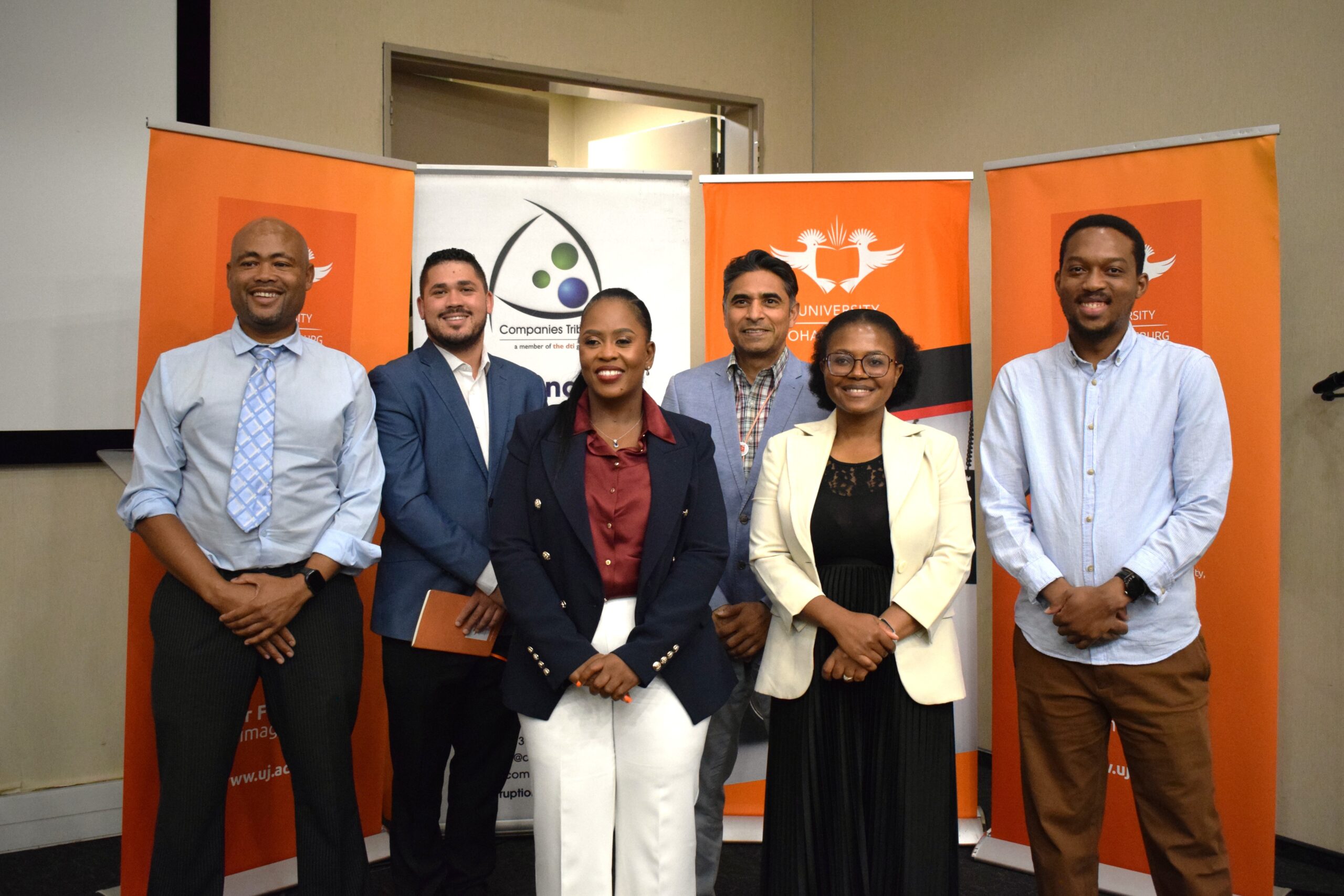
The lecture was delivered by Dr Minah Tong-Mongalo, Deputy Chairperson of the Companies Tribunal, under the theme “When Rights Exist Only on Paper: Reimagining the Companies Tribunal as a Gateway to Corporate Justice.”
The lecture brought together academics, students, legal professionals and representatives of the Companies Tribunal to reflect on the accessibility and effectiveness of corporate dispute resolution in South Africa.
In opening the proceedings, Professor Cayle Lupton, Acting Vice-Dean: Research and Global Engagements at UJ Law, emphasised the importance of reassessing legal and regulatory frameworks in a rapidly changing world. He noted that technological developments, geopolitical tensions and changes in the corporate environment require continuous reflection on whether existing legislation and institutions remain fit for purpose.
At the centre of Dr Tong-Mongalo’s address was a fundamental question: What value do corporate rights hold if those entitled to them cannot afford or navigate the processes required to enforce them?
She drew on practical examples involving shareholders, company directors and family-owned businesses to illustrated how corporate disputes can extend beyond legal disagreements to affect livelihoods, employees, suppliers and the sustainability of businesses. “It’s not good enough to have rights if you are not able to enforce them,” she emphasised.
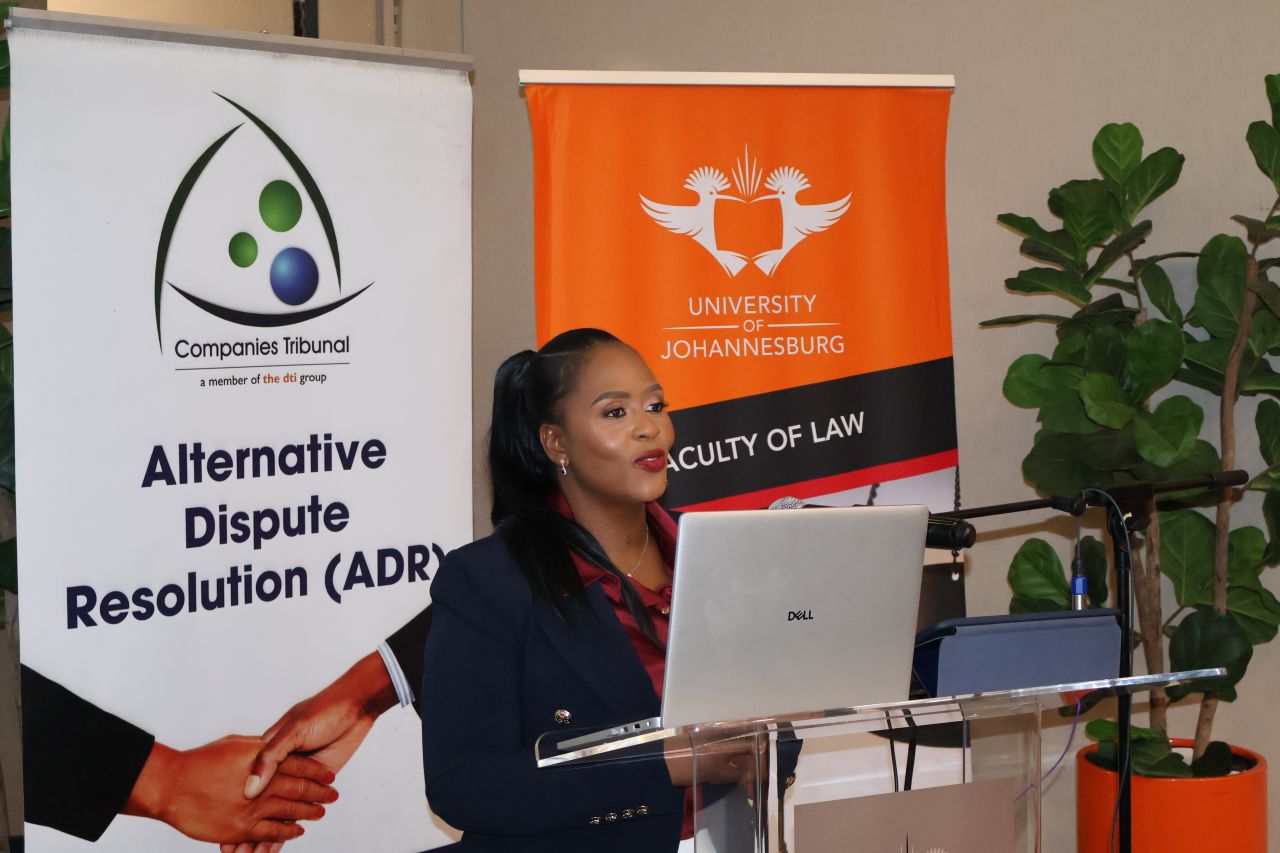
Dr Tong-Mongalo distinguished between formal justice, which recognises the existence of legal rights, and effective justice, which enables individuals to translate those rights into meaningful outcomes.
She explained that while the Companies Act provides various protections and remedies, individuals may still face significant obstacles, including limited knowledge of their rights, complex procedures, legal costs, jurisdictional uncertainty and delays. Dr Tong-Mongalo highlighted the Companies Tribunal’s potential as a specialised and accessible mechanism for resolving corporate disputes without requiring parties to pursue costly litigation in every instance. However, she noted that the Tribunal operates within a defined statutory mandate, which limits the matters it may adjudicate.
Using examples involving access to company records and disputes over the removal of directors, she demonstrated how jurisdictional restrictions can leave individuals with recognised rights but without a straightforward route to obtaining relief.
She argued that reform should focus not simply on expanding the Tribunal’s powers, but on creating clearer, more efficient pathways for resolving disputes while preserving the institution’s independence and specialised character. Her proposals included simplifying procedures, improving digital access, strengthening mediation mechanisms, establishing clearer referral processes and ensuring that the Tribunal has adequate resources to fulfil its mandate.
Importantly, she cautioned against transforming the Tribunal into another court, arguing instead for a specialised institution capable of providing proportionate, timely and practical remedies.
Beyond the legal implications, Dr Tong-Mongalo stressed that accessible corporate dispute resolution is essential to protecting businesses and the communities that depend on them. She explained that prolonged disputes can disrupt decision-making, drain working capital, undermine business relationships and threaten employment.
“Accessible dispute resolution therefore protects livelihoods, not merely legal positions,” she stated.
She further challenged legal practitioners, academics and policymakers to consider whether South Africa’s existing corporate dispute resolution framework adequately serves those seeking justice, particularly individuals and smaller businesses without the financial means to pursue lengthy litigation.
Concluding her address, Dr Tong-Mongalo called for a shift in how access to corporate justice is measured.
“Access to justice will only be meaningful when it is experienced by the user, not merely stated by the institution.”