As artificial intelligence (AI) and emerging technologies continue to reshape society, legal systems face an increasingly pressing question: Can the law evolve quickly enough to respond to technological innovation while protecting fundamental rights?
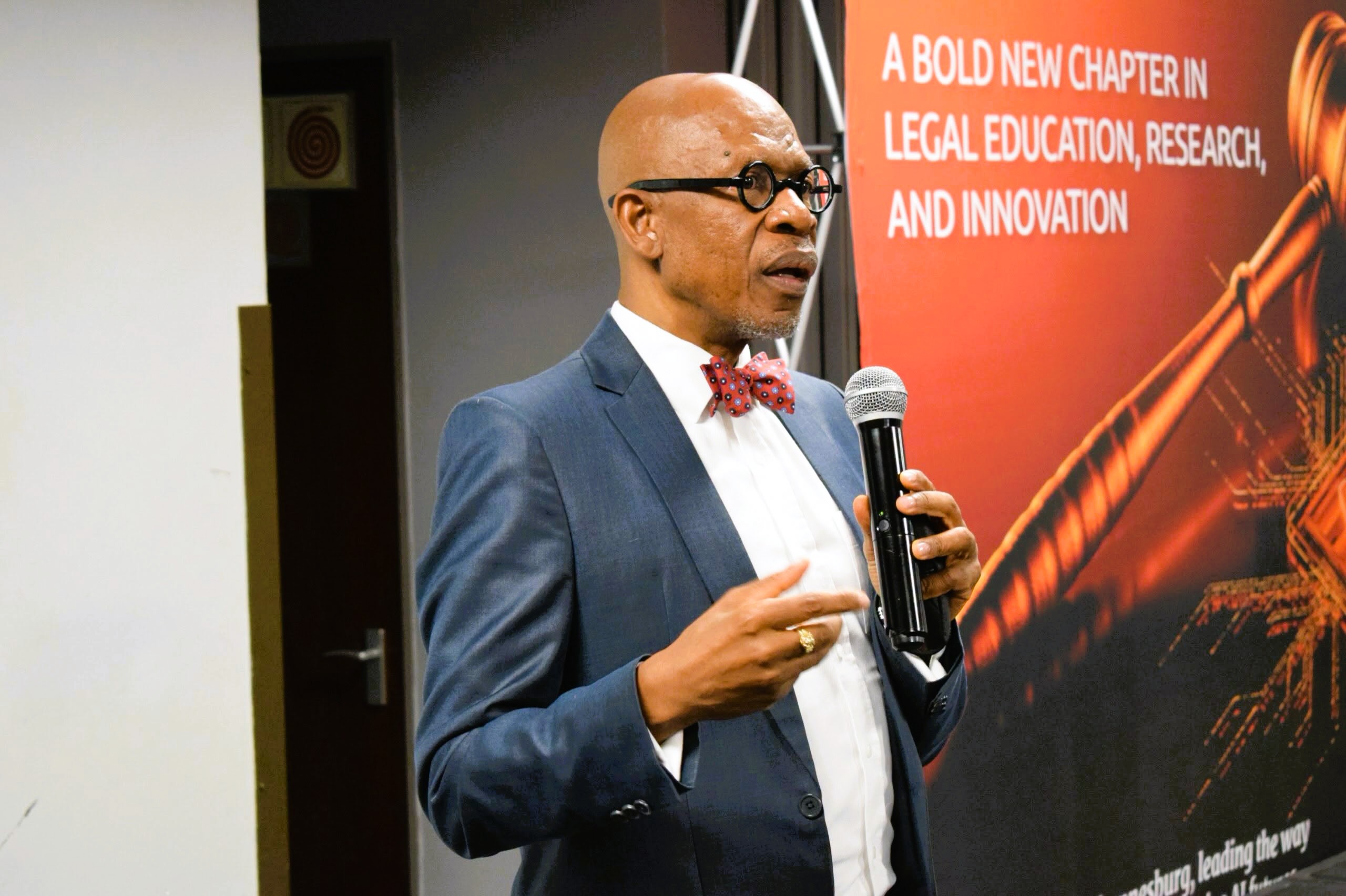
This question took centre stage at a public lecture hosted by the University of Johannesburg’s (UJ) AI and the Law Institute on Thursday, 29 October 2026, delivered by Judge Omphemetse Mooki of the High Court of South Africa, Gauteng Division, Pretoria.
Titled “Does the Law Have an Answer: Law and the Constant Shifting Sands of Technology,” the lecture examined the complex relationship between technological advancement and existing legal frameworks, highlighting the challenges facing lawmakers, courts and society as innovation continues to outpace traditional approaches to regulation.
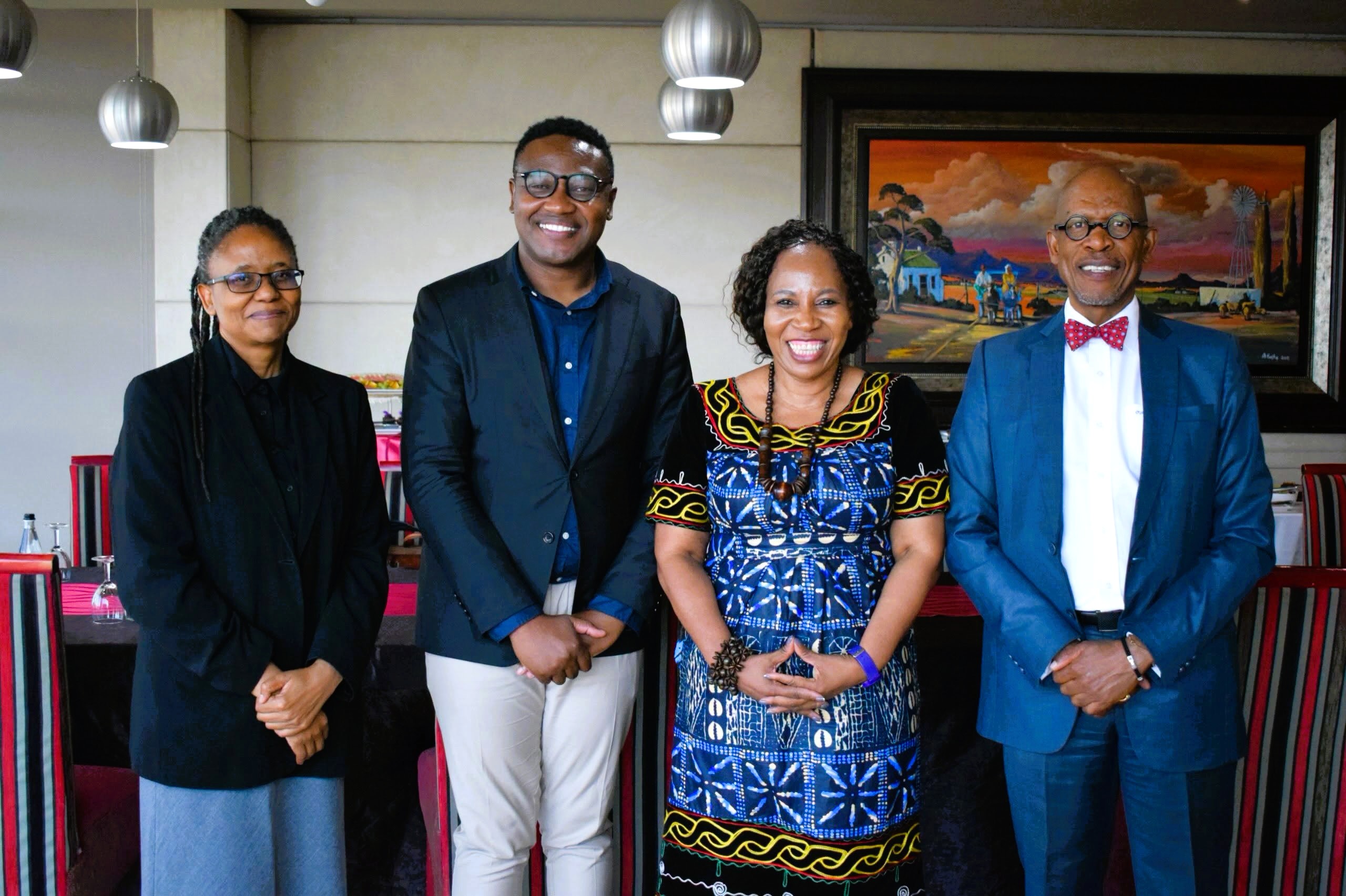
In welcoming attendees, Professor Charles Maimela, Executive Dean of the UJ Faculty of Law, emphasised the Institute’s commitment to bringing together perspectives from the judiciary, academia and industry to advance meaningful discussions on AI and the law. He highlighted the importance of ensuring that these conversations remain relevant, impactful and responsive to the challenges facing South Africa and the African continent.
Opening his address, Judge Mooki reflected on the interconnected nature of law and technology, noting that both play fundamental roles in shaping modern society.
“Technology generally is incredibly foundational to modern life. It cannot be evaded, more so today than it has in the past. The law equally is foundational to society,” he remarked.
Through a series of international and South African legal cases, Judge Mooki demonstrated how emerging technologies are raising questions that existing legal frameworks were not necessarily designed to address. One of the key issues explored was intellectual property in the age of AI. Using examples of AI-generated music, artwork and inventions, he questioned whether existing copyright and patent laws adequately recognise and protect creations produced without direct human involvement.
He highlighted cases involving AI-generated works where courts have grappled with the requirement for human authorship or inventorship, as well as South Africa’s granting of a patent naming an AI system as an inventor. These developments, he explained, raise broader questions about the legal recognition of machine-generated innovation and its implications for future technological development.
Beyond intellectual property, Judge Mooki examined the growing challenges surrounding accountability for the consequences of AI-generated content. He discussed cases involving digitally manipulated images, AI-generated child sexual abuse material and the potential liability of technology companies when their systems produce harmful outputs.
Particular attention was given to the risks associated with AI chatbots, including their interactions with vulnerable users and the legal responsibilities of companies developing and deploying these technologies. Judge Mooki also explored the implications of inaccurate information generated by AI systems, drawing on defamation cases involving chatbots and AI-powered search engines.
These examples highlighted the difficulties of determining responsibility when automated systems generate false or harmful information, particularly as people increasingly rely on these technologies in their everyday lives.
Turning to autonomous vehicles, he illustrated how developments in self-driving technology challenge traditional legal concepts of negligence and liability. Using examples of driverless vehicles operating internationally, he questioned how existing legal frameworks would respond to accidents involving vehicles without human drivers.
He noted that South Africa’s current legal arrangements for motor vehicle accidents are largely built around the conduct of human drivers, raising important questions about how liability might be determined as autonomous vehicles become more widely adopted.
Although such technology is not yet commonplace on South African roads, he encouraged legal practitioners and policymakers to anticipate the challenges it may introduce.
Throughout the lecture, Judge Mooki emphasised that technological advancement presents both opportunities and difficult legal questions, many of which do not yet have clear answers. He called for greater consideration of how legal frameworks can anticipate emerging risks while avoiding excessive regulation that could unnecessarily restrict innovation.
“There is that tension between innovation and what is provided as to how one seeks to achieve a cordial marriage between law and technology,” he observed.
He further stressed that South Africa is not immune to technological developments taking place internationally and that these challenges will increasingly become part of the country’s legal landscape.
The lecture provided an opportunity for students, academics and legal professionals to reflect critically on the future of legal interpretation, accountability and regulation in an increasingly technology-driven society.