Deputy Finance Minister Dr David Masondo launched a six-part lecture series featuring internationally acclaimed political theorist Prof Vivek Chibber under the theme “Economic Change in the Post-Colony”. The lecture series, hosted by NEHAWU and endorsed by the University of Johannesburg (UJ), took place from 3-6 August 2026 at the Radisson Hotel & Convention Centre in Kempton Park.
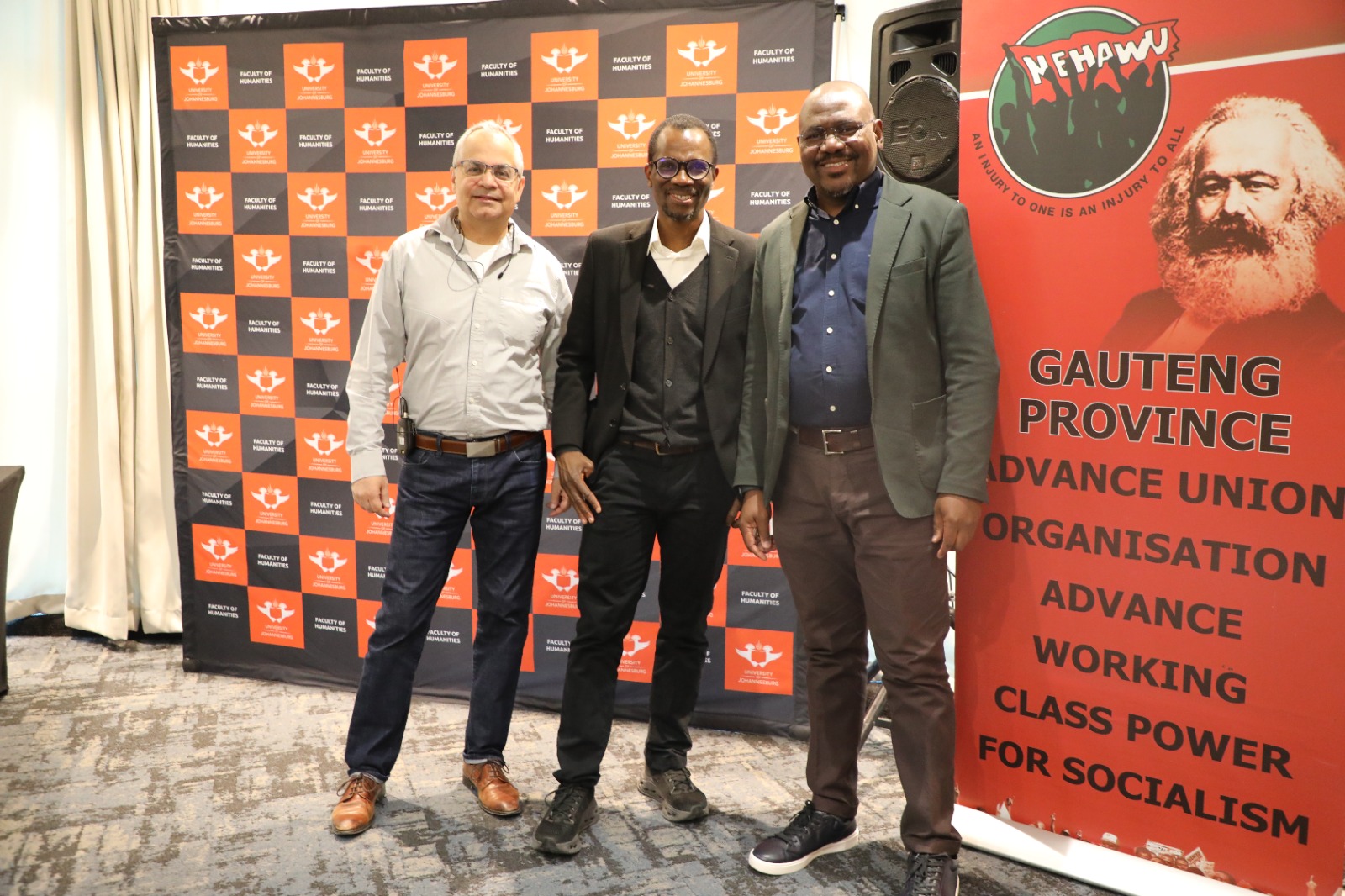
The programme brought together scholars, students, trade unionists and policymakers to reflect on the economic transformation in post-colonial societies, and pathways towards inclusive economic growth in South Africa.
Delivering the welcome address on behalf of the UJ, Prof Mandla Radebe of the department of strategic communication said the lecture series exemplified the University’s commitment to meaningful internationalisation through intellectual engagement.
Radebe pointed out that internationalisation is frequently misunderstood as merely signing memoranda of understanding, facilitating student exchanges or hosting international visitors.
“While these are important, they are not the primary purpose,” he said. “The true purpose of internationalisation is to place our students, our academics and our society in conversation with the world’s leading thinkers on questions that matter to South Africa, Africa and the Global South.”
Radebe said this was precisely why the lecture series was significant for the University.
He described Prof Chibber, Professor of Sociology at New York University and editor of Catalyst Journal, as one of the world’s foremost scholars of political economy, capitalism and development.
Furthermore, Radebe emphasised that universities achieve international relevance not by importing ideas uncritically, but by creating spaces where different intellectual traditions engage each other through rigorous scholarly debate.
“Universities do not become globally relevant by importing ideas uncritically. They become globally relevant by placing different intellectual traditions into conversation, allowing ideas to be tested, challenged and enriched through debate. That is precisely what today’s engagement represents,” he said.
The lecture series explored the historical experiences of post-colonial development, and contemporary pathways towards inclusive economic growth, while examining their relevance for South Africa’s developmental trajectory.
The seminar forms part of UJ’s broader strategy of strengthening international academic partnerships and creating platforms where globally recognised scholars engage directly with South African academics, students and policymakers on issues of national, continental and global importance.