The University of Johannesburg (UJ)’s Faculty of Law hosted Constitutional Court Justice Jody Kollapen for a Distinguished Public Lecture examining South Africa’s constitutional journey and the continuing challenge of translating the Constitution’s promise into the lived experiences of South Africans.
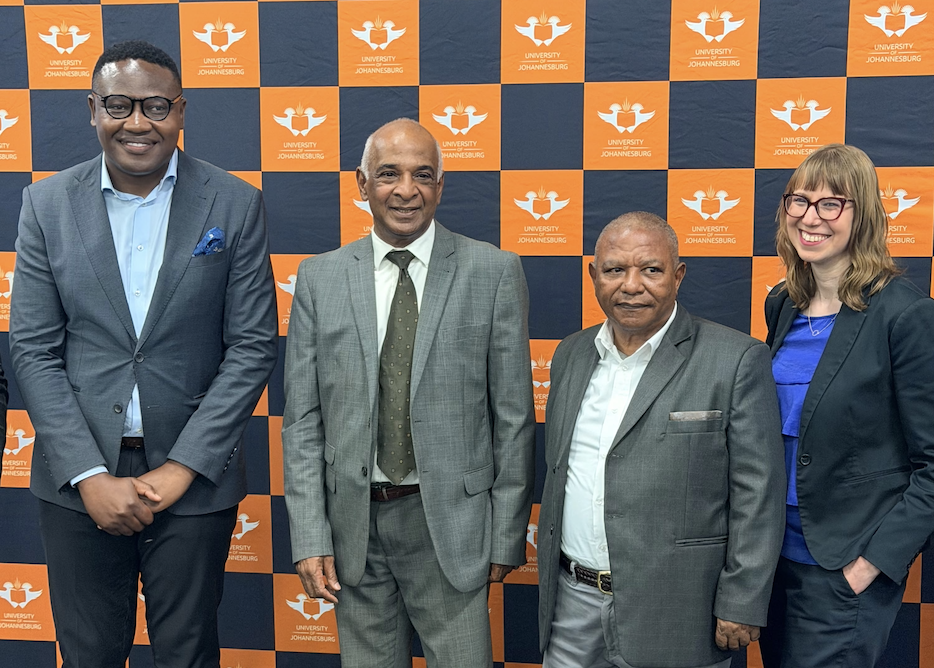
The lecture was held on 17 September 2026 at the Auckland Park Campus, the lecture, titled Constitutionalism in South Africa Today, brought together academics, students, legal practitioners and members of civil society for a conversation on democracy, inequality, accountability and the role of the courts.
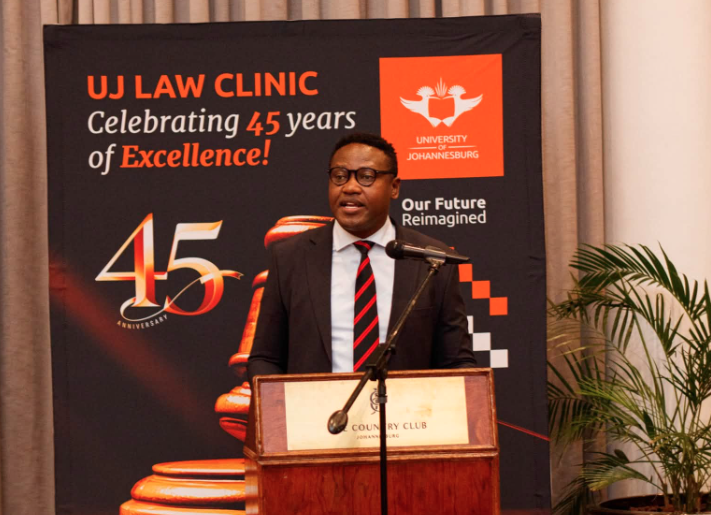
Professor Charles Maimela, Executive Dean of the UJ Faculty of Law, welcomed guests and highlighted the importance of creating spaces for engagement on issues shaping South Africa’s constitutional democracy.
Justice Kollapen began by reflecting on South Africa’s first democratic elections in 1994, recalling the significance of witnessing people exercise the right to vote after decades of exclusion. For him, the transition represented more than a change in government. It was a commitment to move away from the inequalities of apartheid towards a society founded on dignity, equality, human rights and social justice.
These aspirations, he emphasised, were embedded in the Constitution. “It is, in a significant way, our hopes, our fears and our aspirations.” However, more than three decades into democracy, Justice Kollapen argued that South Africans must be willing to ask how effectively that constitutional promise has translated into people’s everyday lives.
He recalled being challenged by a community member who questioned whether his enthusiasm for the Constitution was influenced by how well the democratic system had worked for him personally. The encounter, he said, highlighted why people who continue to experience poverty and inequality should be allowed to question the constitutional project.
“People are entitled to interrogate it, entitled to ask: ‘Why has it not worked for me?’”
At the same time, Justice Kollapen stressed that the Constitution cannot transform society on its own. “The Constitution is not self-executing. It’s a text, it’s a document, it’s an inspirational text. But it can’t, on its own, bring that into reality.”
A central theme of the lecture was South Africa’s persistent inequality and what this means for constitutionalism. Justice Kollapen also questioned how the country could celebrate its progressive constitutional framework while remaining deeply unequal.
“How does a country that prides itself on having one of the most progressive constitutions in modern democracy still retain its status as one of the most unequal societies in the world?” he asked.
Drawing on examples from education, healthcare and personal security, he reflected on how access to certain rights can, in practice, depend on an individual’s financial circumstances. “Did we fight for a society where human rights would become commodities, and your ability to access and enjoy those rights would depend upon your financial standing? I don’t think so.”
While acknowledging the progress South Africa has made since 1994, he emphasised that significant work remains to realise the Constitution’s transformative ambitions.

Justice Kollapen also cautioned against expecting the judiciary to solve every social and political challenge saying, “There’s a lot of pressure on the courts, especially when democracy is not working, to go and do something.”
While courts have a responsibility to uphold constitutional rights, he stressed the importance of respecting the separation of powers and strengthening engagement between government and citizens.
Meaningful public dialogue, he argued, could improve the quality of democracy by ensuring that government is more responsive to the needs of the people it serves.
“The Constitution requires all of us to also undertake a journey of transformation,” he further argued that constitutional transformation is not only an institutional responsibility but a personal one
This includes confronting the biases, prejudices and stereotypes that South Africans have inherited from the past and considering how individuals contribute to building a more inclusive society.
His message ultimately positioned constitutionalism as an ongoing project requiring participation from government, the judiciary, civil society and citizens alike.
“That’s not the South Africa I want for my children and for my grandchildren,” Justice Kollapen said of the country’s persistent inequalities. “A different South Africa is possible. It’s within our reach.”
The lecture concluded with a question-and-answer session chaired by Dr Megan Finn, providing students and guests with an opportunity to engage Justice Kollapen on accountability, public-interest litigation, judicial remedies and the role of courts in advancing constitutional rights.