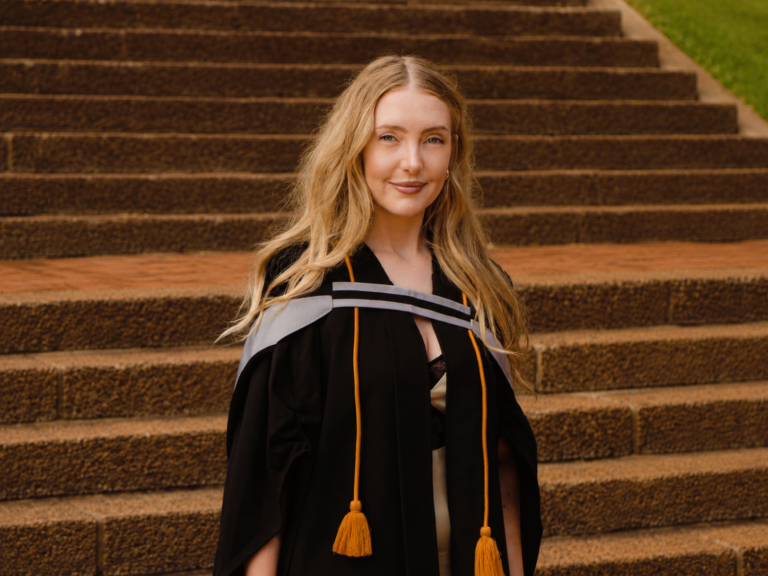
Dr Afezekile Moko is a 30 year-old academic from Zihlahleni, a small village in the Eastern Cape where community ties run deep and traditions anchor everyday life.
Dr Moko carries the quiet strengths of her origins into every step of her academic journey. She grew up in the city of KuGompo (formerly East London) and was disciplined in the corridors of a girl’s boarding school in Grahamstown (now Makhanda). As the niece of Dr Phumzile Mlambo-Ngcuka, Chancellor of the University of Johannesburg (UJ), she grew up with a living example of scholarship and leadership close at hand.
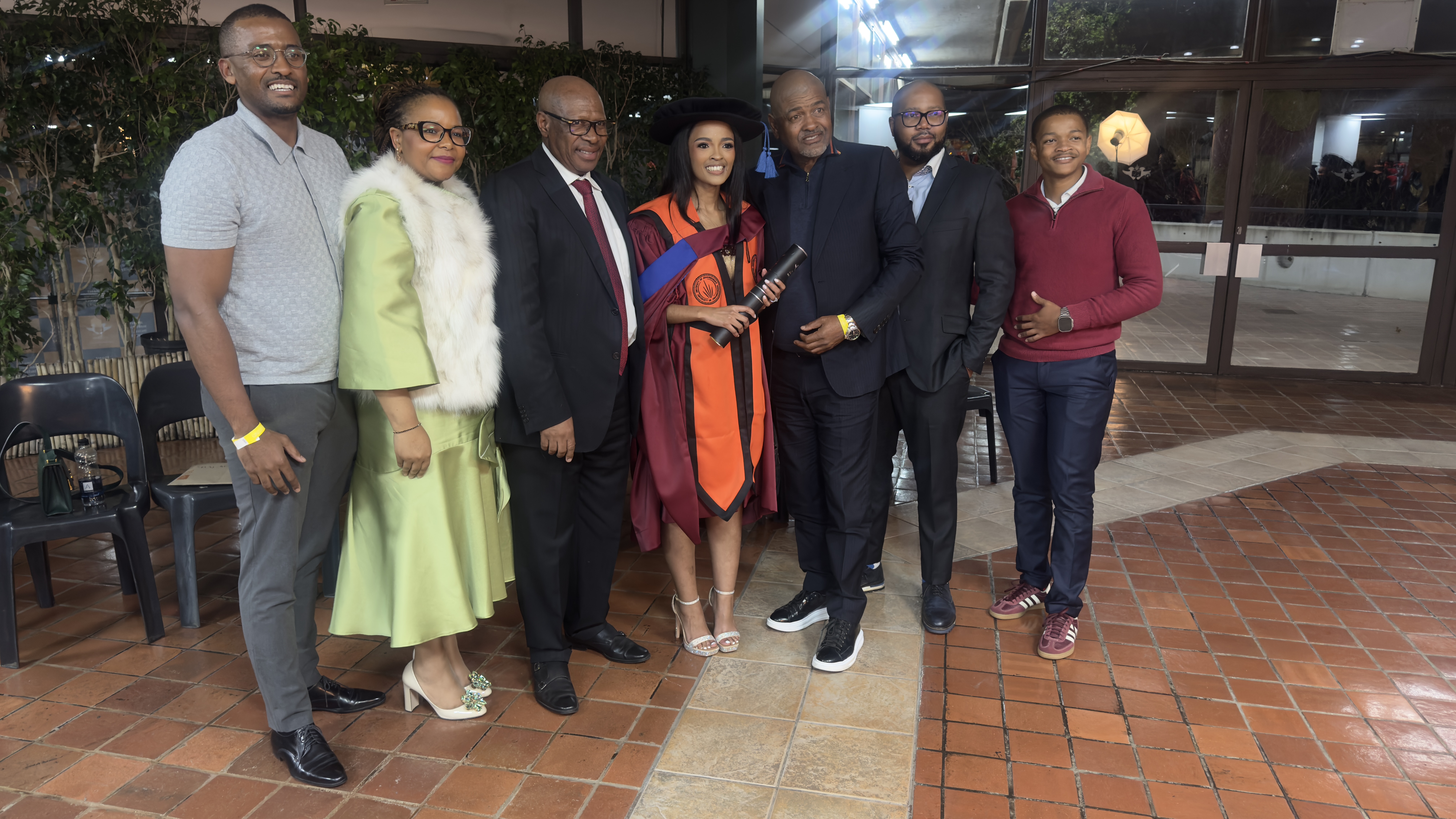
This inspiration helped her guide her own path and that path now led to her graduating with a Doctor of Philosophy (PhD) in Finance, with a thesis titled; ‘ Financial Sustainability in Smart City Implementation in South Africa’. Dr Moko shared that if she were to sum up her life story in a single sentence; “It has been a journey of a thousand miles, but one that has been worthwhile every step of the way”.
Although academia was not necessarily the path Dr Moko had originally envisioned, she said, she had always been passionate about grooming the next generation of property practitioners. After graduating from the University of Witwatersrand where she studied a Bachelor of Science (BSc) in Property Studies, she returned to her home ground, the Eastern Cape. This is where she registered as a candidate valuer and lent her expertise to the public sector at the Department of Public Works. A few years later she carried that foundation into the private sector while simultaneously pursuing a master’s degree in Town and Regional Planning at the University of Pretoria.
Shortly after graduating her master’s degree Dr Moko discovered her vocation in academia when a UJ recruiter told her to apply for a lecturer position to teach Property Valuation and Management, one of the scarcest skills which has less than 3000 registered property valuers and a multi-billion-rand property portfolio just in the public sector. When this opportunity presented itself, Dr Moko said she embraced it wholeheartedly, and it has proven to be one of the most rewarding decisions of her career.
Dr Moko’s journey at the UJ began on the 1st August 2022 and at the end of the following month, her aunt Dr Mlambo-Ngcuka was inaugurated as the Chancellor of the University. She said, “The timing of it all was coincidental but still feels almost destined. I left the inauguration ceremony at the Sanlam Auditorium feeling inspired, at that moment I set myself a goal: the next time we were both of at the auditorium, I wanted it to be as a doctoral graduate receiving my degree from her. By October that year, I had identified a supervisor, (thank you to Prof Chioma Okoro for taking me under her wing), and I submitted my PhD application in Finance. Thereafter prepared my proposal for February 2023,” she said.
Dr Moko said Dr Mlambo-Ngcuka’s achievements and commitment to excellence speak for themselves, and having someone of her calibre her corner naturally motivated her to strive for greater heights and continuously make them proud.
Dr Moko’s study addresses gaps in South Africa’s Public Finance Management Act (PFMA) Treasury Regulation 16 by introducing the ARCS framework a model validated by both public and private sector stakeholders.
Designed to make smart city public-private partnerships (PPPs) financially viable, it moves beyond generic Treasury guidance with clear attributes, responsibilities, challenges and strategies for principals and agents. Dr Moko explained; “While Treasury Regulation 16 provides the broad framework for PPP’s, its guidance is often generic. The ARCS framework adds substance by offering a detailed roadmap that can be readily implemented in practice”.
Her research also revealed how apartheid’s legacy still shapes smart city development. “In one case, strategically located land was owned by a single private entity, forcing public-private collaboration and creating risks if the partner faltered. Such circumstances can create substantial risks, particularly if the private partner experiences financial difficulties.”
She also points to deeper inequalities; “While private‑sector investment is essential, market‑led developments do not always address the needs of lower‑income communities or support broader transformation objectives.” For her, smart cities must be more than growth engines, they must transform space economies, alleviate poverty and create inclusive environments for the most marginalised.
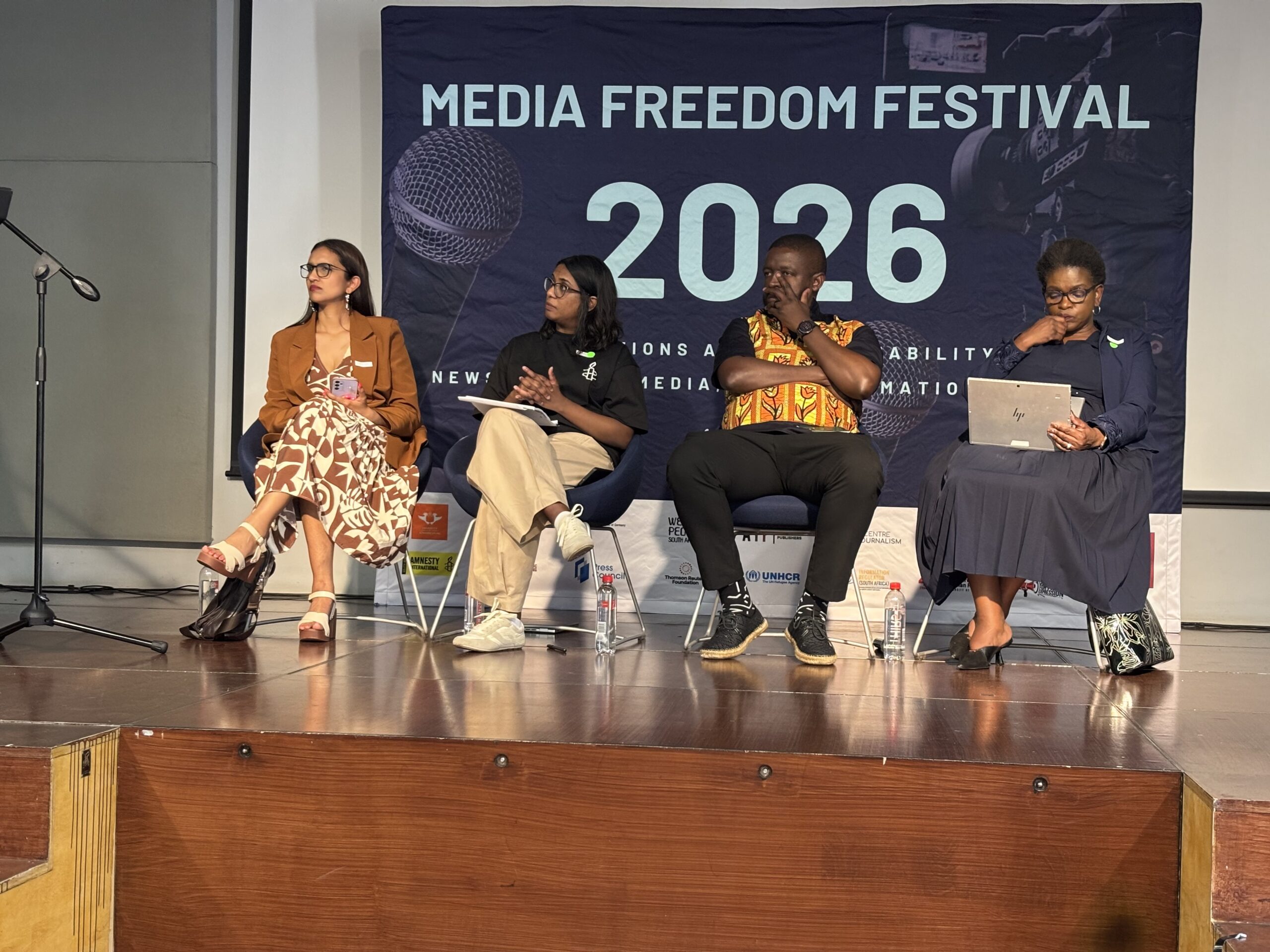
Dr Moko’s research journey also reached international stages from the African Real Estate Society(AfRES) Conference in Zambia to International Real Estate Business School (IREBS) in Germany. At AfRES, the conference was themed ‘Smart Cities in Africa for the 21st Century’ and she found her findings echoed across the continent, funding shortages remain a barrier and partnerships are key.
“Examples such as Rwanda’s smart city initiatives with China and Kenya’s Konza Technopolis highlighted how collaboration often serves as a catalyst for progress,” said Dr Moko. At IREBS, she encountered similar themes in discussions on housing and urban development. “Collaboration, governance and public-private partnerships were recurring issues across African countries”.
Dr Moko added that research has strongly influenced the way she mentors students, she does this by encouraging them to engage with real-world challenges through both research and practice.
“I have been fortunate to supervise several Honours students whose projects focused on smart cities, particularly smart governance”. Dr Moko’s supervision has had notable success, from a project selected for the 2024 UJ College of Business and Economics (CBE) Top 30 Poster Challenge, an accepted conference paper at the 2026 International Business Conference (IBC) and another smart governance study under review for publication.
“These accomplishments reflect my commitment to developing property practitioners who are not only industry-ready but also capable of undertaking research that informs future real estate development, governance and smart city initiatives,” she said.
Recognised as a South African Institute of Black Property Practitioners (SAIBPP) Rising Star, Dr Moko’s research bridges two complementary areas, artificial intelligence in property valuation which enhances efficiency and accuracy as well as the ARCS framework, which strengthens governance and collaboration in smart city development. Together, these strands of work shape the future of Africa’s built environments.
Quizzed on why she chose to ‘complete’ her academic journey at UJ, Dr Moko shared that the University’s position as a leading research-intensive institution, made that decision for her. It is for this reason too, that she added she’d encourage other postgraduate students to further their studies at UJ too:
“The university has established itself as one of South Africa’s leading research-intensive institutions, consistently producing high-quality research outputs and graduates who make meaningful contributions across industries, ranked South Africa’s top producer for accredited research for the past four years. The quality of supervision, research support and academic excellence available at UJ creates an environment where postgraduate students can truly thrive. For anyone serious about pursuing research and academic excellence, UJ remains a compelling choice”.