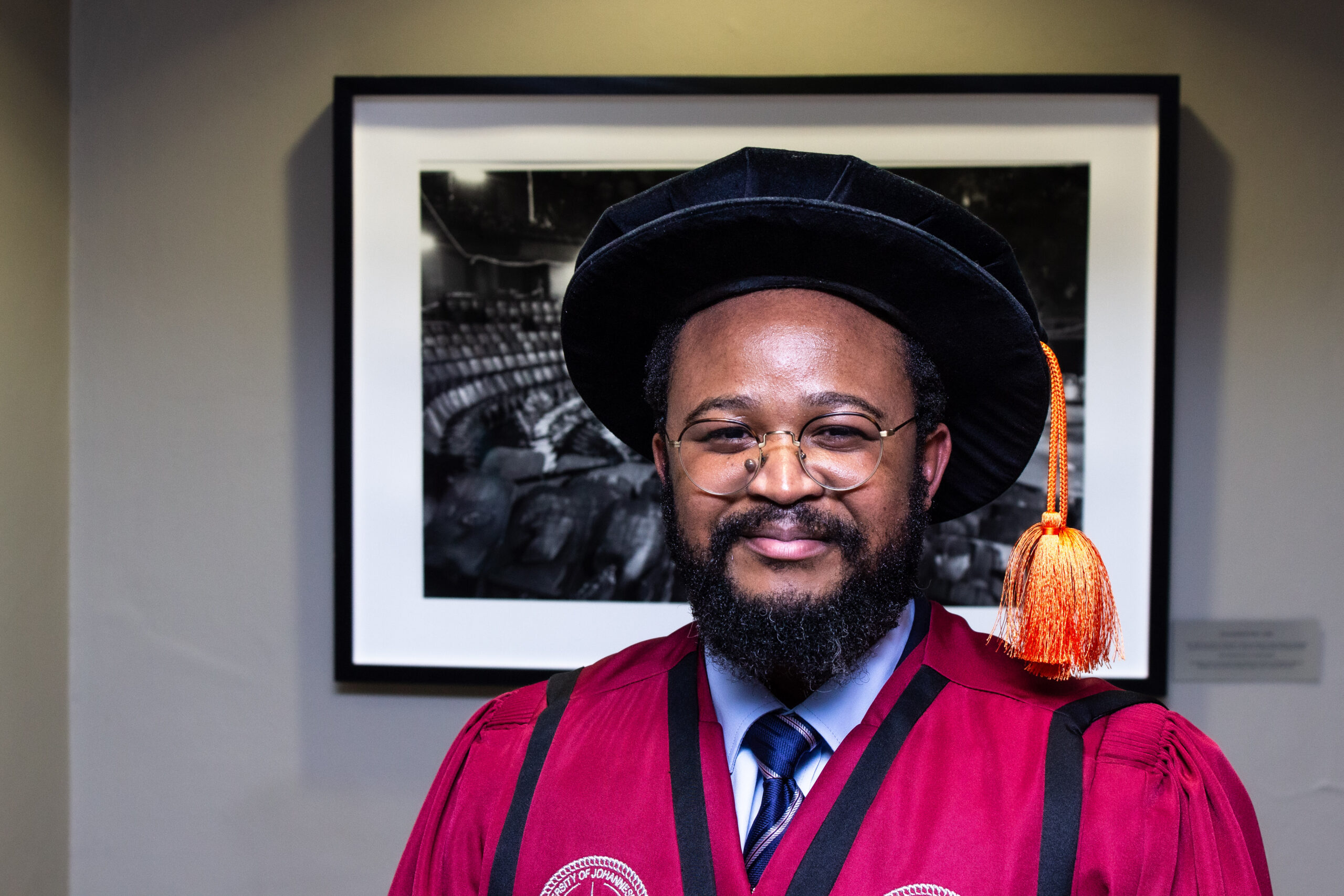
In the study of International Relations, ‘sovereignty’ can be mistaken for a dry, legal abstraction. However, in the political landscape of Africa, sovereignty is a visceral reality, says Professor Bhaso Ndzendze from the University of Johannesburg (UJ).
The question of who has the right to rule a people, defend a territory and go to war, is answered by sovereignty, and in Africa there is more than one version of it, he says.
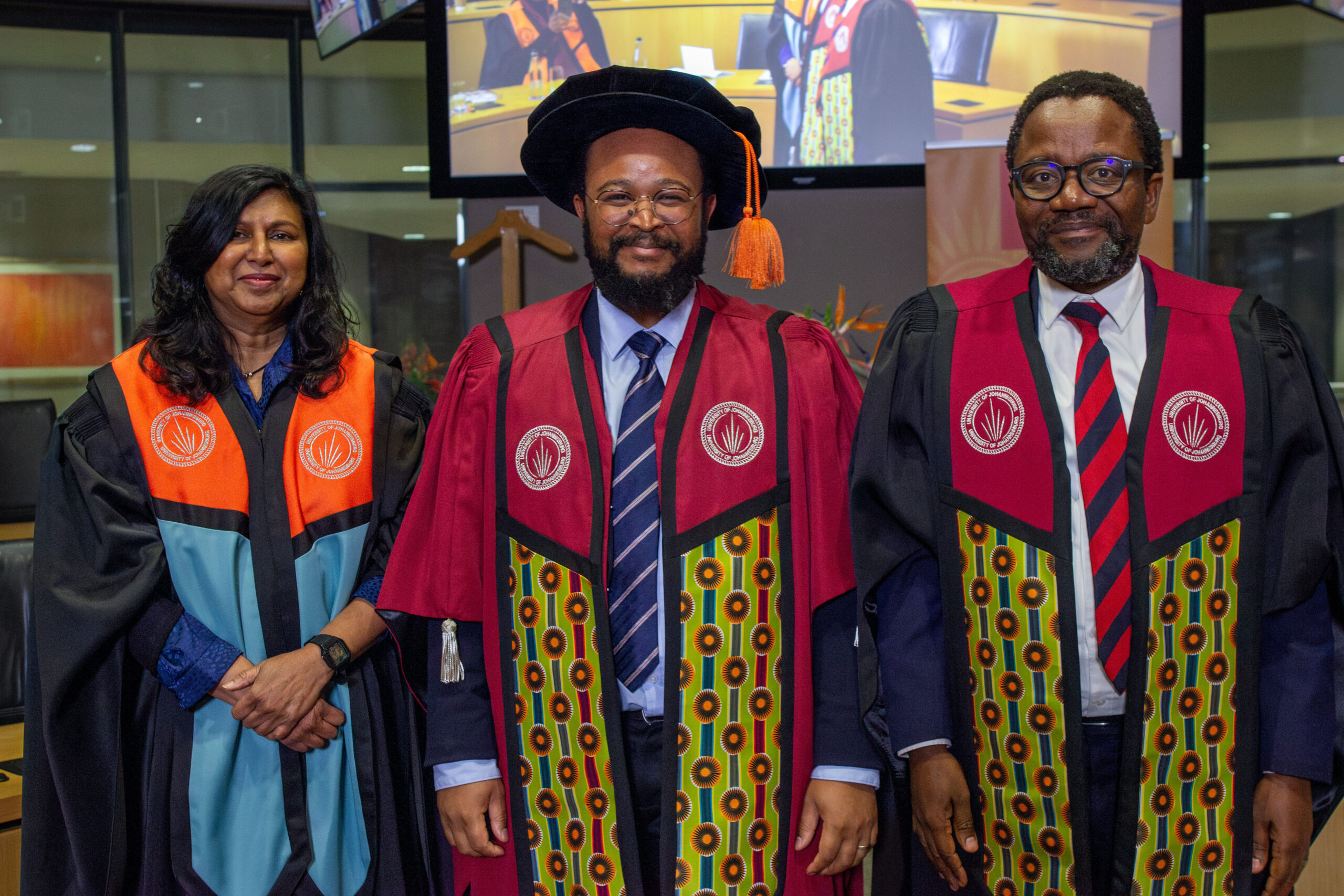
Prof Ndzendze is a researcher in politics and international relations, and a longstanding member of that department. He serves as Senior Director of UJ’s Division of Global Engagement. He was speaking at his inauguration on Tuesday 8 September at the UJ Kingsway campus.
In his lecture, Prof Ndzendze highlights that many of the historical definitions of a ruler’s power date back to sixteenth-century European theory. These still function as the ‘operating system’ for modern African politics, determining how a leader governs, and whether they choose the path of war or peace.
Three versions of sovereignty in Africa
Sovereignty in Africa exists in three distinct ‘versions’ that interact with each other, explains Prof Ndzendze.
One version is presidential sovereignty. This holds that the leader (the ‘sovereign’) is the state. Here, the executive holds the sole authority to judge the public good, the right to go to war, and the right to compel their people to pay for the wars, says Ndzendze.
Territorial sovereignty is a second version, where physical borders are inherited from the colonial era in Africa. Though these borders are often arbitrary, African leaders pledged in the 1964 Cairo Declaration to respect these boundaries as a ‘tangible reality’.
The third version in Africa is popular sovereignty, which exists in the sense of ownership or identity felt by the average citizen, a feeling that the country belongs to the people. This sentiment is fuelled by nationalism and symbols such as national anthems that transform a legal entity into a shared identity.
When a leader’s personal authority (presidential) uses the people’s identity (popular) to seize land (territorial), war is the result, says Ndzendze. Yet, if this is the case, why are full-scale interstate wars in Africa rare, he asks.
Why most African states do not fight each other
In standard International Relations theory, states can be expected to build armies to protect their borders from neighbours. However, in the African context, Professor Errol Henderson identified a phenomenon that ‘turns liberal-democratic logic on its head,’ explains Prof Ndzendze.
Because some African regimes lack deep popular legitimacy, a dictator must keep their army at home to suppress their own population and prevent domestic uprisings, which Henderson calls ‘Inverted Legitimacy.’
In addition, a loss on the battlefield is statistically correlated with a loss of power and often their life, for a dictator.
So instead of ‘real wars,’ African leaders engage in ‘proxy showdowns,’ another insight from Henderson, who calls this Neopatrimonial Balancing. Leaders fund and train rebel groups inside their neighbour’s borders to weaken them without risking a full-scale invasion.
This explains why Africa sees many civil wars but few interstate ones; they are actually ‘proxy wars’ fuelled by fellow African governments.
Not all dictatorships are created equal
However, not all African states have followed the Henderson thesis, says Prof Ndzendze.
“In July of 1977, President Siad Barre ordered the Somalia National Army to invade southeastern Ethiopia. In October of the following year, President Idi Amin ordered his Ugandan Army to cross the Kagera River and invade northwestern Tanzania.
“Two decades later, President Isaias Afwerki of Eritrea likewise directed his army to take over a piece of territory in the border with Ethiopia in Badme. All three presidents were after more land,” he adds.
Ndzendze’s research notes that these three major interstate wars cost the continent a staggering $50 billion in lost growth and destruction.
If dictators are afraid of war, why did Barre, Amin, and Afwerki choose to invade? In his ‘Varieties of Inverted Legitimacy’ thesis, Prof Ndzendze argues that not all dictatorships are created equal.
Dictatorship exists on a spectrum; some are far more ‘closed’ than others, he says.
“Highly closed regimes suffer from ‘closed information systems.’ This results in a lack of open discussion in cabinet and the military apparatus, suppressed access to foreign media (which is useful for intelligence gathering), in addition to incentives for diversionary behaviour as a result of economic decline,” says Prof Ndzendze.
A leader can also make a miscalculation regarding their neighbour. They can decide to invade when they mistakenly believe their neighbour is even more unstable or ‘more dictatorial’ than they are. They convince themselves that the neighbour’s presidential sovereignty is collapsing and that it will be easy to seize their territorial sovereignty.
An example of this is Eritrea, mistakenly invading their neighbour Ethiopia, says Prof Ndzendze.
“Eritrea has no constitution, and the parliament of Eritrea has not met in nearly twenty-five years. The president effectively rules by decree, as the ultimate sovereign,” he adds.
Leaders rallying citizens into war
While the decision to invade is made by a leader, the ‘fuel’ for that war is popular sovereignty. Even the most closed dictator must rally the masses, often using nationalism as a tool to sustain a war effort.
Here, Prof Ndzendze points to an unusual predictor in his research of which states will choose to invade their neighbours: national anthems.
“States with interstate war themes in their lyrics have engaged in more interstate conflict; 75% compared to 54.05% for those without. Further analysis of the three conventionally defined interstate wars in the continent’s history, show that those conflicts were all initiated by states who sing about war in their anthems against states without such themes,” he adds.
Ndzendze captures these findings in his newest book, published by Bloomsbury, titled Interstate Wars in Africa: Costs, Trade and Territoriality.
The unfinished business of colonisation by African neighbours
The colonisation of Africa can be described as a European crime. However, Prof Ndzendze proposes the additional concept of Near-Neighbour Colonization and Occupation (NNCO) in a forthcoming book.
“For most African countries, their moment of independence was marked by a departure of their former European occupant. For about 11% of African countries, including South Sudan, Eritrea and the Western Sahara, the colonial power is a permanent African neighbour. This should complicate our perception towards the African map and the African Union’s policies. It urges us to ask many questions,” he says.
“Confronting this unfinished past is crucial. Within it, I believe, may lie answers to current problems of international law, theory, and trade policy. Digging into this neglected past holds promise for truly understanding it as it happened, how the borders really took shape, and for setting a more realistic pace for genuine continental unity.
“Under those conditions, perhaps it will not only be African states that will empirically prove worth fighting for, but the very continent itself,” concludes Prof Ndzendze.