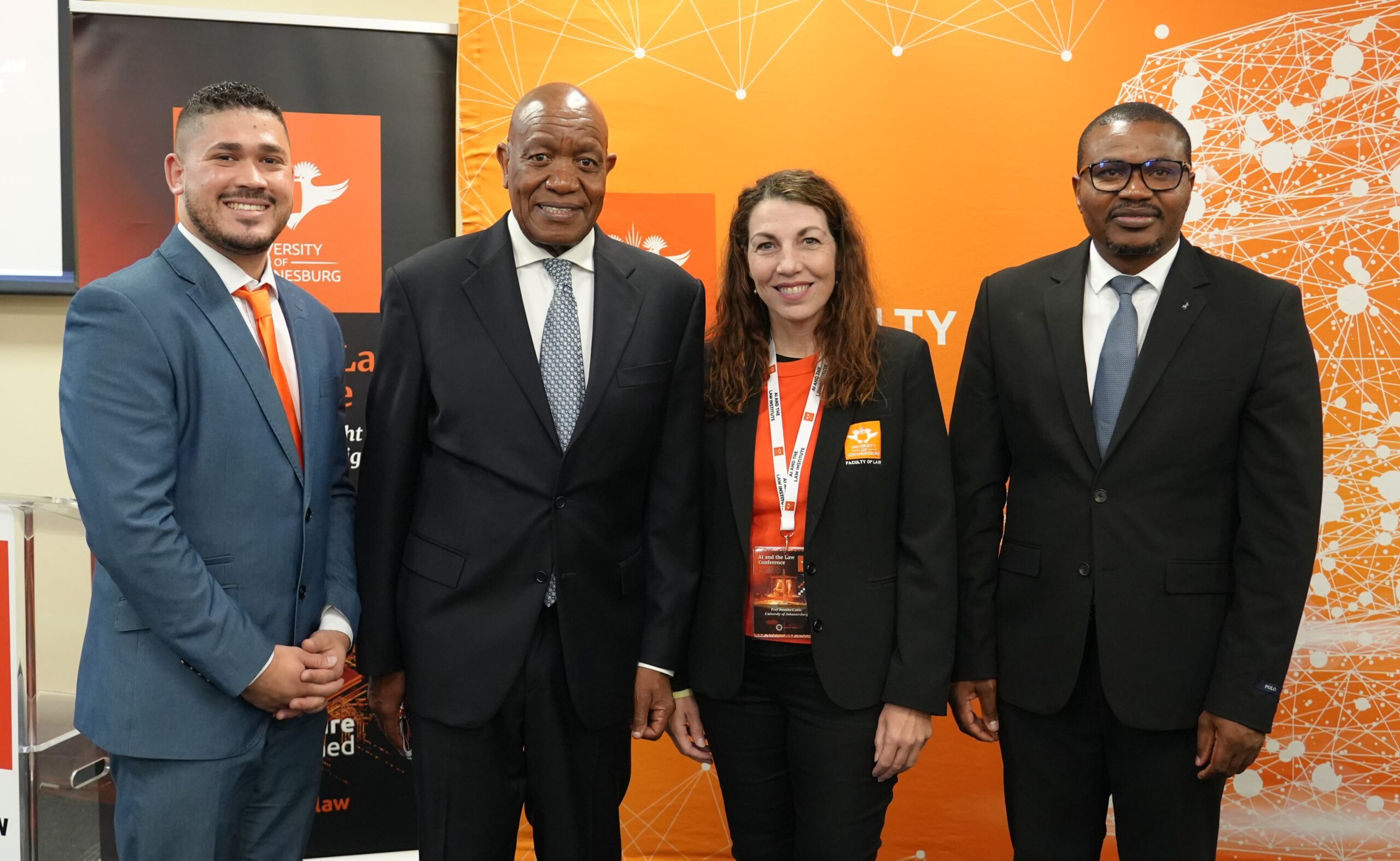
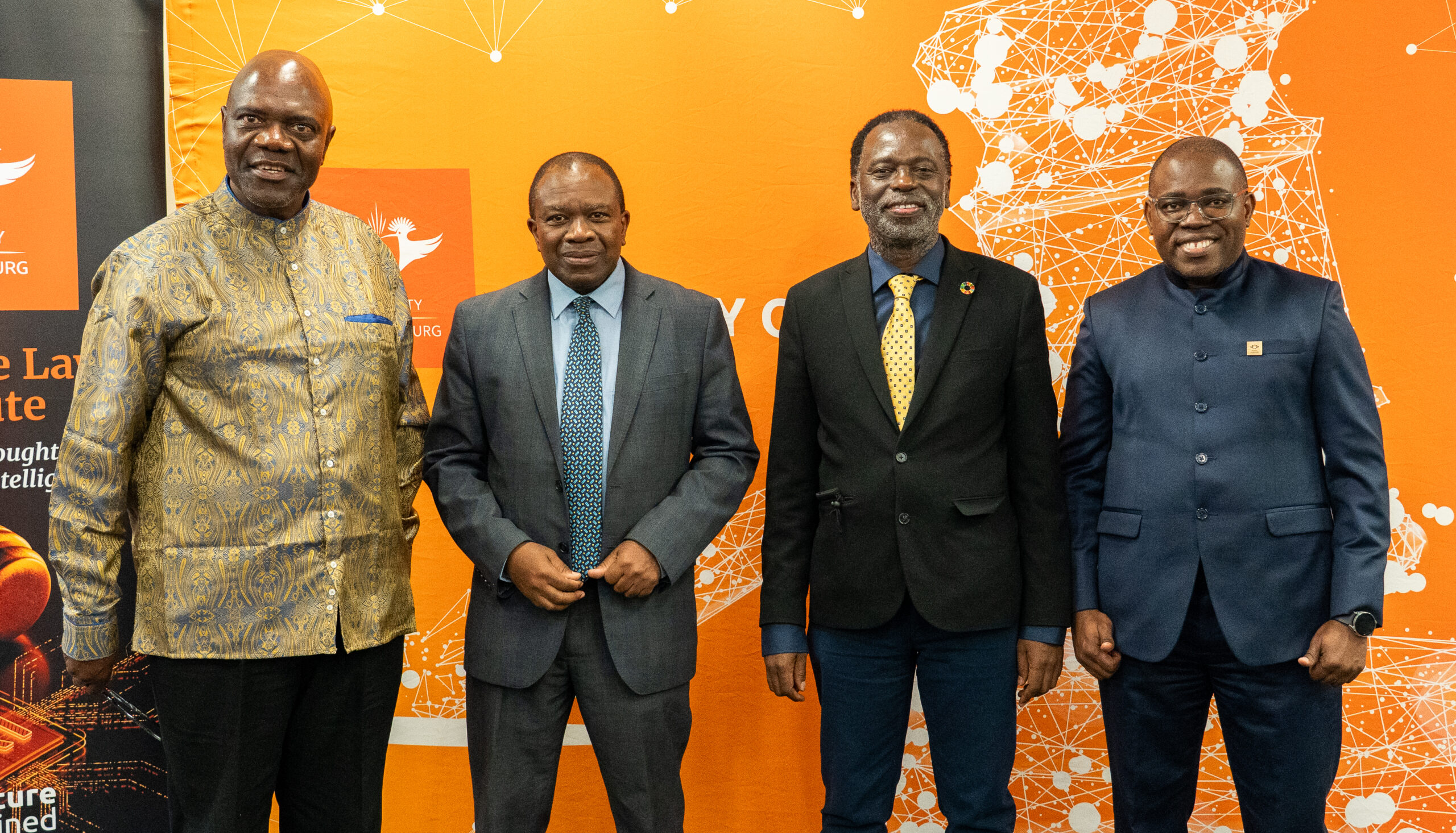
Africa cannot afford to let artificial intelligence (AI) systems developed elsewhere define its people, languages, cultures and future. That was the central message emerging from the second day of the University of Johannesburg’s (UJ) inaugural AI and the Law Conference, where delegates were challenged to confront who designs AI systems, whose data they use, who benefits from them and who is ultimately held accountable when they cause harm.
The second day of the conference brought together leading voices from academia, law, technology and industry for a full day of rigorous engagement. Through keynote addresses, interdisciplinary panel discussions and parallel sessions, scholars, researchers and practitioners presented research and exchanged perspectives on the rapidly evolving relationship between AI, law, governance and sustainable development. The programme also featured an industry address by Technology Innovation Agency (TIA) Chief Executive Officer Dr Titus Mathe, bringing an industry and innovation perspective to the conference.
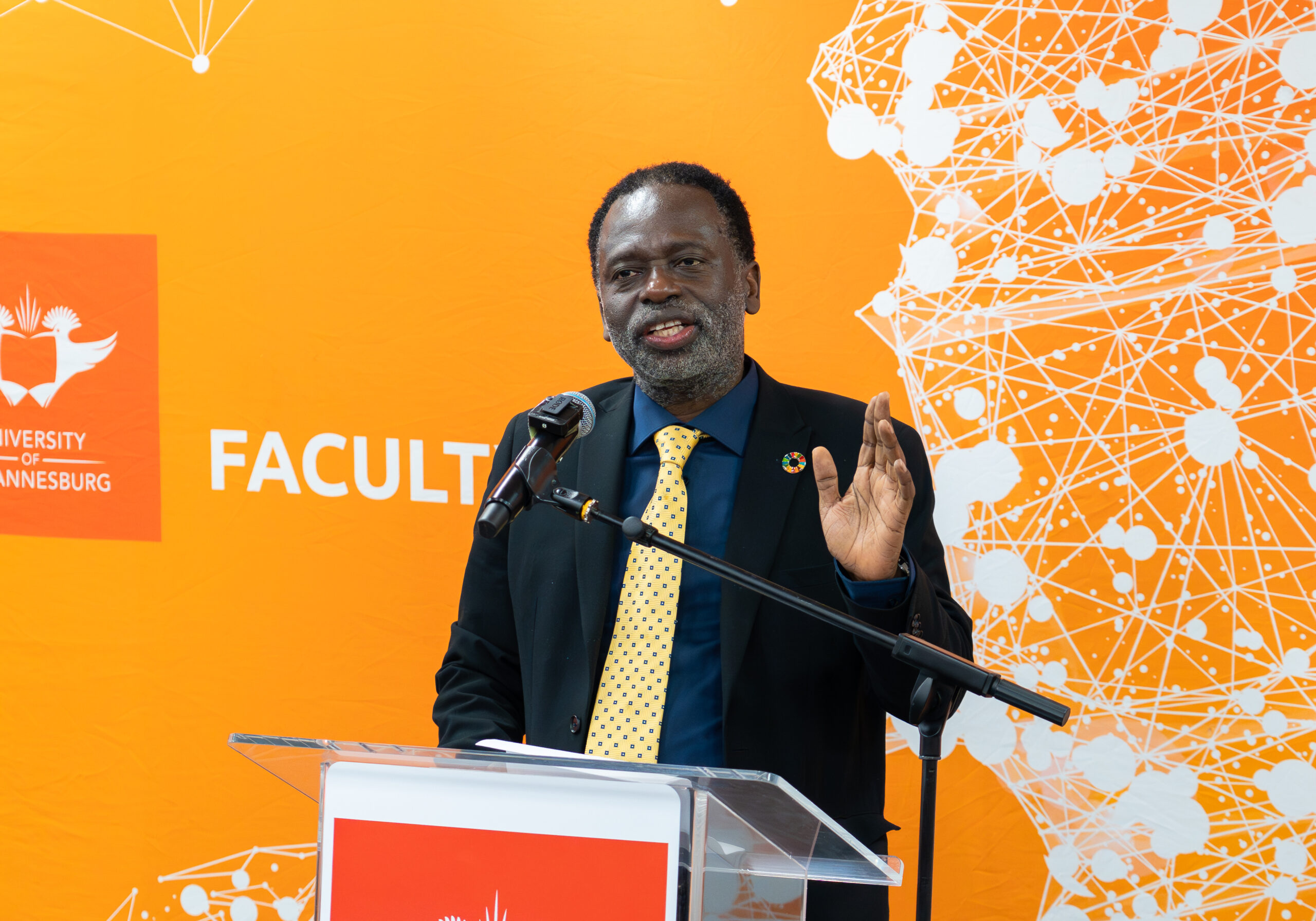
At the centre of the morning’s proceedings were keynote addresses by United Nations Under-Secretary-General and Rector of the United Nations University Professor Tshilidzi Marwala and UJ Vice-Chancellor and Principal Professor Letlhokwa George Mpedi. Together, they delivered a clear message: Africa must move beyond being a passive consumer of technologies and regulatory frameworks developed elsewhere and take an active role in shaping the laws, governance systems and technologies that will define its future.
Prof Marwala opened his address with a series of fundamental questions that he said sit beneath almost every conversation about artificial intelligence.
“When something goes wrong, or even when something goes right, who decides? Who is liable? Who designed the system that made the decision possible? And what trade-offs did we quietly accept along the way without really naming them?” he asked.
He argued that society must approach artificial intelligence through three interconnected lenses: law, governance and balance. Law determines who is liable and how rights are protected; governance determines how systems of oversight, data, algorithms and computing infrastructure are designed; while balance requires society to confront the unavoidable trade-offs between technological advancement and its risks.
“For every domain AI touches, society must decide how much certainty the law demands, how much structure governance provides and how much trade-off we are willing to accept,” Prof Marwala said.
He warned that AI’s rapid expansion into areas including access to justice, criminal law, healthcare, employment, intellectual property and environmental sustainability demands greater collaboration between lawyers, engineers, policymakers and experts across disciplines.
In the justice system, AI-powered legal assistance and document automation could significantly expand access to legal services, particularly for communities that have historically struggled to access justice. However, Prof Marwala cautioned that these benefits would only be realised if people could access and trust these technologies and if meaningful regulatory safeguards were established.
“If we let the companies write the rules for the very tools meant to close the justice gaps, we risk the same digital divide simply reappearing inside the solution,” he warned.
He also raised concerns about the use of AI in criminal justice, where predictive policing and risk-scoring systems can influence decisions on bail, sentencing and parole. Given that AI systems are fundamentally based on statistical models, he questioned whether probabilistic technologies should be relied upon in legal matters that demand proof beyond reasonable doubt.
Prof Marwala further cautioned that AI systems can produce responses that appear convincing and accurate while being factually incorrect, making it essential for lawyers and policymakers to understand the technical limitations of the technologies they seek to regulate.
“Accuracy is not truth,” he said. “The same way we have long understood that correlation is not causation, we must recognise that accuracy is not truth.”
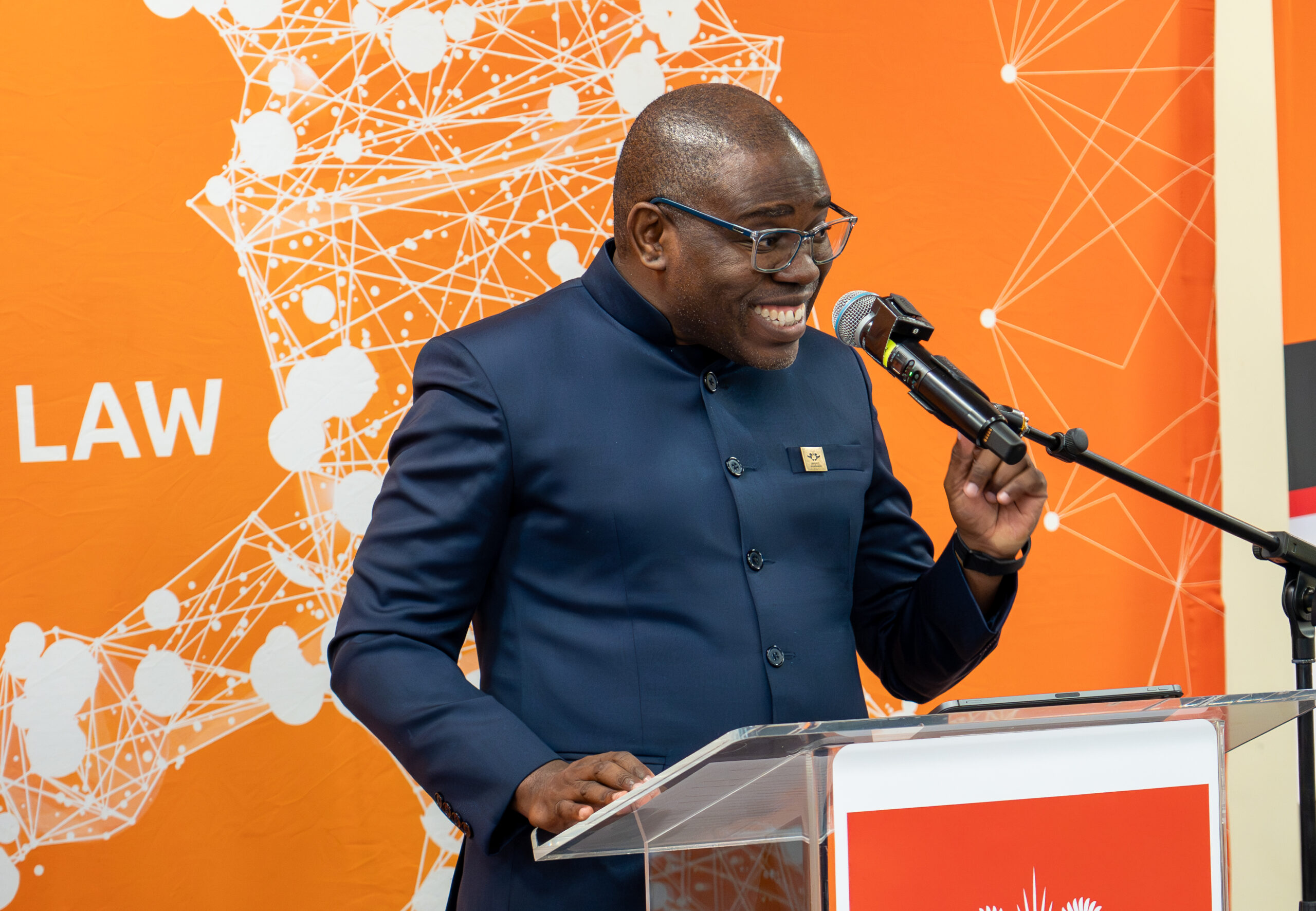
Building on Prof Marwala’s address, Prof Mpedi brought the conversation firmly into the African context, warning that the continent cannot simply import AI governance frameworks developed for other jurisdictions and expect them to respond adequately to Africa’s distinctive social, cultural and economic realities.
“AI models are mirrors. They reflect whatever they were fed. And if the data feeding those mirrors is overwhelmingly Western, then Africa is letting someone else’s mirror define its own reflection,” Prof Mpedi said.
He highlighted the risk of African cultural heritage and indigenous knowledge being reproduced by AI systems without recognition, attribution or compensation. Traditional African fabrics, patterns and other forms of cultural expression, he said, could be replicated and commercialised thousands of kilometres away from the communities that created them.
Drawing on South Africa’s protection of Rooibos through geographical indication, Prof Mpedi argued that Africa should explore similar legal mechanisms to safeguard the provenance of its cultural heritage in the age of artificial intelligence.
“Africa needs the AI equivalent of geographical indication – a legal mechanism that protects cultural provenance before it is absorbed and monetised elsewhere,” he said.
Prof Mpedi argued that Africa is not without negotiating power. Through the African Union and the African Continental Free Trade Area, the continent represents 54 countries and approximately 1.4 billion people, giving it significant collective leverage in shaping how African data is used to train AI systems.
“We should talk together. We represent 1.4 billion people. If we harness it, it will be strong,” he said.
Language, he added, presents another significant challenge. Africa is home to approximately 2,000 languages, yet leading AI systems perform reliably in only a small fraction of them. This has important implications for access to justice and raises questions about whether AI systems can genuinely serve communities whose languages, legal traditions and approaches to dispute resolution they do not adequately understand.
“An AI-driven legal aid tool is not neutral if it cannot reason competently in isiZulu or Sesotho,” Prof Mpedi said.
He stressed that algorithmic bias must therefore be understood as more than discriminatory outputs. It also raises fundamental questions about whose languages, legal reasoning, cultural knowledge and social realities are represented in the data used to develop AI systems.
The two keynote addresses ultimately converged on a shared message: law, governance and technological innovation cannot operate in isolation.
“Law alone arrives too late. It adjudicates harm only after the fact. Governance alone lacks teeth. It can design excellent systems that no one is actually bound to follow. And balance alone is just honesty about trade-offs, with no mechanisms to enforce the choices we have made,” Prof Marwala said.
“Put together, balance names the trade-offs, governance designs and manages them, and law enforces the outcome.”
Beyond the keynote addresses, day two unfolded as a full day of rigorous academic and interdisciplinary engagement. Parallel sessions created a platform for scholars, researchers and legal practitioners to present their research and critically engage with the opportunities and challenges emerging at the intersection of artificial intelligence, law and sustainable development.
The programme also featured a panel discussion under the theme Artificial Intelligence, Sustainability and the Future of Society: Interdisciplinary Perspectives. Chaired by UJ Faculty of Law Acting Vice-Dean for Teaching and Learning Professor Sebo Tladi, the discussion brought together Professor Georg Borges of Universität des Saarlandes in Germany, Professor Arthur Mutambara of UJ’s Institute for the Future of Knowledge, and Professor Sune von Solms of the UJ Faculty of Engineering and the Built Environment. The session reinforced the conference’s multidisciplinary character and the importance of looking beyond traditional disciplinary boundaries when confronting the complex societal implications of AI.
Speaking in the Kruger National Park, which marks a century of protection in 2026, Prof Mpedi drew a parallel between conservation and the responsibility facing the current generation as it develops legal and governance frameworks for artificial intelligence.
“We are gathered in a place that protects something precious because generations before us had the foresight to build the legal instruments to make that protection durable. I hope this conference is one more such instrument,” he said.