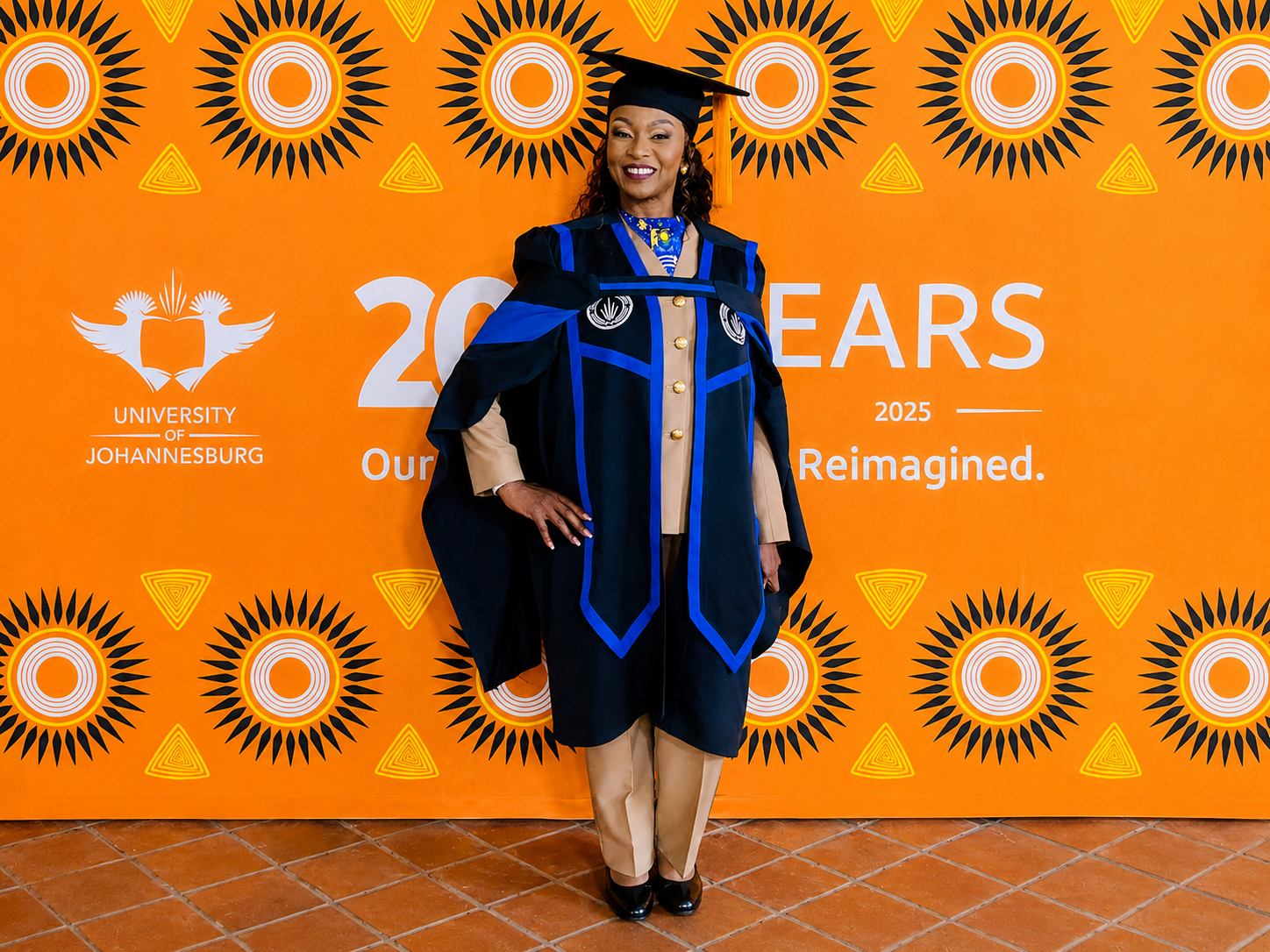
When Johannesburg Metropolitan Police Department (JMPD) Director of Operations, Angela Mokasi graduated with a Master’s degree in Public Management and Governance from the University of Johannesburg (UJ), she made a choice that reflected who she is.
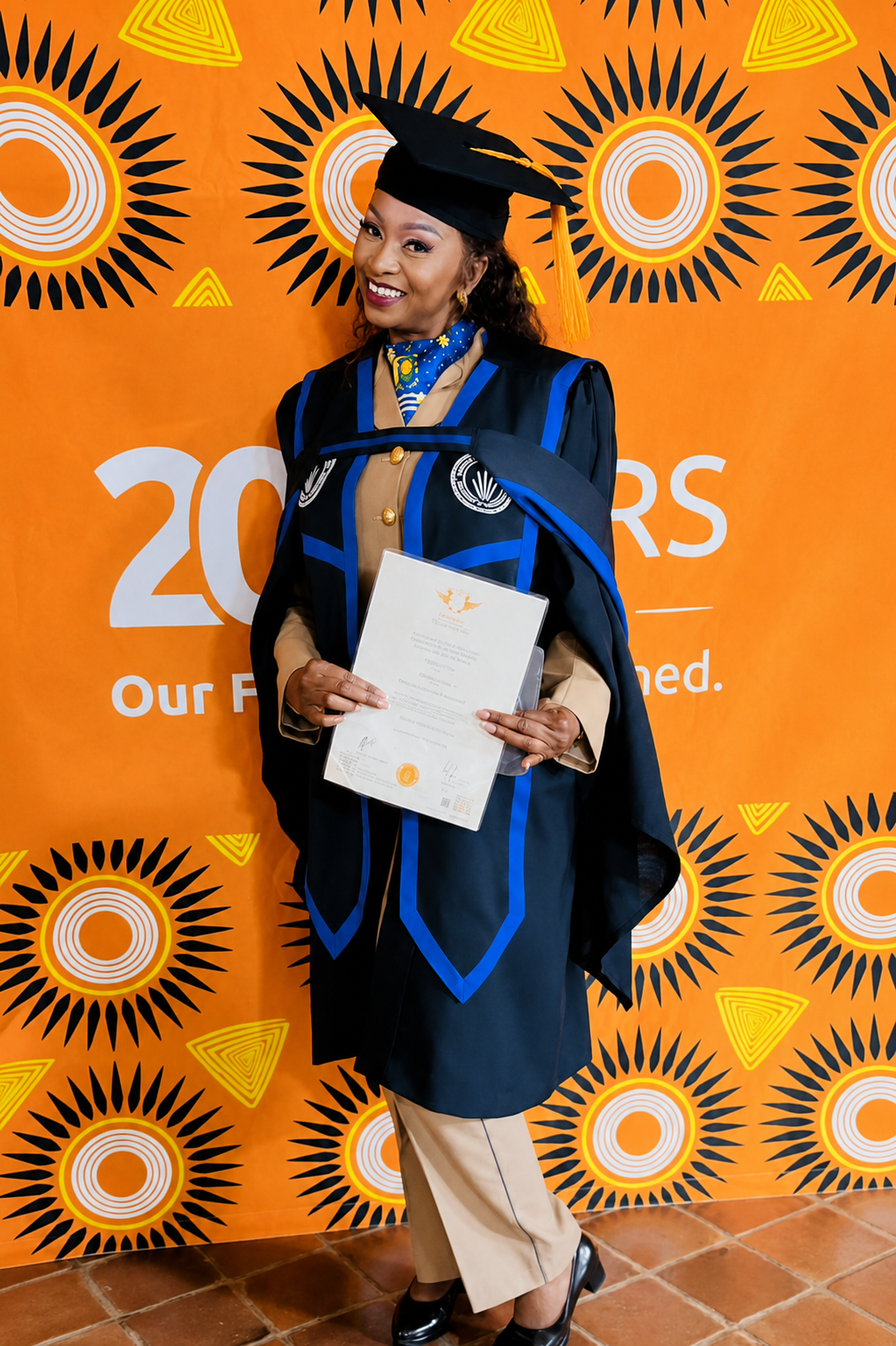 Instead of wearing a formal outfit beneath her graduation gown, Mokasi wore her JMPD uniform.
For her, it was more than a uniform. It represented 30 years of serving the people of Johannesburg and reminded her of the journey that brought her to the graduation stage.
“I chose to wear my uniform because it is part of my identity,” she says. “It represents discipline, service and commitment to the people of Johannesburg.”
Graduating in uniform was also her way of showing that education and public service go hand in hand. She says she wanted to represent not only herself, but also her profession and the many women in law enforcement who continue to lead and inspire others.
Mokasi joined the JMPD in 1995 and has spent three decades serving the City. During that time, she has often seen metro police officers judged by the minimum entry requirements of a matric certificate and a driver’s licence.
She says earning a master’s degree was one way of changing that perception.
“We study not only to improve ourselves, but also to improve the organisations we serve,” she says.
She hopes her achievement shows that police officers are lifelong learners who are committed to growing as professionals and serving their communities better.
Mokasi’s years on the frontline inspired her master’s research.
Her dissertation looked at how artificial intelligence and digital technology can help improve policing and governance in Johannesburg.
She believes modern policing must keep up with criminals who are becoming more organised and are using new technology.
“We need smarter tools, better information and more innovative systems to improve crime prevention and public safety,” she says.
Her research recommends greater use of technologies such as CCTV cameras, dashcams and body-worn cameras. These tools can help officers gather evidence, improve accountability and respond more effectively to incidents.
She also believes artificial intelligence can help police identify crime hotspots, predict risks and deploy officers where they are needed most.
For Mokasi, technology is not about replacing officers. It is about giving them better tools to protect communities.
Mokasi has also made history in her career. Between 2020 and 2024, she became the first woman to act as Chief of Police.
She says the experience taught her to stay focused, believe in herself and lead with confidence, even when faced with resistance.
“Leadership is not about gender,” she says. “It is about character, capability and the courage to serve.”
She hopes her journey encourages more women to pursue leadership positions and believe in what they can achieve.
Balancing work, family life and postgraduate studies was not easy, but Mokasi says she never lost sight of her goal.
Today, she sees her master’s degree as more than a qualification. She believes it will help her become a stronger leader and contribute to better policing and better governance.
She also hopes her story inspires others, especially women in uniform, to continue learning throughout their careers.
“For me, this degree is not the end of a journey,” she says. “It is the beginning of a new chapter of impact.”