As South Africa prepares for the upcoming local government elections, concerns around online misinformation, artificial intelligence (AI), and the safety of journalists have moved to the forefront of public debate.
These issues took centre stage at the Media Freedom Festival 2026 ,that took place over three days from 14 to 16 October 2026 at the Goethe-Institut, Johannesburg.
Hosted by Moxii Africa, where University of Johannesburg’s (UJ) Prof Prinola Govenden, UNESCO Chair in Cultural Inclusivity and Equity in Digital Media was a partner and moderated a high-level panel discussion on Unpacking Everyday Risk to Election Threats of Online Harms. The discussion brought together representatives from the Independent Electoral Commission (IEC), Amnesty International South Africa, the South African National Editors Forum (SANEF) and the South African Human Rights Commission.
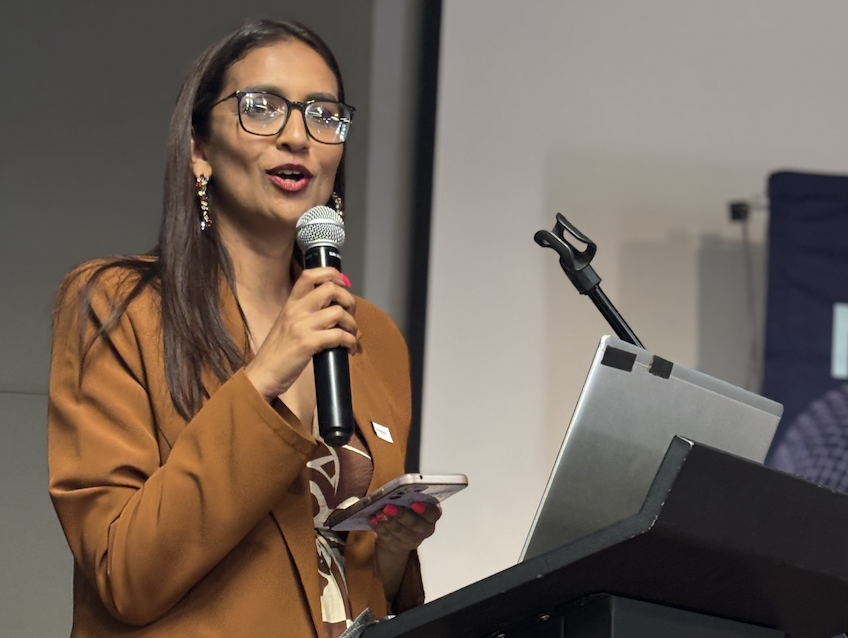
Opening the conversation, Prof Govenden questioned how institutions such as the IEC are adapting to the growing challenges posed by AI-generated content and disinformation campaigns. “We are in an era of AI and social media,” she said. “Are you starting to address the fake AI that political parties are using?”
Fikile Moya, IEC General Manager: Communications emphasised that information integrity is central to the Commission’s work. “What we do at the IEC is organise elections in such a way that they are understood to be free and fair,” he said. “In the process of making sure that elections are free and fair, information integrity is integral.” Moya explained that the Commission has dedicated teams responsible for detecting and debunking disinformation, ensuring that voters have access to information that is “credible, verifiable and useful” when making electoral decisions. The discussion also highlighted the broader societal impact of online harms.
Speaking from a human rights perspective, Amnesty International South Africa’s Cassandra Dorasamy warned that unchecked digital platforms can undermine democratic participation and expose journalists, activists and human rights defenders to abuse. “How do we know what we know?” she asked. “We have an existential question about information integrity and what individual agency means in a context where information is shaped by algorithmic systems built on profit models.” Dorasamy argued that stronger regulation and accountability mechanisms are needed to address online harms, while also recognising the positive role that digital platforms can play in civic mobilisation and democratic participation.
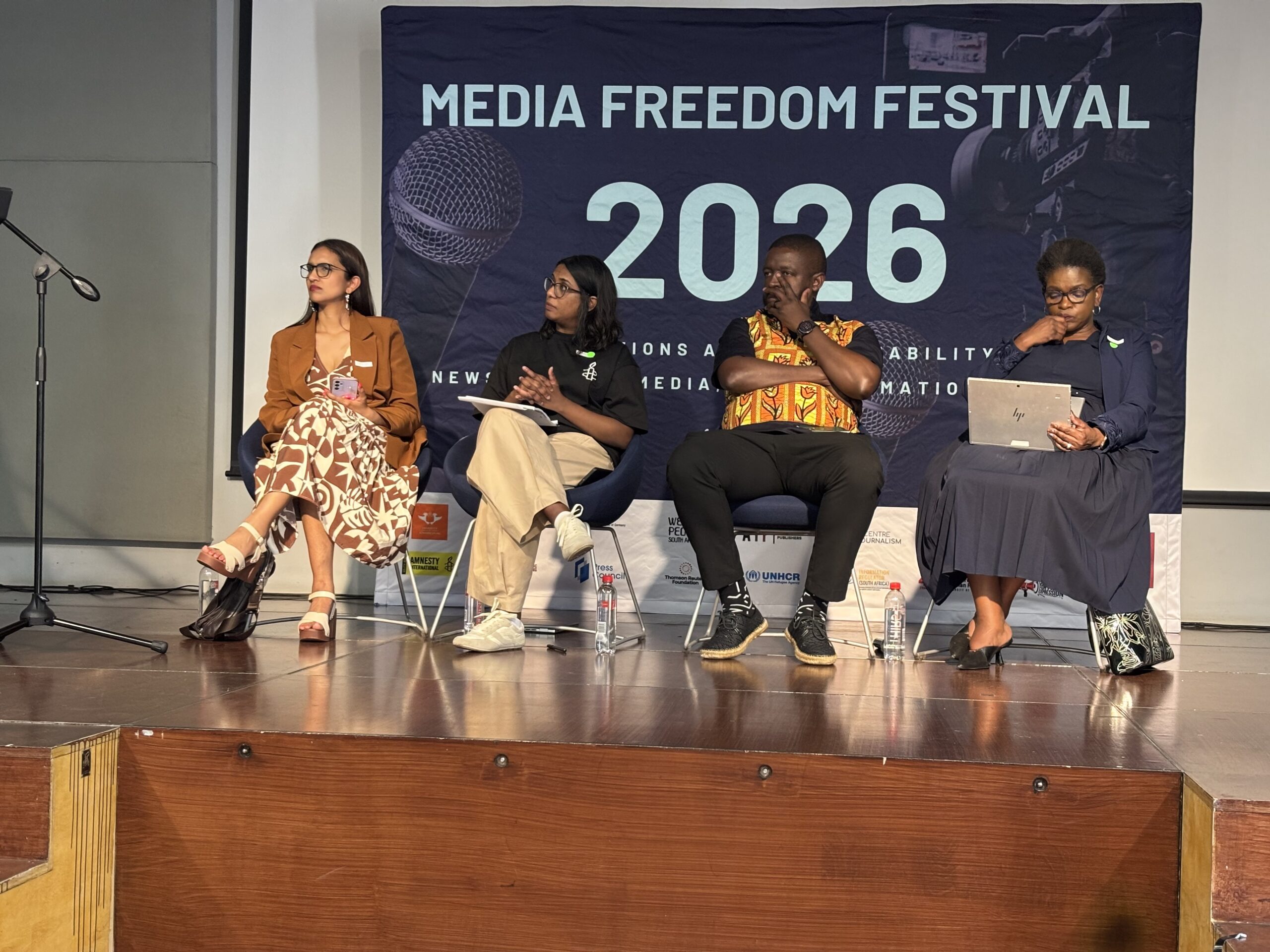
A particular concern raised during the discussion was the increasing harassment of journalists online. South African National Editors Forum (SANEF) executive director Reggy Moalusi noted that the organisation, working with partners including the IEC and Moxii Africa, had trained thousands of journalists across South Africa on election reporting, information integrity, and online harms. “We have seen the IEC releasing the disinformation code, and we registered our unhappiness with the IEC on that code because it largely excluded journalism matters,” Moalusi said. He added that SANEF remains concerned about online attacks directed at journalists, particularly women journalists. “We don’t seem to be making progress on online harms directed at journalists, particularly female journalists,” he said.
Nomahlubi Khwinana, Commissioner at the South African Human Rights Commission outlined the Commission’s role in election monitoring and voter rights protection, including advocacy for persons with disabilities and broader civic education initiatives in the lead-up to elections.
Reflecting on the discussion, Prof Govenden emphasised that the purpose of the Media Freedom Festival 2026 was not simply to encourage dialogue but to identify practical solutions. “I think one of the objectives of this year’s Media Freedom Festival is not only to be a dialogue and to conversate, but also to come up with solutions,” she said.
The conversation highlighted the growing importance of collaboration between electoral bodies, media organisations, civil society, and human rights institutions in safeguarding information integrity and strengthening democracy in an increasingly digital age.