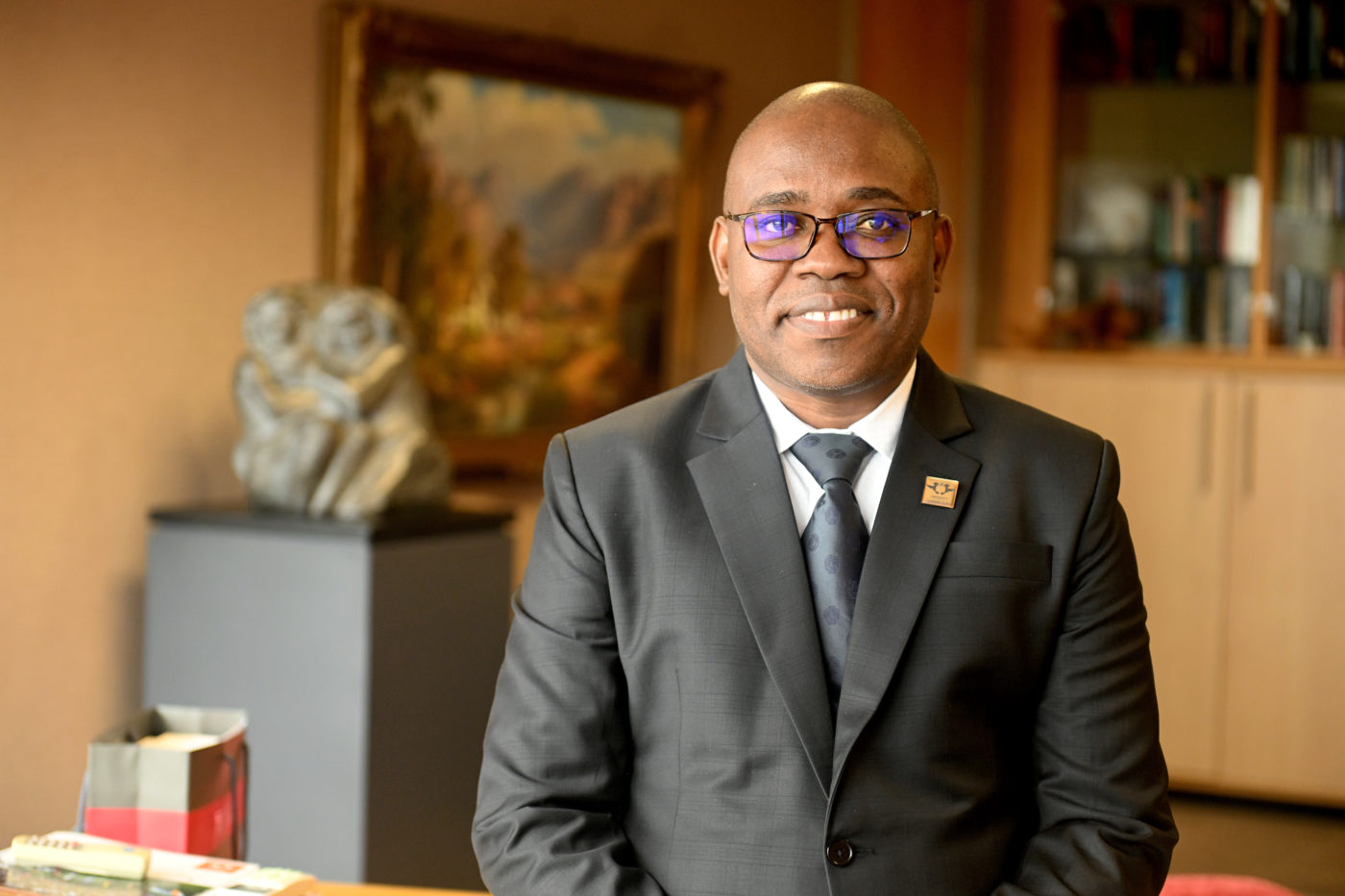
Umesh Ramnarain is a Distinguished Professor of Science Education, and Director of the Centre for Advanced Learning Technologies in Science, Technology, Engineering, Arts and Mathematics (CALTSTEAM) at the University of Johannesburg.
Mafor Penn is an Associate Professor of Science Education, and senior researcher at the Centre for Advanced Learning Technologies in Science, Technology, Engineering, Arts and Mathematics (CALTSTEAM) at the University of Johannesburg.
Joseph Krajcik is a Distinguished Visiting Professor in Science Education at the University of Johannesburg, and University Distinguish Professor and Director of the CREATE for STEM Institute at Michigan State University.
They recently published an opinion article that first appeared in the Sunday World on 05 July 2026.
Imagine a science teacher in a rural South African school. Her classroom is overcrowded, there is no laboratory, and internet access is unreliable. She wants her learners to truly understand science rather than simply memorise facts, but she has limited resources and very little support. Every day, she searches for better ways to teach, hoping to make lessons more engaging and meaningful. Not far away, a university researcher has published what turns out to be a popular paper on science education in an academic journal. Despite the paper receiving rave reviews for contributing to academic success, the teacher never learns about the results or how the results could impact her teaching. As such, nothing changes in her classroom, and students’ motivation and understanding do not improve.
This is the uncomfortable reality of much of our education research in South Africa that focuses on STEM (Science, Technology, Engineering and Mathematics) education. South Africa produces a significant amount of research in STEM education, which on the surface, suggests progress and growth in knowledge. However, in many classrooms, the same challenges persist and inequalities exist. Learners continue to struggle with mathematics and science, teachers remain under-supported, and inequalities between schools are still deeply entrenched.
The problem is not a lack of research, but that much of it is disconnected from the realities of classrooms and not accessible to teachers and learners. It is often written in technical language, published in hard-to-access journals, and aimed primarily at other academics rather than the teachers and learners it is meant to serve. As a result, a gap continues to widen between what is researched in universities and what is experienced in classrooms.
Part of this problem lies in how universities define success. Researchers receive rewards for the number of papers they publish, the status of the journals, and how often other scholars cite their work. This creates a strong incentive to produce research quickly and consistently, often prioritising what is publishable over what is useful. In such a system, research that involves working closely with schools, testing ideas in real classrooms, and developing practical solutions can be overlooked because it takes time and does not always lead to immediate publications. Yet in a country facing serious educational challenges in STEM education, this approach is increasingly difficult to justify.
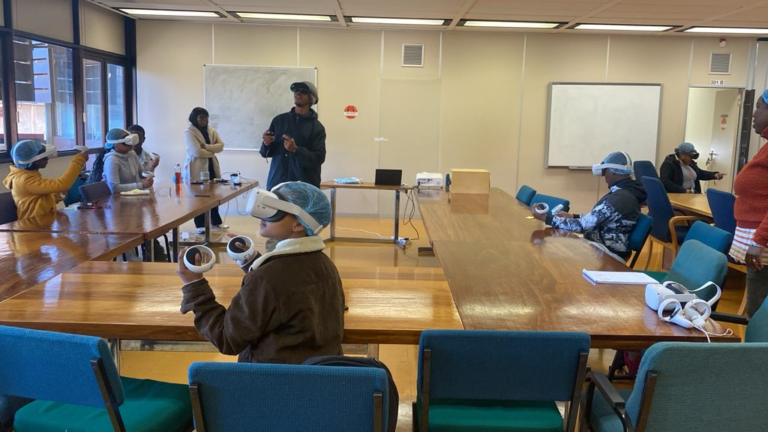
If research is to make a meaningful difference in lives of teachers and students, it must be grounded in the realities of classrooms. It should involve working directly with teachers and learners, developing and testing strategies that can be used in everyday teaching, and creating solutions that are practical and adaptable. This could include supporting teachers to environments and actively, even without laboratories, designing low-cost digital tools that bring interactive learning into under-resourced environments, and developing approaches that encourage learners to think critically and engage actively with scientific ideas.
Such research may take longer and may not always produce quick output, but it has the potential to bring about real change. Moreover, teachers need access to the research findings to bring about change in their classrooms. As such, researchers also need to receive rewards for publishing companion pieces that align with published research articles that teachers can read and apply the ideas in their classrooms.
Doctoral studies also need to be rethought in this context. PhD programmes are meant to develop the next generation of scholars, yet too often they become exercises in meeting academic requirements rather than addressing real-world challenges that exist in schools. There is an opportunity to guide doctoral students towards research that tackles pressing issues, such as improving mathematics and science teaching in rural and township schools, supporting learners who struggle with mathematics, developing tools that make learning more accessible and engaging, or exploring how to provide teachers with professional learning to implement these new approaches. These are not only academically valuable topics but also socially necessary ones. Without this shift, we risk producing graduates who contribute to academic debates but not to improving the teaching and learning of STEM in South Africa.
STEM education in South Africa faces challenging and deeply rooted and complex problems. They include inequality in access to resources, gaps in teacher preparation, and learners who often find science and mathematics disconnected from their lived experiences. These are not simple problems with quick fixes, but they are often referred to as “wicked problems” Addressing them requires sustained effort, collaboration across sectors, financial support from private and governmental sources, and research that is both innovative and practical. It requires researchers to spend time in schools, to understand the realities teachers face, and to work alongside them in developing solutions that are meaningful and sustainable.
This also requires a shift in how we measure the success of research. Instead of focusing primarily on how many papers researchers have published, we need to ask whether research is making a difference. Has it improved teaching practices? Has it enhanced learners’ understanding and motivation to learn science? Has it contributed in any way to reducing inequality? Can it be applied in different contexts? These are the questions that should guide how research is valued, particularly in a country where education plays such a critical role in social and economic development.
The current emphasis on publishing has consequences that extend beyond academia. Teachers continue to feel unsupported, learners become disengaged, and valuable research remains unused. This is not simply an issue for universities; it is a national concern. If research is to fulfil its purpose, it must move beyond being an end in itself and become a means of improving lives teachers and learners throughout South Africa. If research does not reach the classroom, supports the teacher, or inspires the learner, then it does not fulfil its purpose. It is time to move beyond counting publications and start focusing on impact.
*The views expressed in this article are that of the author/s and do not necessarily reflect that of the University of Johannesburg.