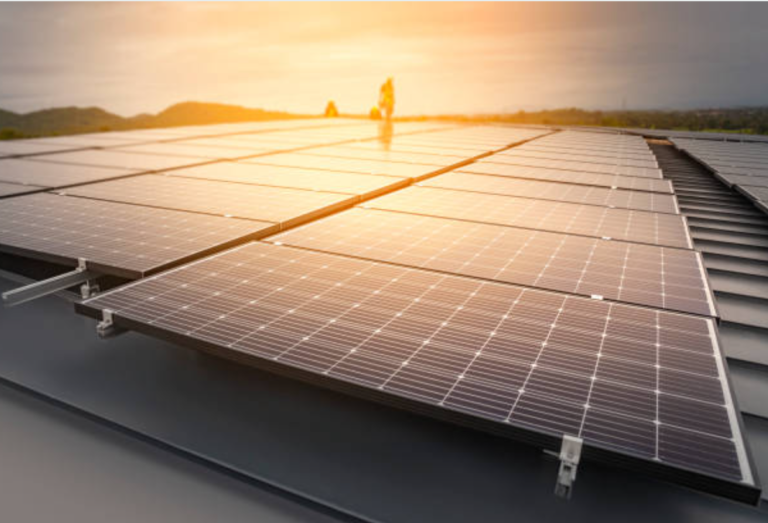
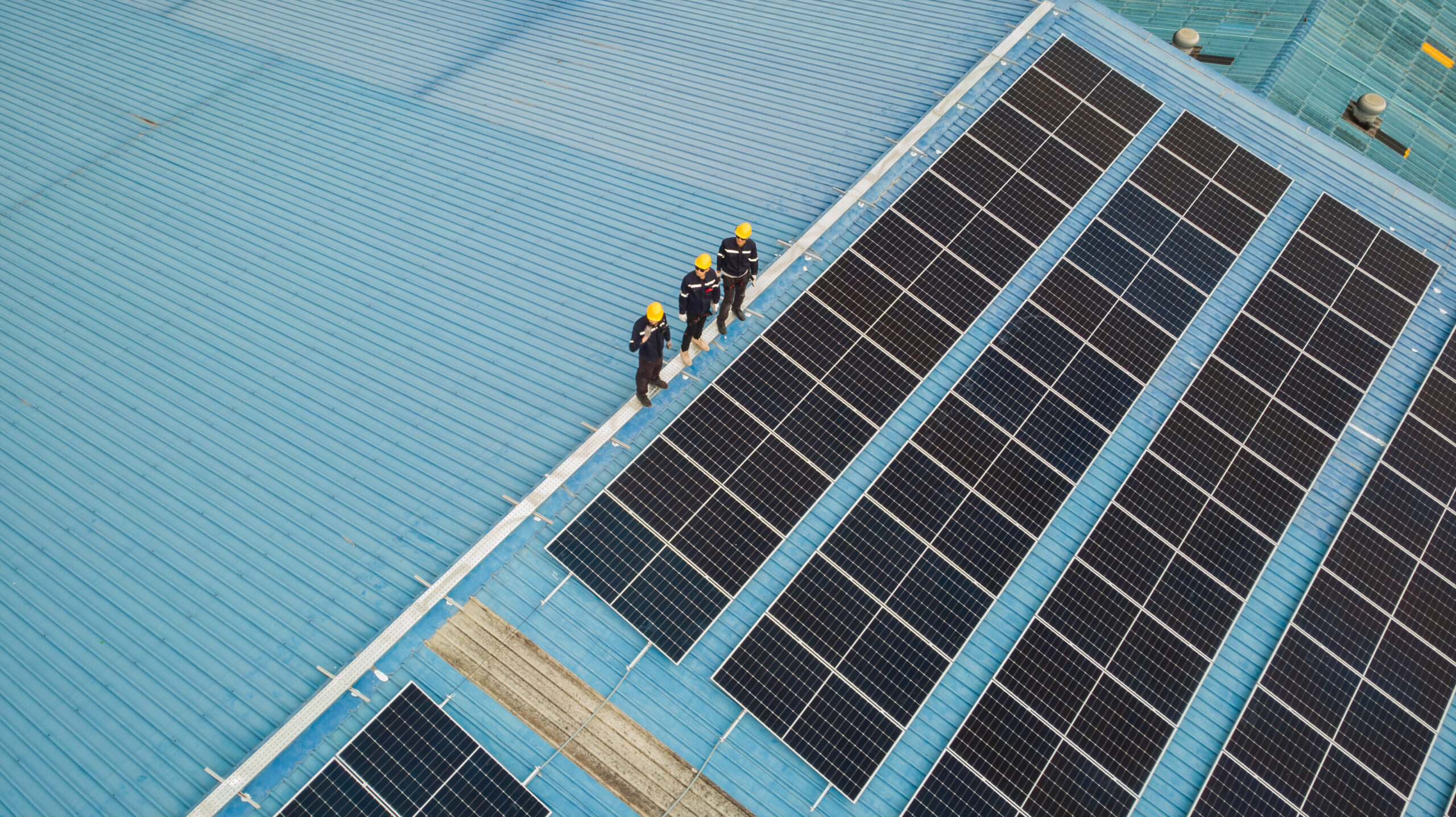
Researchers at the University of Johannesburg (UJ) have developed a model showing that a resilient rooftop solar energy system with storage is feasible for mid-sized commercial facilities in the city.
In a recent study, they combine solar photovoltaic (PV) power panels, battery storage, and a bidirectional inverter for flexible power conversion at a site in a developed area. The model is optimised for the specific solar and climatic conditions in Johannesburg.
“Large businesses normally want four things from an electricity system. They are looking for continuity of supply, acceptable power quality, and predictable energy costs. They also want to add more energy resilience themselves,” says Professor Bonginkosi Thango.
 Prof Thango is an Associate Professor in the Department of Electrical Engineering Technology at UJ.
“For a headquarters, data-intensive office or industrial site, the question is whether operations can continue during day-long local or national grid outages. A PV-only system can reduce daytime electricity purchases. However, it cannot supply the building at night, or through a grid outage, unless it has storage. PV combined with storage and bidirectional power conversion is already established technology in South Africa.”
At utility scale, Eskom has commissioned battery-energy-storage (BESS) projects such as the Hex installation in the Western Cape. Commercial and industrial behind-the-meter batteries are also a growing South African market.
The study site’s measured and modelled demand is about 840 kWh per day. That is an average continuous load of roughly 35 kW, but the peak reaches about 178 kW, more than five times the average.
The study also shows the strongest demand in the late afternoon and early evening, especially around 18:00 to 21:00. “That profile is consistent with a busy commercial building using lighting, cooling, refrigeration and electronic equipment,” says Prof Thango.
What is distinctive about this model is the Johannesburg-specific optimisation. A 337kW PV array against a peak load of about 178 kW, and 901 kWh of storage. The PV array is large relative to the peak load, allowing it to cover daytime demand and charge the battery.
The model indicates about 18 hours of battery autonomy for the study site.
“Complete off-grid independence is expensive,” says Prof Thango. “This is not an ‘off-grid’ model. It is a resilience model. The facility keeps its grid connection while using PV and storage to make the grid a smaller part of the energy mix.”
The design remains technically plausible under a range of solar conditions. However, during prolonged cloud cover combined with a grid outage, the site would have to reduce non-critical demand or use another backup source.
“Reducing demand means defining load priorities. Safety, security, data servers and critical process loads first; essential operational loads second; comfort loads such as non-critical air-conditioning third,” says Prof Thango.
“The bidirectional inverter can manage power flow, battery charging and discharging and operating limits. However, it cannot decide which elevator, electrical plug circuit, or air-conditioning zone to switch off.
In the model, annual consumption of grid energy at the site is 306,618 kWh without the system. With the PV-BESS storage-bidirectional inverter system, the model indicates that consumption could be reduced to 7,011 kWh annually, which is a 97.7% reduction.
For a business with an existing high-capacity diesel generator, Prof Thango has a suggestion.
“For a business that cannot tolerate a multi-day outage, I would keep the existing diesel generator. The preferred operating stack is solar for daytime energy, battery for shifting solar into the evening and bridging short outages, the grid as normal backup, and diesel only for an unusually long grid failure combined with poor solar conditions,” he says.
For a Johannesburg business, a design based on this model can reduce exposure to electricity-tariff increases, local distribution faults and diesel-price shocks.
The research is published in Sustainability.