The Chinua Achebe Auditorium at the University of Johannesburg (UJ)’s library bristled with energy on Tuesday, 15 September 2026, as audiences of all ages gathered to listen to legendary musician Sipho “Hotstix” Mabuse reflect on his remarkable musical journey.

Mabuse was joined by Professor Siphiwo Mahala, Acting Director of the JIAS and a multi-award-winning author currently writing his biography.
Mahala presented a paper titled “Sounds of Soweto: The Decolonial Rhythms and Multicultural Roots of Sipho ‘Hotstix’ Mabuse’s Music.”
In his presentation, he described Mabuse as one of South Africa’s most versatile and enduring musical icons. With a long and vibrant career spanning more than six decades, Mabuse continues to perform regularly at festivals and music events. He began his musical career in a high school band called The Beaters. Following a visit to Rhodesia (now Zimbabwe) in 1976, the band changed its name to Harari. During the discussion, Mabuse corrected a common misconception about the name’s origin. Contrary to the belief that it was named after Zimbabwe’s capital, Harare, he explained that the name loosely translates as “he who does not sleep” in Shona, as they themselves did not sleep much.
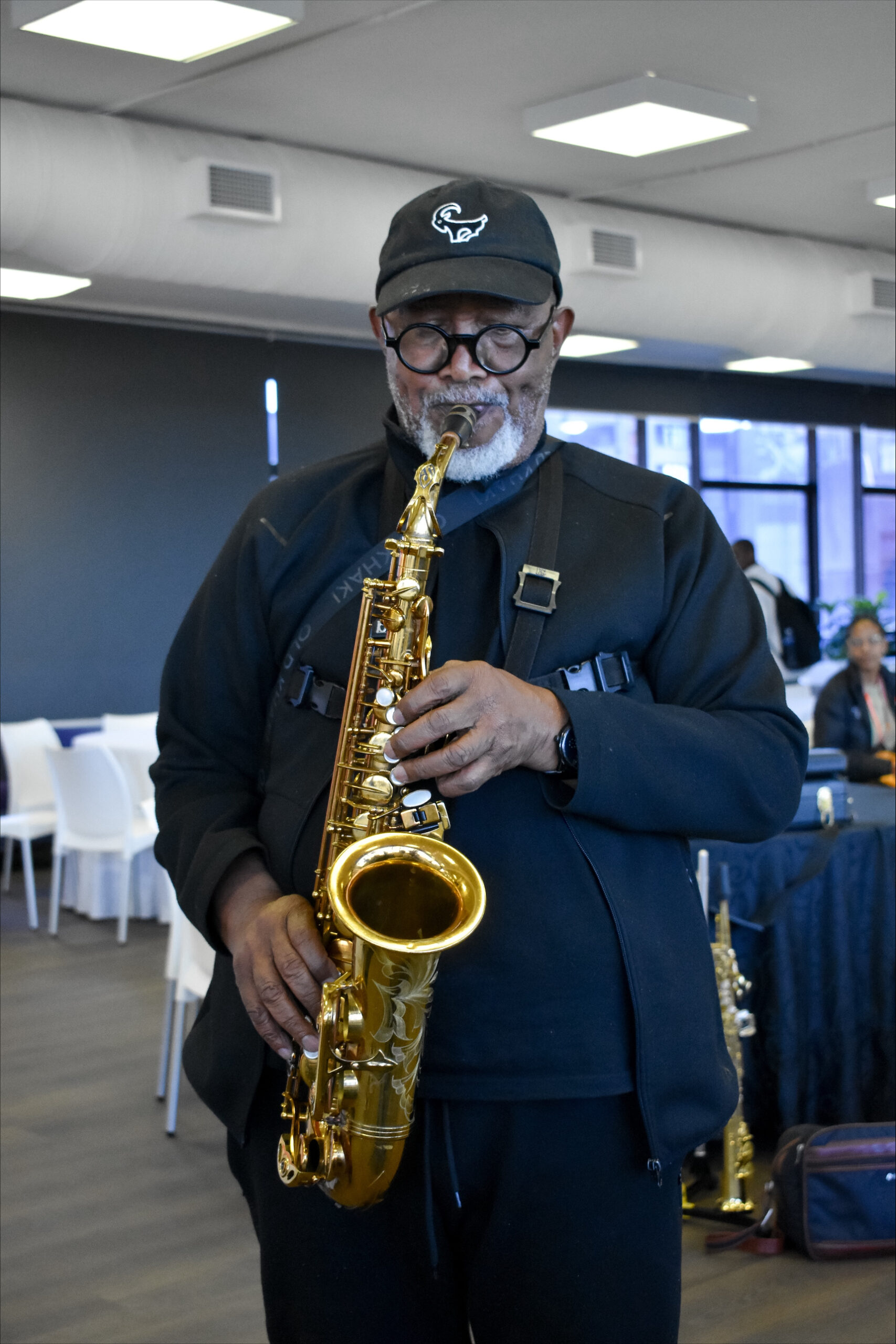 Mabuse began his solo career in 1983 and went on to establish himself as an accomplished multi-instrumentalist with broad crossover appeal. His catalogue includes timeless hits like “Zanzibar,” “Thaba Bosiu,” “Shikisha,” “Jive Soweto,” and “Burn Out.” He has worked with some of South Africa’s most celebrated musicians, including Kippie Moeketsi, Miriam Makeba, and Hugh Masekela, as well as international artists such as Al Jarreau, Timmy Thomas, Brook Benton, and Paul Simon.
In his presentation, Mahala highlighted Mabuse’s deliberate incorporation of sounds, languages, dances, and performance traditions associated with historically marginalised communities. He situated these creative practices within a broader decolonial framework, arguing that Mabuse’s music represents more than just a cultural product. “Mabuse’s music can be understood not merely as a cultural product, but as part of a broader historical process through which Black South African musicians have appropriated, transformed and re-signified musical forms within their own cultural and political worlds.”
Mahala further announced that the biography, provisionally titled Jive Soweto: The Musical Journey of Sipho “Hotstix” Mabuse, forms part of the African Biographies Project, an initiative of the University of Johannesburg’s Vice-Chancellor, Professor Letlhokwa Mpedi. The book explores crucial moments in Mabuse’s life, including his decision to leave school in 1969 to pursue music, and his return to education decades later to complete his matric in 2012.
Mahala described the opportunity to write Mabuse’s long overdue biography as an immense honour, one that he does not take lightly. Mabuse’s continuing presence on the stage is a testament to his enduring artistic vitality. After six decades in the music industry, he remains committed to keep audiences jiving, because he never seems to burn out.