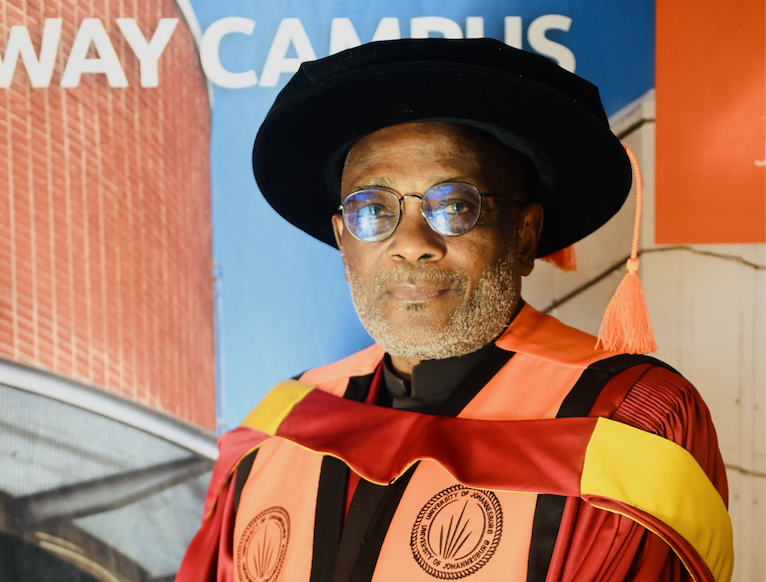
In STEM classrooms where Professor Lydia Mavuru’s ideas have taken hold, integrating learners’ sociocultural backgrounds shifts something: Learners’ interest in science grows, confidence to communicate grows, understanding science increases, and learners become better able to apply science to their own lives.
In contrast, Mavuru’s own learning experience was science as remote, inaccessible, and reserved for the ‘clever few.’
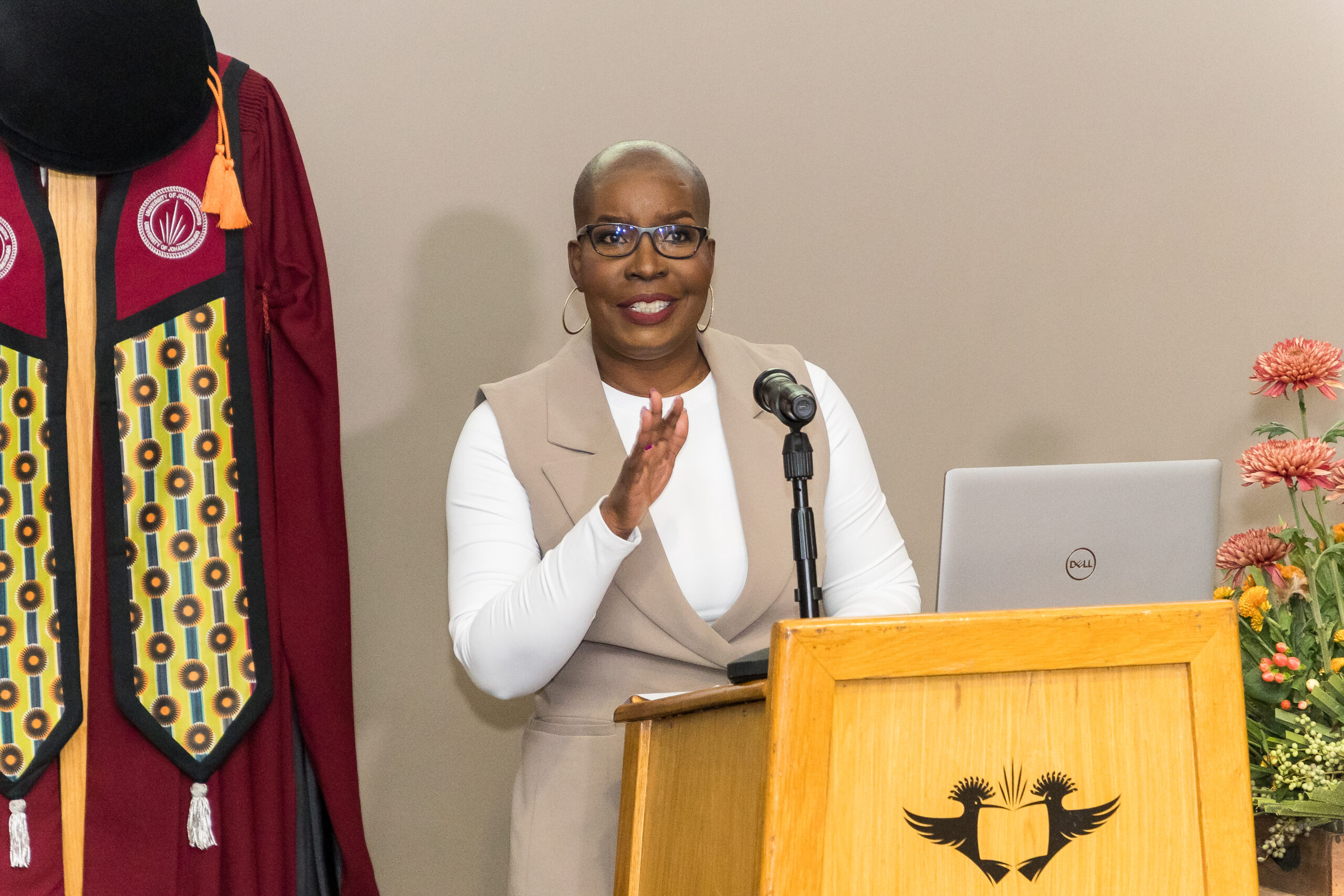
Mavuru researches how to bring this empowering shift about – also in under-resourced schools. Her professorial inaugural address at the University of Johannesburg sets out a case she has been building for years: that learners’ cultures, languages, and lived experiences are not obstacles to learning science, but resources for it.
Prof Mavuru is the Head of UJ’s Department of Mathematics, Science and Technology Education, at the University’s APK Campus.
Her experiences as a child to a woman are stitched into that argument. “Science was taught in a way that felt detached from everyday life,” she says of her journey from school to university, to science teacher and then as science teacher educator.
She had to cope with English, a language completely unlike her mother tongue. This challenge was compounded when working in unfamiliar ways with unfamiliar laboratory equipment.
And though she and her fellow Science learners represented a rich diversity in race, language, religion, and socio-economic status, teachers ignored all that, she says. When entering the science classroom, learners’ cultural norms and values were marginalised and rendered less important. Such a practice limited the potential of science education to be inclusive, relevant, and transformative.
“This kind of diversity exclusion remains entrenched in many African and South African classrooms, where little progress has been made,” she adds.
Her response has been to reposition the science classroom to value what so many teachers still ignore. She integrates learners’ sociocultural beliefs, experiences, and practices in the science classrooms.
The goal of science education is to develop learners with the knowledge, skills, and values that they can apply in their lives. Done well, it enables learners to identify themselves in the science classrooms and understand what they learn within the framework of their sociocultural belief systems, says Mavuru.
“We aim for learners to realise how valuable and relevant school science is in their daily lives,” she adds.
The sociocultural backgrounds she refers to are broad. These take in learners’ indigenous knowledge systems, norms and values, religion and beliefs, socio-economic and political realities. Also included are the science and technology already alive in their homes, from food preparation to tools, games, languages and clothing.
She believes all students can achieve scientific excellence with equitable support and opportunity, and views learners as inherently capable, agentic, and positioned for success. She frames her role as a critical friend who scaffolds learning and fosters independent thinking, and her duty is to cultivate pedagogies responsive to diversity and inclusive of all learners.
Mavuru sees the science classroom as a meeting point. Science education brings concepts, inquiry and application; pedagogy brings strategies, scaffolds and learning materials; and learners bring beliefs, language and lived experiences. Where the three overlap, contextualised scientific understanding takes shape.
Her toolkit is practical. It includes depicting real-life scenarios and using open-ended questions to draw out learners’ conceptions, using familiar examples during experimental work, and designing problem-based activities rooted in learners’ backgrounds. It uses analogies, code-switching between English and indigenous languages, community involvement, and argumentation that helps students weigh their worldviews alongside science knowledge.
This approach runs into resistance at many levels, however. “Resistance is rooted in historically entrenched conceptions of science as objective, culture-free, and detached from everyday lived experiences. It is embedded in the thinking of many stakeholders, including parents, science teachers, and science teacher educators,” she adds.
Mavuru charges UJ’s student teachers and society to empower learners for STEM careers: “Let it not be the science teacher, science teacher educator, nor stakeholders in education, policy makers included, who stand in the way of learner success in science!” she says.