As South Africa confronts rising fuel costs, grid instability and mounting pressure to decarbonise its transport sector, the University of Johannesburg (UJ) is stepping firmly into the electric mobility arena. Through the Centre for Automotive & Electric Vehicle Innovation (CAEVI), UJ is building a high-impact, multidisciplinary platform that moves beyond research papers to real-world implementation, reducing carbon emissions, stimulating green industrialisation and positioning South Africa as a serious player in Africa’s electric vehicle transition.
Hosted within UJ’s Faculty of Engineering and the Built Environment, CAEVI is far more than a conventional research centre. It is an action-driven implementation platform that brings together engineering, artificial intelligence, battery science, policy research and community development to tackle one of the country’s most urgent priorities, the transition from internal combustion engines to a competitive, locally driven and sustainable electric mobility ecosystem.
 “South Africa cannot afford to be a spectator in the global EV revolution,” says Dr Samuel Gqibani, Head of the School of Mechanical and Industrial Engineering and Director of UJ’s CAEVI. “We must develop local solutions, build local skills and create a mobility system that is cleaner, more affordable and inclusive. The transition to electric mobility must be engineered in South Africa, for South Africa, in ways that strengthen our economy, empower our communities and advance long-term environmental sustainability.”
He adds that electric mobility is not only a technological shift but a societal one. “If we get this right, we will reduce carbon emissions, unlock new industrial opportunities, create jobs for young engineers and technicians, and ensure that the benefits of the green transition reach communities that have been historically excluded from high-technology sectors.”
Turning research into road-ready solutions, CAEVI is confronting barriers such as EV adoption and the high cost of imported electric vehicles. Rather than waiting for global prices to decline, the Centre is advancing conversion engineering that transforms existing petrol and diesel vehicles into electric alternatives. This approach reduces lifecycle emissions, extends vehicle lifespan and provides a practical, cost-effective pathway to electrify public transport fleets and small logistics operators, while simultaneously strengthening local manufacturing capability, stimulating industrial growth and accelerating technical skills development.
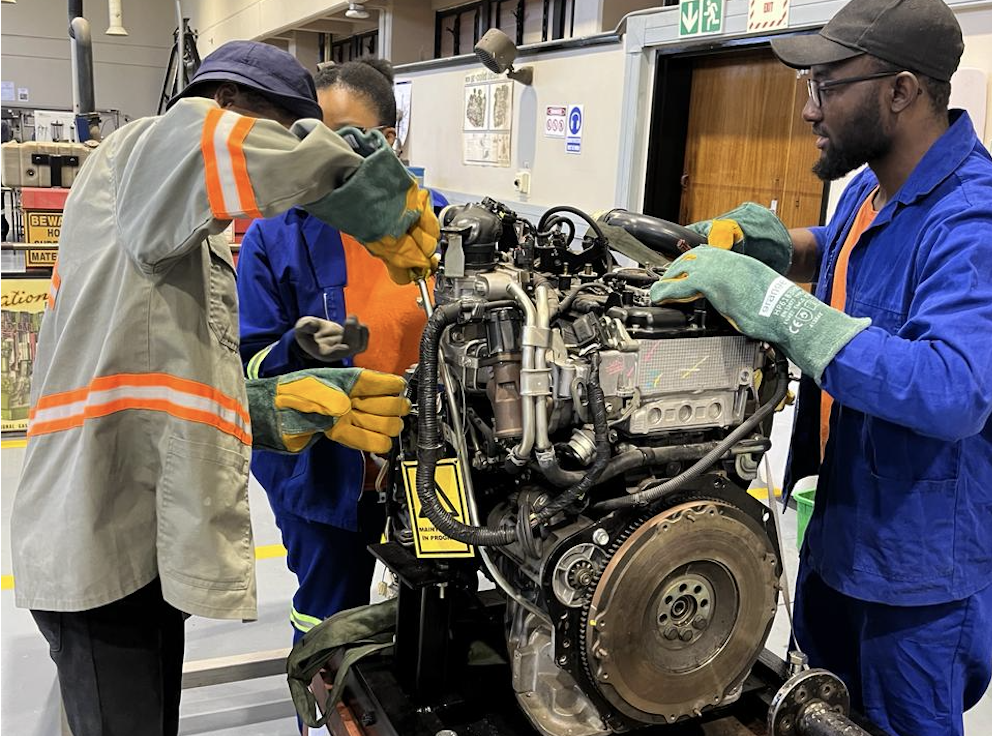
The Centre’s research spans the full electric mobility ecosystem, including advanced battery diagnostics and thermal management, second-life battery applications, vehicle-to-grid systems, smart charging technologies and AI-powered vehicle management platforms. It also interrogates the economic, regulatory and industrial dimensions of EV adoption to ensure that technological innovation translates into national competitiveness, sustainable job creation and practical policy implementation.
Notably, the Centre’s work is already translating into tangible, hands-on innovation.
Dr Gqibani explains, “One of our most significant current projects is the full conversion of a petrol-powered tuk-tuk into an electric vehicle. This is a deliberate intervention that responds directly to South Africa’s affordability challenge in the EV market. We are demonstrating that electric mobility does not have to depend on expensive imports. It can be designed, engineered and assembled locally.”
He adds, “The project involves a complete systems overhaul, from powertrain integration and battery architecture to thermal management, charging solutions and solar energy integration. It is being executed according to rigorous engineering standards, safety protocols and regulatory requirements. What makes it powerful is not only the technical outcome, but the message it sends. It proves that sustainable mobility can be practical, scalable and economically relevant, while building local expertise and advancing our climate commitments.”
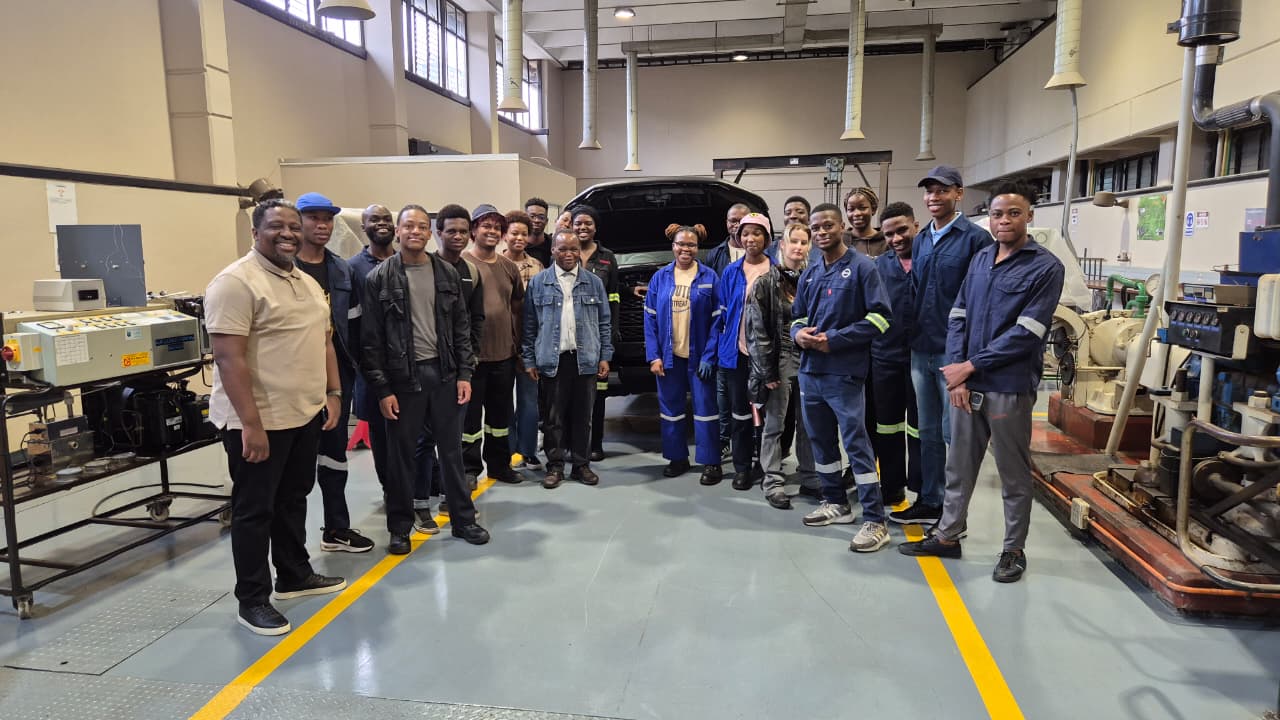
The project also functions as a live training laboratory. Students, technicians and emerging researchers are directly involved in design, procurement, integration, testing and commissioning, embedding skills transfer into every stage of development. In this way, the initiative advances sustainability not only environmentally, through reduced emissions, but socially, by equipping young engineers and artisans with future-focused capabilities, expanding technical capability and opening pathways into the green economy.
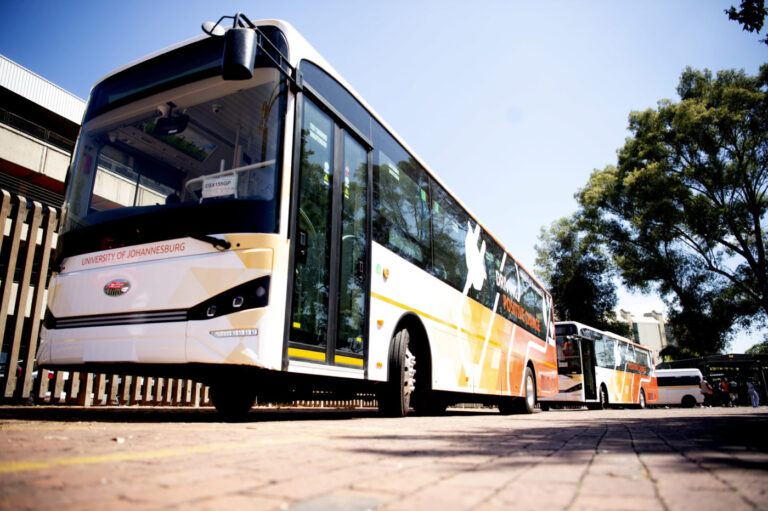
Beyond this initiative, the University of Johannesburg has already demonstrated its institutional commitment to decarbonisation through the introduction of electric buses across its campuses, significantly reducing transport-related emissions. The Centre for Automotive & Electric Vehicle Innovation (CAEVI) is strengthening this momentum by advancing research on smart charging systems, grid stability, renewable integration and fleet optimisation to ensure that electrification efforts are not only environmentally responsible, but technically robust and economically sustainable at scale.
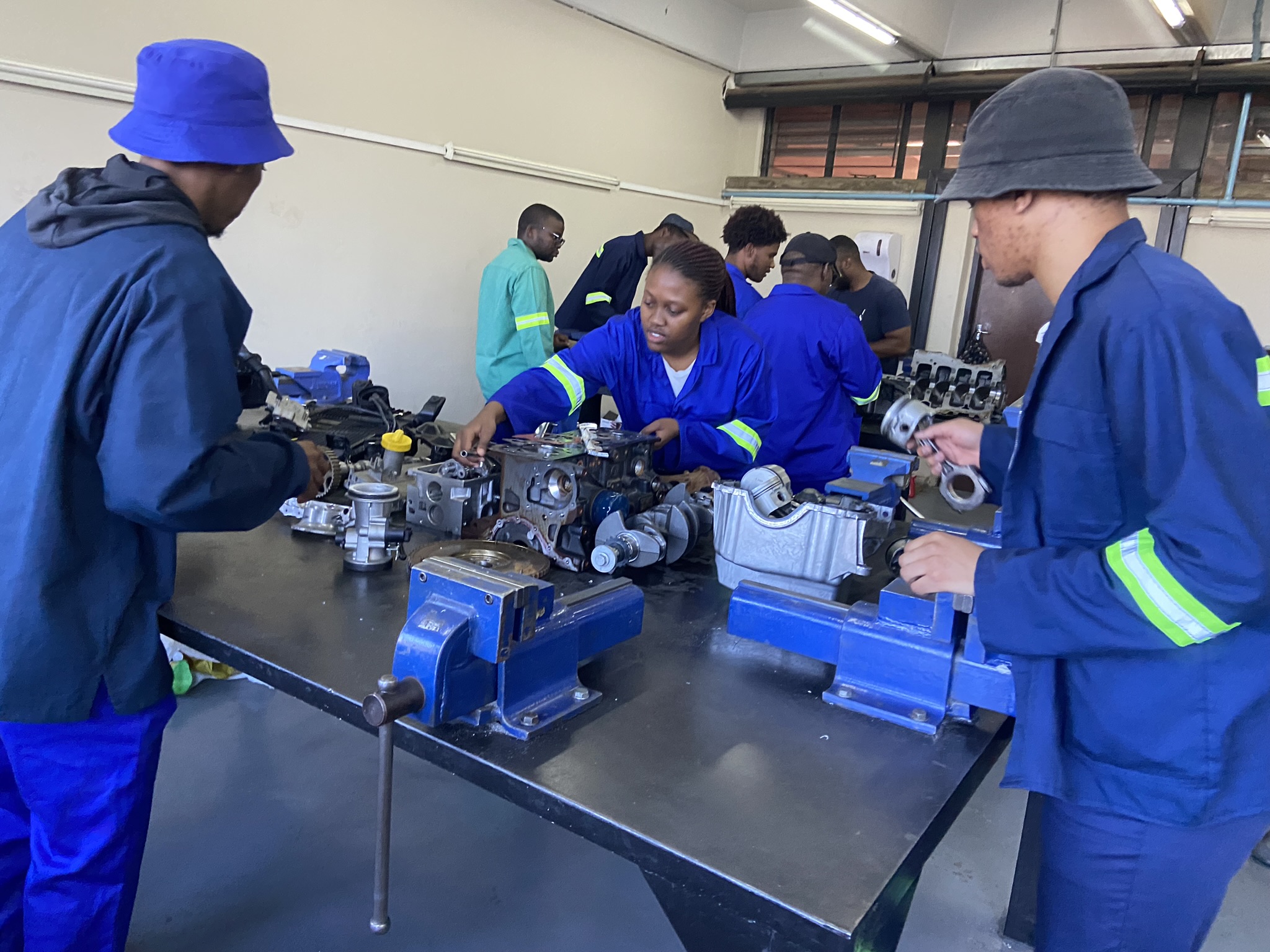
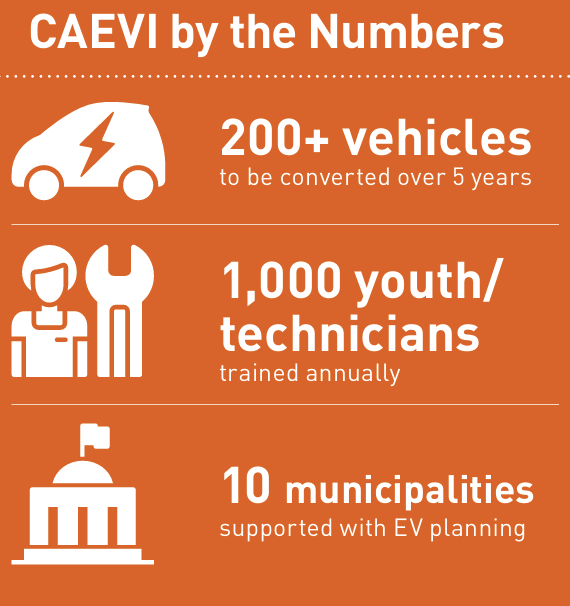
Dr Gqibani concludes, “Over the next five years, we intend to support at least 10 municipalities with structured EV infrastructure planning and contribute to the conversion of more than 200 vehicles through focused pilot programmes. Through technical bootcamps, high-voltage EV certification courses and township-based workshops. We also aim to train more than 1,000 youth and technicians annually. This is about building real capacity on the ground and ensuring South Africa is ready for a just and inclusive energy transition.”
He adds, “Electric mobility must translate into measurable impact. It must reduce emissions, unlock industrial opportunity and create sustainable livelihoods. Our work is about turning innovation into practical solutions that strengthen communities and drive long-term environmental and economic resilience.”
The Centre is in collaboration with Nissan South Africa, Automotive Industry Development Centre (AIDC), Central Johannesburg College (CJC), UJ PEETS, Resolution Circle and the Faculty of Art, Design and Architecture (FADA).