International growth and strategic partnerships were high on the agenda as the University of Johannesburg (UJ) successfully hosted the inaugural Jiangsu-Africa Cooperation Alliance Summit last week (23 October 2026). Borne out of a desire to grow Sino-African academic relations, the summit is the realization of a decade of strategic partnerships, research collaboration and cultural exchanges between the alliances founding partners, UJ and Nanjing Tech University, China.
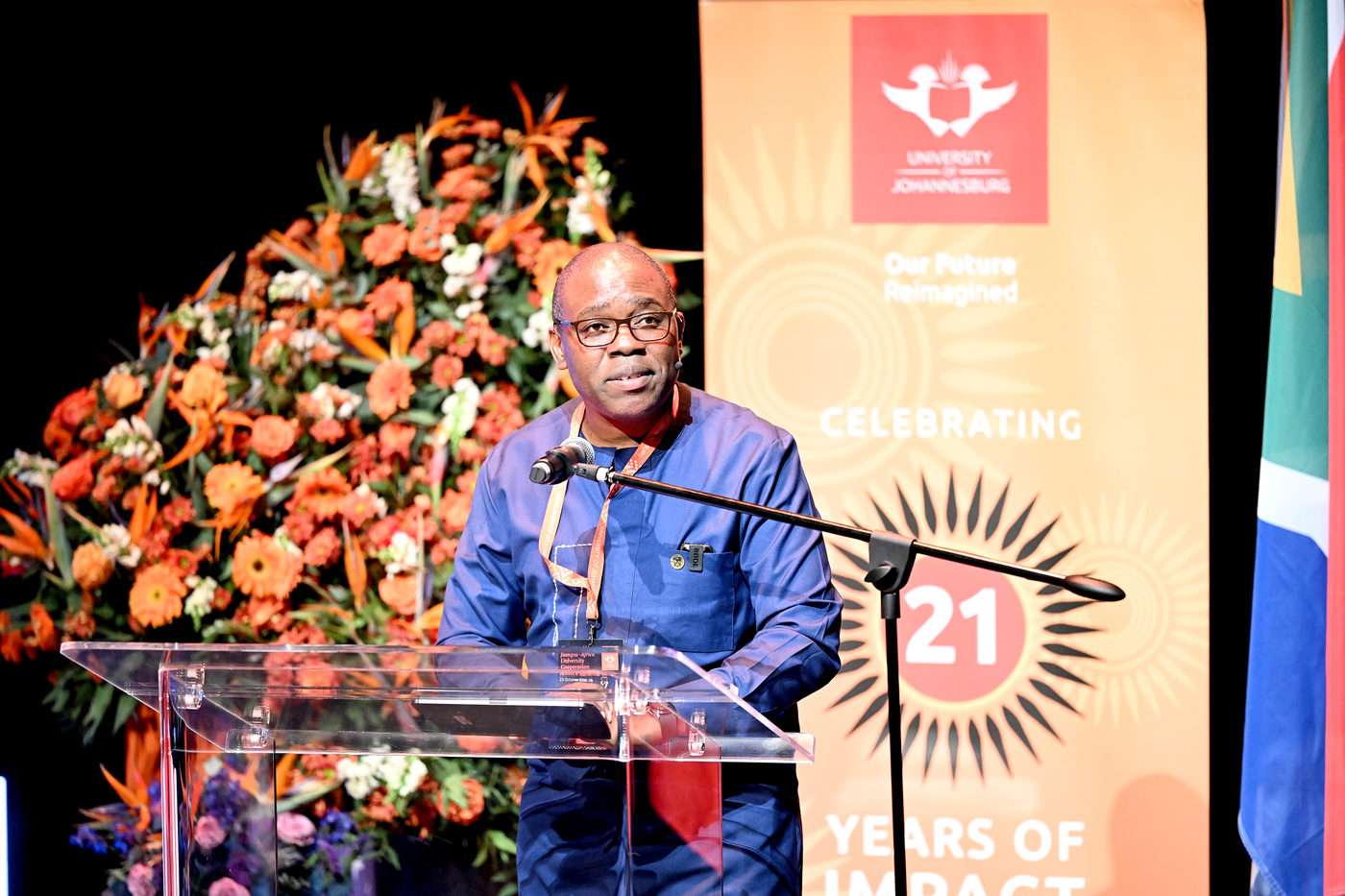
Delivering the keynote address, UJ Vice-Chancellor and Principal Professor Letlhokwa Mpedi began by tracing the roots of the Alliance to a meeting in the Jiangsu Province, China which led to the summit. “Almost exactly a year ago in Suzhou, the Jiangsu- Africa University Cooperation Alliance was launched. Nanjing Tech University and UJ initiated [the alliance] under the guidance of the Jiangsu Provincial Department of Education, 13 Jiangsu Universities joined forces with more than 20 African institutions from 13 countries,” he said.
Professor Mpedi is the co-chair of the Jiangsu-Africa University Cooperation Alliance. He outlined the purpose of the alliance, saying that it was particularly valuable to the African institutions as it creates opportunities to partner with leading Chinese institutions. It enables meaningful exchange of ideas and skills. He emphasized that it is with this spirit, that the summit is convened.
“The theme before us is Sino-Africa Higher Education Partnerships for the Future, jointly advancing research, teaching, learning, and innovation. This summit comes at an appropriate time. This year marks 70 years of China-Africa diplomatic relations. It is also four years to 2030, the deadline of the Sustainable Development Goals (SDG).
“As I’ve written for various African and Chinese publications, the countries of the Global South face remarkably similar challenges, including infrastructure gaps, youth unemployment, climate vulnerability, and technology gaps. When one of us finds a solution, it creates a path that others can adapt”.