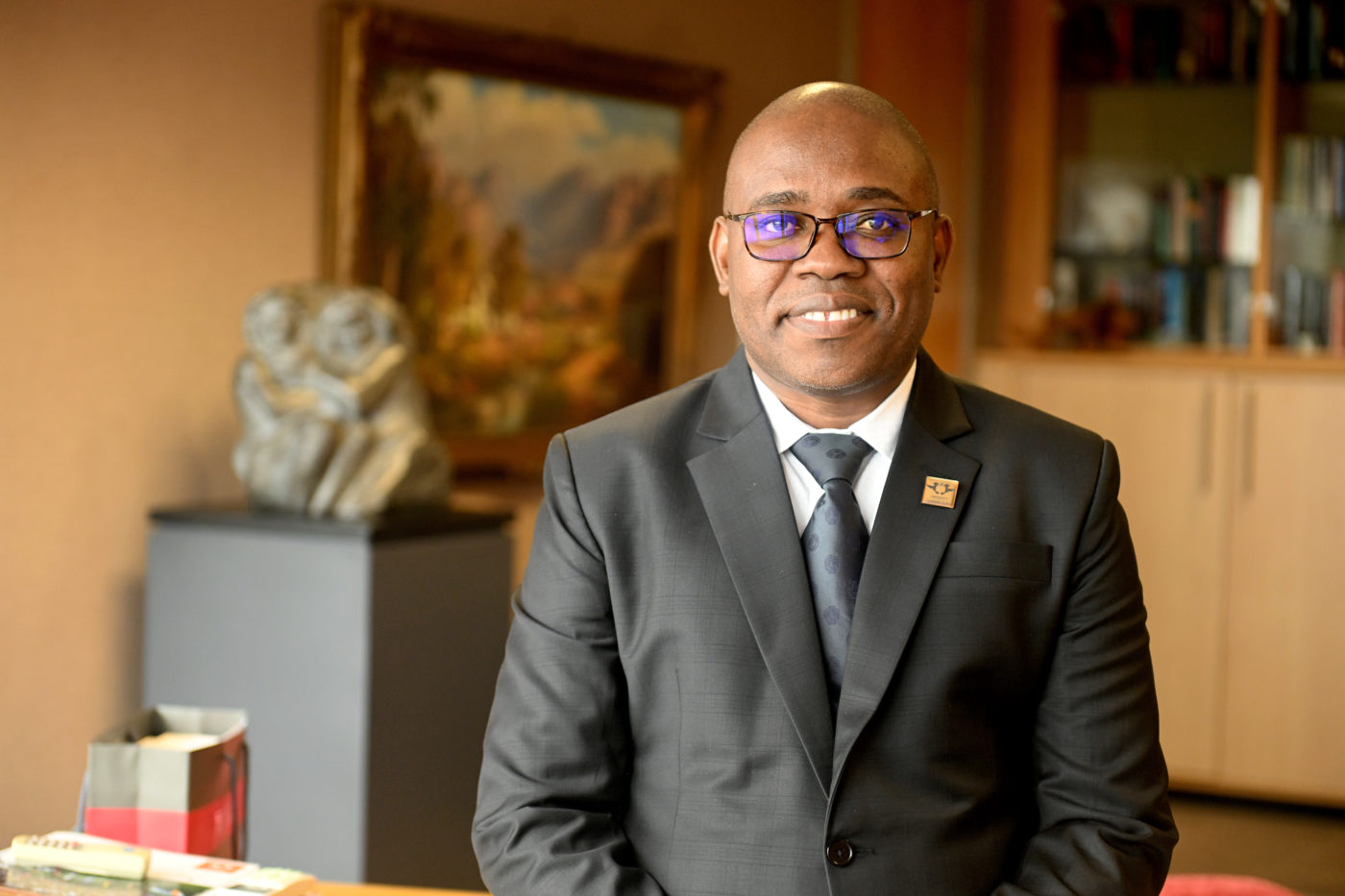
The University of Johannesburg (UJ) officially launched the Wiseman Nkuhlu Centre for Innovation, Thought Leadership and Governance, marking a decisive step in the University’s commitment to ethical leadership, institutional renewal and evidence-based public discourse in South Africa, on Thursday, 5 February 2026.
Housed in UJ’s School of Accounting in the College of Business and Economics, the Centre positions the University as an active national actor. Against a backdrop of declining public trust, it reinforces the role of universities in addressing governance and ethical challenges with independence, evidence and courage.
Named in honour of Wiseman Nkuhlu, one of South Africa’s foremost economists and governance thinkers, the Centre was established as an instrument of public service. Addressing the launch, Nkuhlu, who was also celebrating his 81st birthday, highlighted that the initiative carried a national obligation, not personal acclaim.
“I receive this honour not as a personal recognition, but as a responsibility,” he said. “A responsibility to continue serving the public interest, to uphold the highest ethical standards, and to contribute meaningfully to the intellectual and developmental agenda of our country.”

Reflecting on South Africa’s democratic journey, Nkuhlu placed the establishment of the Centre within a stark national context. While the first decade of democracy delivered historic advances in dignity, access to services and institution-building, he stressed that momentum faltered from around 2008, with lasting consequences.
“Our failure to recover was not inevitable,” Nkuhlu said. “It was largely the consequence of corruption, weak governance, institutional decay and misguided economic and institutional choices.”
He warned that the damage extended far beyond the economy, eroding confidence in public institutions and weakening society’s belief in its own capacity to govern itself.
Against this backdrop, the Wiseman Nkuhlu Centre is positioned as a credible, independent force for rigorous and courageous engagement. Its work is grounded in evidence and professionalism, with a deliberate emphasis on turning research into practical, implementable solutions that strengthen institutions and restore trust.
“This Centre must serve as a space for research and dialogue guided by evidence, professionalism and steadfast commitment to the public interest,” Nkuhlu says. “It must be prepared to confront uncomfortable truths and to propose solutions that are practical, implementable and world class.”

UJ’s Vice-Chancellor and Principal, Professor Letlhokwa Mpedi, framed the launch as a defining moment in UJ’s national role, signalling a clear shift from contribution to leadership in matters of governance and ethics. Having completed its first two decades, the University now directs its full weight toward shaping South Africa’s future through sustained, measurable societal impact
“The Wiseman Nkuhlu Centre advances this agenda by strengthening ethical leadership, governance and professional accountability at a moment when South Africa requires credible, independent and solutions-driven thought leadership,” Mpedi said.
Prof Mpedi reflected on Prof Nkuhlu’s character as one of inspiration and aspiration.
“He is a true servant of the people. Prof Nkuhlu’s story is a powerful reminder that true leadership is grounded not only in achievement, but in service. The Centre will help us shape generations of leaders who carry South Africa forward, not just academically, but morally and socially.”
The work of the Centre will focus on four priority areas. These include strengthening the ethical authority and public trust role of the auditing profession, advancing education and training as engines of inclusive growth, developing values-based leadership capable of navigating 21st-century complexity, and examining the governance and ethical consequences of artificial intelligence and emerging technologies. Together, these focus areas reflect an understanding that ethical governance must evolve alongside economic and technological change.
Prof Nkuhlu highlighted that enduring public confidence depends on integrity, ethical judgement and a clear commitment to the public good, particularly in professions entrusted with oversight and accountability.
“Public trust depends not only on technical competence, but on an uncompromising commitment to integrity and the public good,” he said, emphasising the critical role of the auditing profession in safeguarding accountability across both public and private institutions.
This emphasis resonates strongly with the University’s own contribution to the profession. As South Africa’s leading producer of African accountants, UJ has played an influential role in transforming access to professional expertise and strengthening financial and governance capacity across sectors. The Centre builds on this foundation by extending UJ’s impact beyond professional formation into the wider sphere of ethical leadership, institutional renewal and public accountability.

Beyond its research and policy mandate, the Centre speaks directly to the country’s intergenerational challenge. It recognises that prolonged socio-economic strain has not only weakened institutions, but has steadily eroded confidence, particularly among young people entering professional and public life. By foregrounding integrity, accountability and public service, the Centre positions itself as a space that restores belief in the value of ethical leadership and institutional credibility.
“One of the most serious consequences of prolonged socio-economic difficulty is the erosion of hope, especially among young people,” Nkuhlu said. “Through this Centre, we want to restore confidence that integrity matters, that effort is rewarded, and that institutions can once again be trusted to act in the public interest.”
Read: Prof Wiseman Nkuhlu full speech
Professor Ben Marx, Director of UJ’s School of Accounting, said exceptional leadership was essential for any University.
“Prof Wiseman Nkuhlu is a unique individual who embodies the values of leadership, perseverance, and service. His contribution to the transformation of the accounting profession in South Africa has opened doors for countless young people. This Centre will ensure that his influence continues to inspire and guide future generations of leaders.”
Professor Tankiso Moloi, the Executive Dean of the College of Business & Economics, at UJ, said through this Centre, the legacy of purposeful leadership and African intellect had found its home.
“We honour Professor Nkuhlu not simply by naming a Centre after him, but by actively continuing his vision, equipping our students and faculty with the tools, mentorship and ethical grounding to become agents of change. May this Centre catalyse bold scholarship, courageous leadership, and inclusive transformation in the accounting profession and beyond.”
The launch brought together UJ’s executive leadership, deans and heads of departments, alongside senior representatives from professional and regulatory bodies, including the South African Institute of Chartered Accountants and the Independent Regulatory Board for Auditors, as well as leaders from major audit and advisory firms. Their collective presence reinforced the Centre’s role as a credible, neutral platform that convenes regulators, industry and academia to confront systemic governance challenges together.
Watch the highlights of the launch: