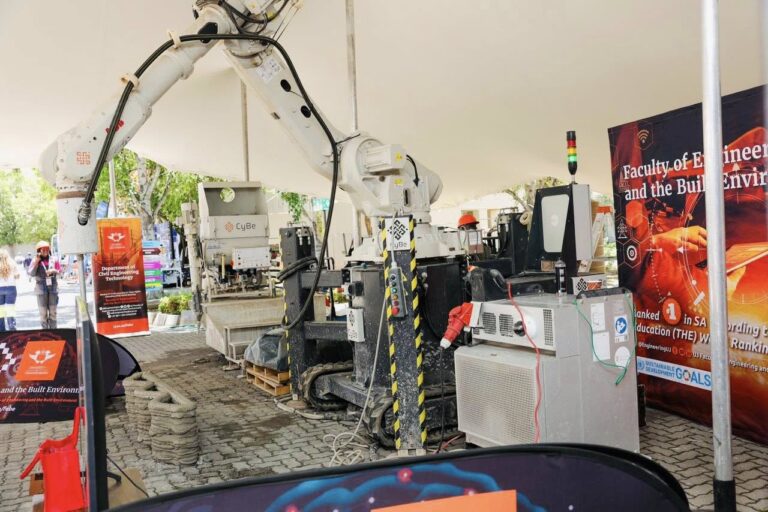
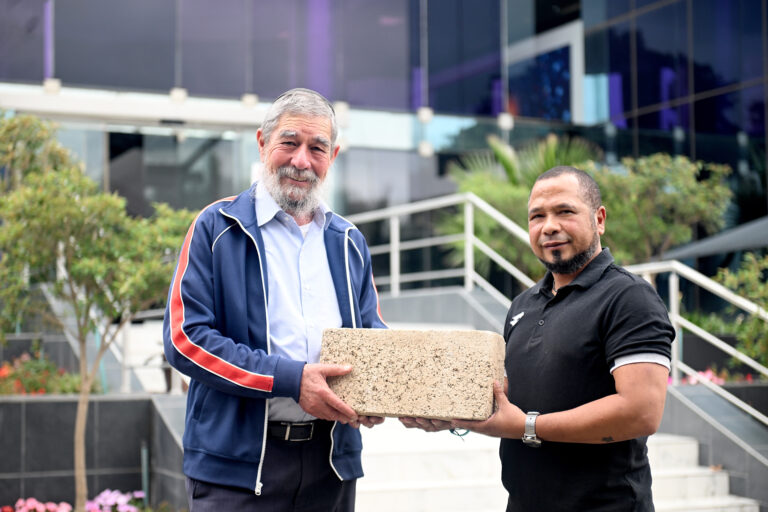
The University of Johannesburg’s (UJ) Civil Engineering Technology Department showcased its cutting-edge 3D Printing Housing Technology at the Presidential Innovative Building Technology (IBT) Summit 2026, held from 3–4 February 2026 at NASREC, Johannesburg.

Convened under the theme “Mainstreaming Innovative Building Technologies for Sustainable Human Settlements”, the Presidential IBT Summit brings together national government, provincial and municipal stakeholders, industry leaders, researchers and innovators to accelerate the adoption of Innovative Building Technologies (IBTs) in addressing South Africa’s housing backlog.
At the full-scale technology exhibition, UJ civil engineering students and academics demonstrated a state-of-the-art 3D printing construction system, offering delegates a practical glimpse into how emerging technologies can reshape the future of the built environment. The technology enables the rapid construction of housing structures with reduced material waste, lower labour intensity and shorter build times, while maintaining structural integrity and design flexibility.
Beyond its technological novelty, 3D printing represents a transformative opportunity for housing delivery in South Africa. Over the past two decades, sustained population growth and urbanisation have intensified demand for affordable housing, placing significant pressure on national, provincial and local governments. High construction costs and the rising price of conventional building materials have further constrained delivery, particularly for low- and middle-income households, who constitute the majority of the population.

Innovative construction methods and alternative materials are therefore increasingly viewed as essential to overcoming these challenges, and 3D printing technology offers a viable response—enabling faster, more cost-effective and more sustainable construction, while supporting resilience, inclusivity and environmental responsibility.
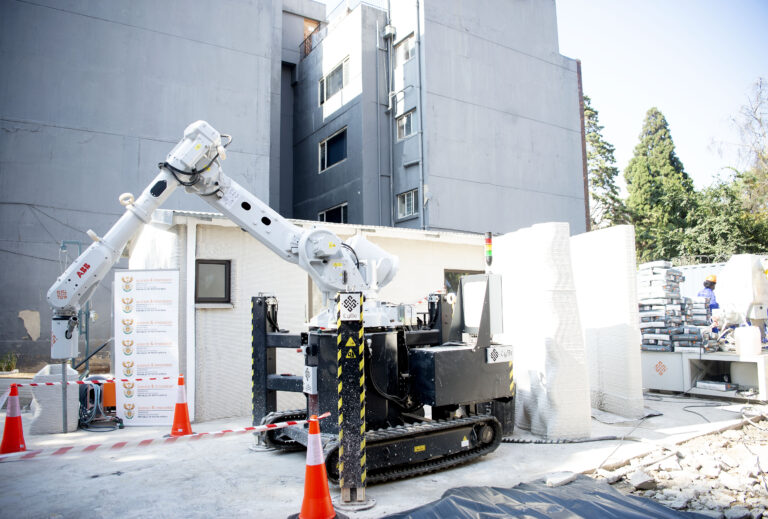
Launch of South Africa’s first 3D-printed house at UJ’s Doornfontein Campus
UJ’s leadership in this field was first demonstrated in January 2023 with the launch of South Africa’s first 3D-printed house at the University’s Doornfontein Campus. Developed in collaboration with the Department of Science and Innovation (DSI) and the KwaZulu-Natal Department of Human Settlements, the low-cost prototype house was constructed in just eight hours using 3D printing technology.
The project marked a significant milestone for the local construction sector and highlighted the potential of additive manufacturing to enhance the delivery of RDP and other affordable housing programmes. It also positioned UJ as a key contributor to national conversations on housing innovation, sustainability and alternative building technologies.
By participating in the Presidential IBT Summit 2026, the University of Johannesburg reaffirms its role as a hub of applied research, innovation and skills development—leveraging academic expertise and student talent to address real-world societal challenges. The showcase also underscores the critical role of higher education institutions in supporting government priorities and shaping sustainable, resilient and inclusive human settlements for South Africa’s future.