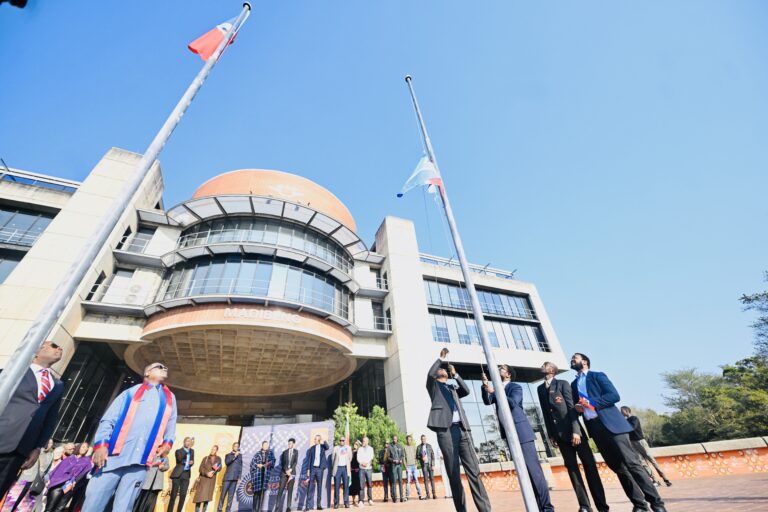
The histories of South Africa and Haiti remain intertwined due to the shared liberation struggles of both nations and a passionate desire for self-determination.
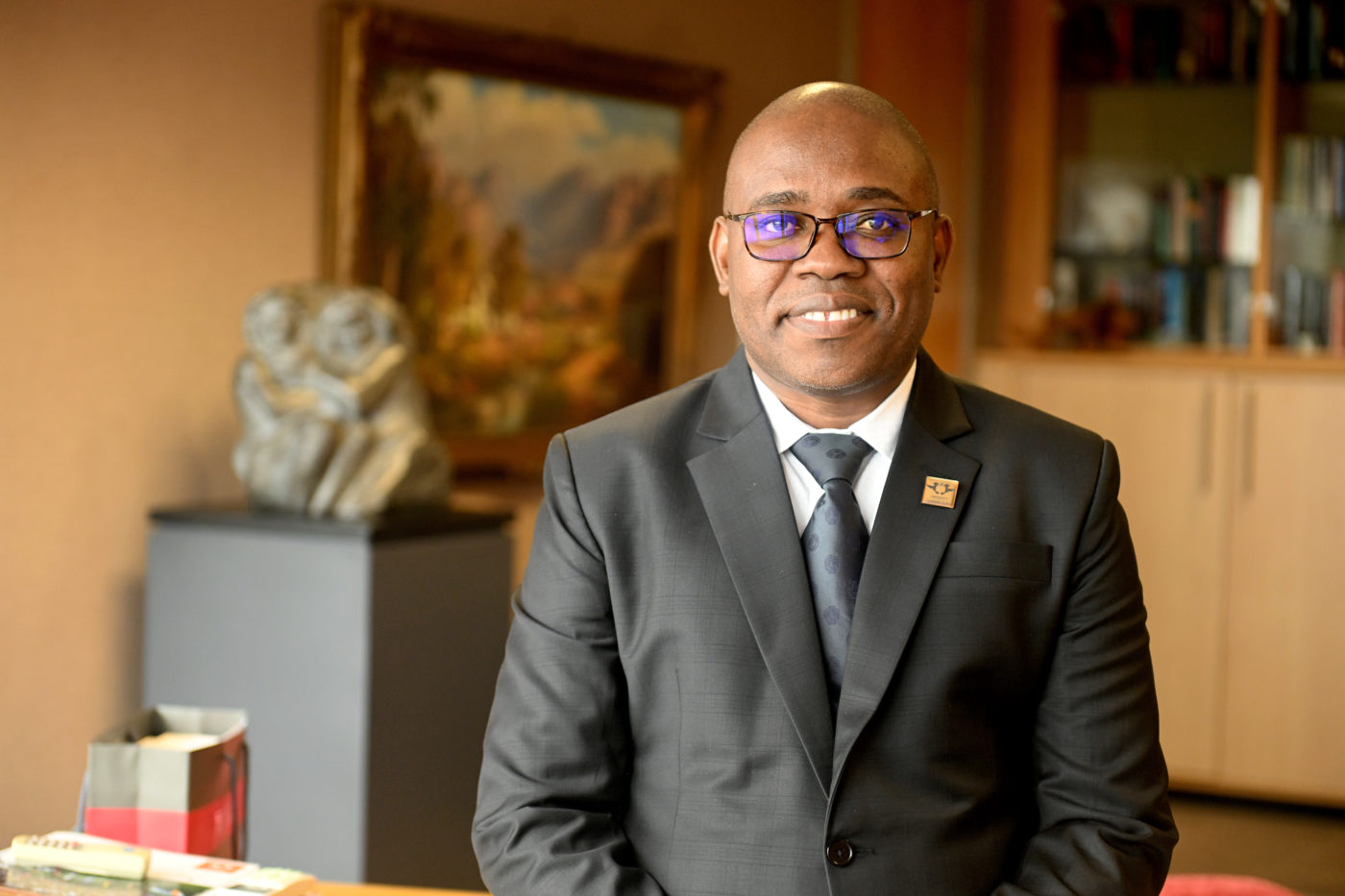
This sentiment was shared by the Ambassador of Haiti to South Africa, Jean-Robert Pillard, when he delivered a special guest lecture on the history of Bois Caïman. Held at the University of Johannesburg (UJ) Bunting Road campus, the lecture was organized in partnership with the Division for Global Engagement and the Faculty of Humanities. The event forms part of ongoing collaborative activities between the Embassy of Haiti in South Africa and UJ.

Bois Caïman refers to a historic area located near Cap-Haïtien in northern Haiti, best known as the birthplace of the Haitian Revolution. On August 14, 1791, enslaved Africans met in this hidden forest for a key Vodou (voodoo) ceremony that launched their rebellion against harsh French colonial power. Led by the priest Dutty Boukman and priestess Cécile Fatiman, the group made an oath to fight for their liberty. This gathering sparked a massive uprising that eventually freed the enslaved population and turned Haiti into the world’s first independent Black republic. Today, Bois Caïman remains a powerful symbol of freedom and resistance.
In his opening and welcoming remarks, UJ Vice-Chancellor and Principal Professor Letlhokwa Mpedi shared that this lecture was significant because it highlighted the deep connection between South Africa and Haiti.
“Haiti’s revolution and South Africa’s own struggle against apartheid are separated by continents and by nearly two centuries. Yet they are distinct parallels. Both were fights to be recognized as fully human and paid for in extraordinary sacrifice. This is why the philosophy of Ubuntu speaks so directly to tonight’s gathering. Ubuntu teaches us that I that I am because we are, that my freedom is bound up with yours. Haiti’s dignity is South Africa’s dignity, and the African diaspora wherever it has been scattered by the tragedies of history remains part of one family. UJ has embraced this philosophy as a compass for how we engage the world through a commitment to societal impact that reaches beyond our campus walls and beyond our borders,” he said.
Prof Mpedi added that the lecture was especially important for students as a reminder that the struggle for emancipation did not come easily, while encouraging them to be forward-thinking.
“This is precisely why this evening matters to us as a university. Today, we are honouring the relationship between Haiti and South Africa, and between the Faculty of Humanities and the Embassy of Haiti. We are also reminding our students that the story of African emancipation remains a global story written by people who dared to imagine freedom before the world was ready to grant it”.

His Excellency Jean-Robert Pillard traced the memory of Bois Caïman from its roots to modern lessons on liberty and equality. In his discussion, he highlighted how African people looked beyond individual identities to fight for a common goal of freedom.
“Bois Caiman was not simply an act of resistance; it was an act of political imagination. People from different African societies, violently separated from their homelands, discovered that different histories could converge around the common future. They did not cease to be Congo, or Ibo, or Akan, or Yoruba, or Bon, or Mandenga or Walla. Rather, they discovered that purpose could be great, could become greater than justice. In that profound sense, Africa did not disappear in the Atlantic.
“Africa crossed the Atlantic, not as kingdoms, not as empires, but as men, as culture, as resistance, as hope, songs survive, rhythms survive, ceremonies survive, languages survive, ways of cooking survive, ways of praying survive, ways of understanding community survive. Memory survived, not because it was preserved in libraries, but because it was carried in human beings across Africa”.
Ambassador Pillard urged modern societies to apply this lesson of prioritizing shared goals during times of hardship.

“That is why I believe that Bois Caiman should be understood as one of history’s great moments of political imagination. People who have been deliberately divided began to imagine themselves as one people, capable of pursuing one common destiny.
“Not because they had become identical, but because they have discovered that purpose could be greater than difference, there is profound wisdom in that. Modern societies often postpone action while searching for perfect consensus. History teaches another lesson. Progress has rarely required complete agreement. It has required sufficient agreement around a common purpose. That lesson speaks not only to Haiti, speaks to Africa, speaks to South Africa. Indeed, it speaks to every society attempting to build unity without demanding uniformity,” he said.
You can watch highlights of the lecture here and read Ambassador Jean-Pillard’s full lecture here.