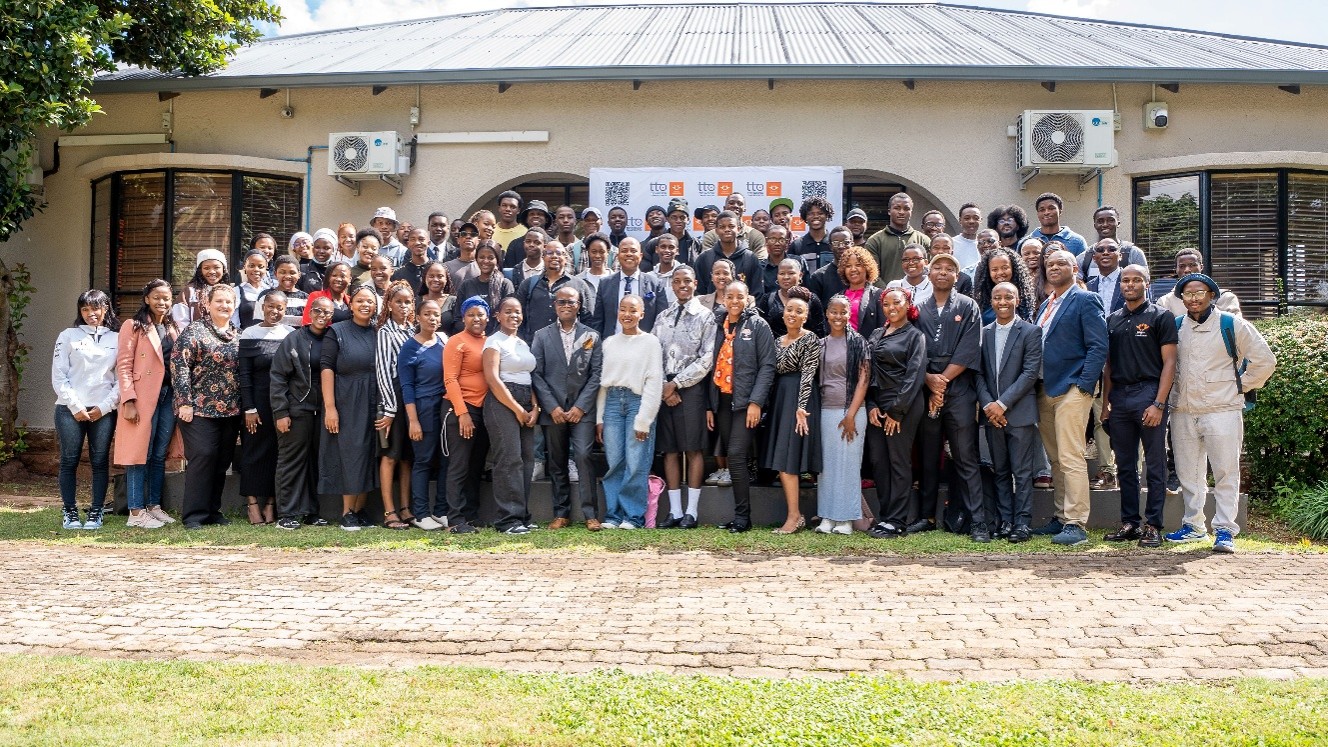
Inside a buzzing hybrid room at the InnUvation Junction, 165 young entrepreneurs were told that their lives were about to change. The University of Johannesburg Technology Transfer Office (UJ TTO) officially welcomed its 2026 Incubation Programme cohort on Monday, 20 April 2026. Moving away from traditional business ideas, this cycle focuses strictly on disruptive, innovation-driven ideas that align with the United Nations’ Sustainable Development Goals.
A Network for the Future

The hybrid induction session combined vibrant in-person energy with virtual attendance via Microsoft Teams. Ms. Ayanda Hlengwa, the programme director and a 2025 graduate of the incubator, opened the event by reminding the students that this is the beginning of a lifelong development journey.
Taking the stage to deliver the welcome address, Mr. Thabang Qumza, Senior Manager of Technology Transfer, placed the cohort within a massive shifting landscape. He shared that Africa attracted roughly USD 3.9 billion in venture capital funding in 2025, with half of those deals sitting squarely in tech. He urged the incoming entrepreneurs to look at one another as their greatest asset.
“You, yourselves, this cohort here, you are a huge network. When you face challenges, face them together, assist each other, advise each other. You don’t know how far you’ll go in the future, ” said Thabang Qumza, Senior Manager: Technology Transfer, UJ TTO
Moving Past the Basics
The selection process was rigorous. Jimmy Mohale, Entrepreneurship Officer, explained that the team screened applications based on innovation, market viability, scalability, and technical maker space compatibility. He noted that the office rejected many duplicate ideas, such as generic ride-sharing apps or basic student marketplaces, to make room for truly original concepts.
“Being selected to the 2026 Innovation Programme is not a small thing. You have demonstrated venture clarity, innovation potential, commitment, and the willingness to take an educated risk and that alone puts you ahead of most,” Mohale said.
The selected innovators will undergo an intense seven-pillar training cycle running from April to November 2026. The program includes 12 weekly training modules, specialized maker space access, Massachusetts Institute of Technology (MIT) licensed mentorship, and hot-desking facilities.
From Concept to Reality
A panel of successful 2025 alumni returned to share practical insights with the newcomers. Moderated by BCom Honours student Neil, the alumni discussed how the incubator forced them to grow. Jewellery designer Andile Hlongwane explained that the program helped her shift from simply making products to creating a holistic brand.
Similarly, Industrial Design graduate Montle Patroo Matsimela shared his experience using the UniPod facility’s 3D printing infrastructure to create an ergonomic bag handle designed to protect users’ hands. The alumni agreed on one central piece of advice: do not wait for an idea to be perfect before starting.
Following the alumni, the Student Women Economic Empowerment Programme (SWEEP) hosted a panel addressing the critical need for female leadership in innovation spaces. SWEEP President Kamogelo Selepe and executives Rebantle Thupayatlase and Aphelele Ndebele shared how they balance their academic requirements while designing tech solutions like digital marketplaces and fake-news detection apps.
Education as a Launchpad
The cohort also received guidance from prominent guest speakers. Ntsiki Mkhize, Stakeholder and Partnerships Manager at Entrepreneurship Universities South Africa (USAf), debunked the famous myth of the successful university dropout. She emphasized that elite dropout stories rely on foundational structures that are hard to replicate, urging students to maximize their institutional access instead.
Carol Keshy, the Acting Director of the Centre for Entrepreneurship at the Johannesburg Business School, challenged the students to view their qualifications through a different lens. She outlined key competencies for the cohort, specifying the need to spot opportunities, generate sustainable revenue, and maintain resilience when dealing with ambiguity and failure.
“Your degree is not just a certificate. It is a tool that transforms. And if we are not using that tool to create impact in our communities, we are doing a disservice to the privilege of our education.” said Keshy.

Closing out the ceremony, UJ TTO Director Dr. Hamilton Mphidi explained that the 2026 program has been fully redesigned with clear, measurable outcomes. The primary goal is no longer just about fostering good intentions or validating concepts. By November, the university expects every single student to walk out of the cohort with a fully functional product and a legally registered business entity.