Researchers at the University of Johannesburg (UJ) are using AI to guide the transformation of oil from an indigenous South African plant into a stable powder with potential for preserving fresh produce.
Existing postharvest fungicides are effective, affordable and essential for protecting fruit during long storage and export journeys. The problem is the heavy reliance on a small number of chemicals, says Professor Olaniyi Fawole.
“Repeated use allows resistant fungi to survive and spread. Resistance to widely used citrus treatments such as imazalil and thiabendazole is already well documented, which can make these less effective over time. In addition, the European Green Deal’s Farm to Fork strategy is encouraging the search for alternatives,” he adds.
Prof Fawole is the SARChI Chair in Sustainable Preservation and Agroprocessing Research (SPAR), and Director of the Postharvest and Agroprocessing Research Centre (PARC) at the UJ Department of Botany and Plant Biotechnology.

There are also health concerns that require further study. One example is where European assessors concluded that the widely used chemical fludioxonil meets their criteria for disrupting human hormone systems, he says.
“The fresh produce industry needs more safe and effective options that can reduce chemical dependence, manage resistance and help exporters meet changing market regulations”, explains Prof Fawole.
One way to develop more options is using essential oils from plants. This is where an indigenous South African plant entered the research.
“We selected Helichrysum splendidum because its essential oil showed promising antifungal and antioxidant properties in an earlier phase of this research, where it was tested against pathogens isolated from selected fruit crops. The plant is also hardy and fast-growing, which may support sustainable production.
“We collaborate with a company in the Western Cape that produces essential oils from indigenous plants at scale. This gives us a reliable, consistent supply and improves the prospects for commercial uptake,” says Fawole.
While this essential plant oil is a promising option, it has built-in challenges. As with other essential oils, it evaporates easily, loses efficacy in storage, and does not mix well with water. Worse, most people find the taste and smell far too strong when enough of it is used to keep fruit and vegetables fresh.
To get around the smell and taste issues, as well as other challenges, the researchers used a technique called ‘encapsulation’. Encapsulation makes the oil easier to handle and more stable.
“Encapsulation is like turning liquid milk into milk powder for coffee. The liquid is changed into a dry form that is easier to store, transport and mix when needed,” says Mr Yusuf Mukaila, a PhD candidate at SPAR and PARC.
“In our powder, chitosan and whey protein form the support structure. The structure helps protect the oil droplets in the powder particles from evaporating or breaking down. It also makes the powder easier to mix with water,” adds Mukaila.
The next stage of the research was to find the optimal ‘recipe’ for the encapsulation. This recipe had to protect the essential oil droplets from evaporating. The recipe also had to ensure the steady but slow release of essential oil to protect fresh fruit from spoilage.
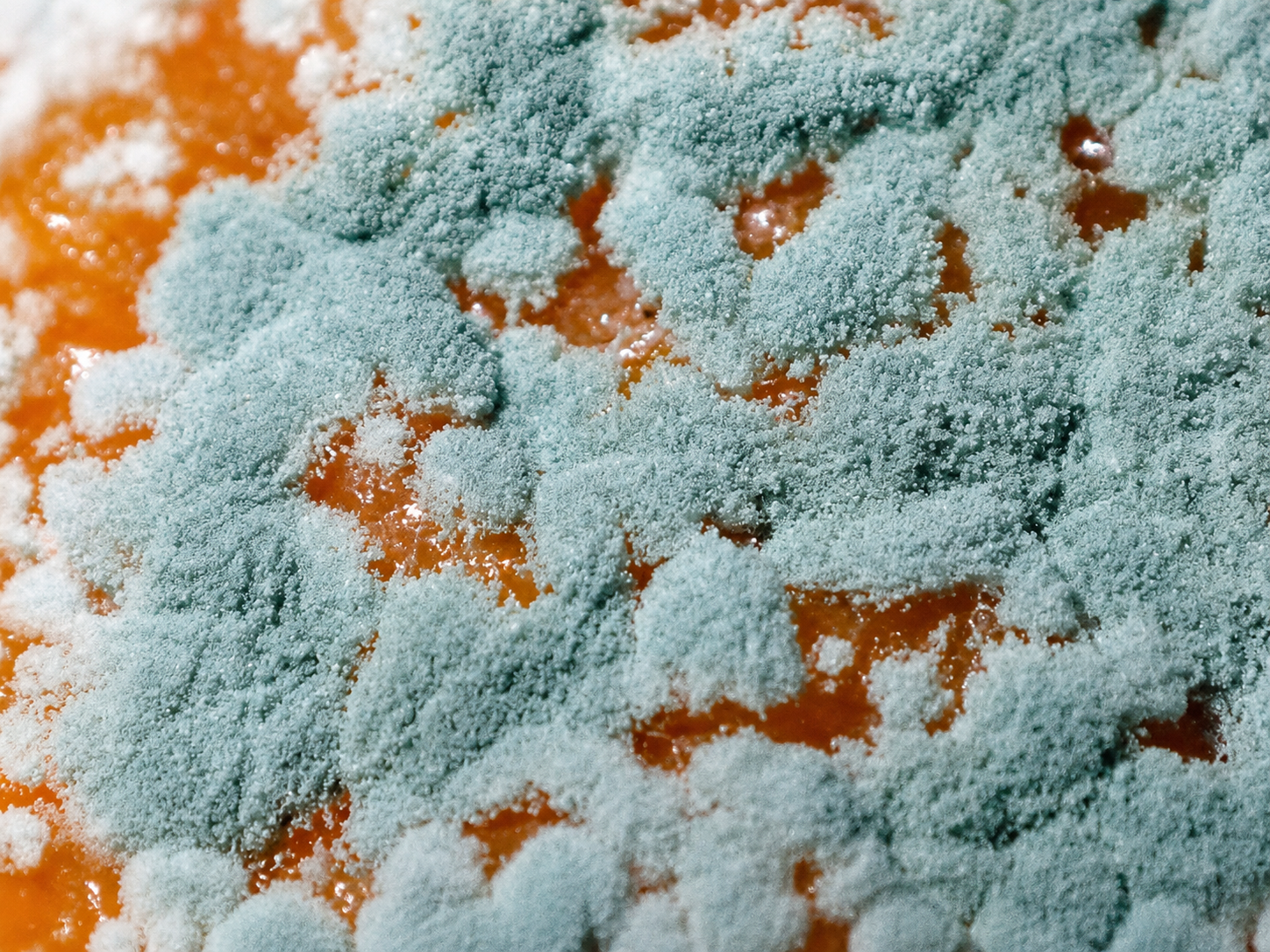
To keep it simple, the researchers conducted the tests for this stage only under controlled laboratory conditions. The recipes have not been tested with fruit yet. Instead, the researchers ran tests against a fungus called Penicillium digitatum, because it causes green mould, which is a major postharvest disease of citrus.
“The fungus was a useful stand-in for one important cause of fruit decay, but not for the whole fruit. Testing the best formulation on real produce is the next stage of the research,” says Mukaila.
“However, these Petri dish experiments allowed the us to compare each powder ‘recipe’ under the same conditions and generate clean, reliable data for the (AI) machine-learning models.”
To obtain sufficient data to train and test AI models, the researchers created 20 different encapsulation ‘recipes’, says Postdoctoral research fellow, Dr Kabiru Jimoh, from SPAR and PARC.

Each recipe contained a different ratio of essential oil, chitosan and whey powder. The recipe was tested three times simultaneously against Penicillium digitatum in Petri dishes. The researchers used results from the tests to teach AI models how the ingredients interact. One of the AI models could then predict the optimal ‘recipe’ with the greatest potential to preserving fresh fruit. Finally, they tested the ‘AI optimal recipe’ and found the AI predictions were over 94% accurate.
In the next stage, the researchers will test the AI-optimised powder on real fruit under realistic storage and transport conditions, says Prof Fawole. They will assess decay, weight loss, firmness, colour, taste and smell to determine whether the powder can extend shelf life without affecting fruit quality.
Research article
2026 Machine learning-assisted optimization of the encapsulation of Helichrysum splendidum essential oil for food preservation applications