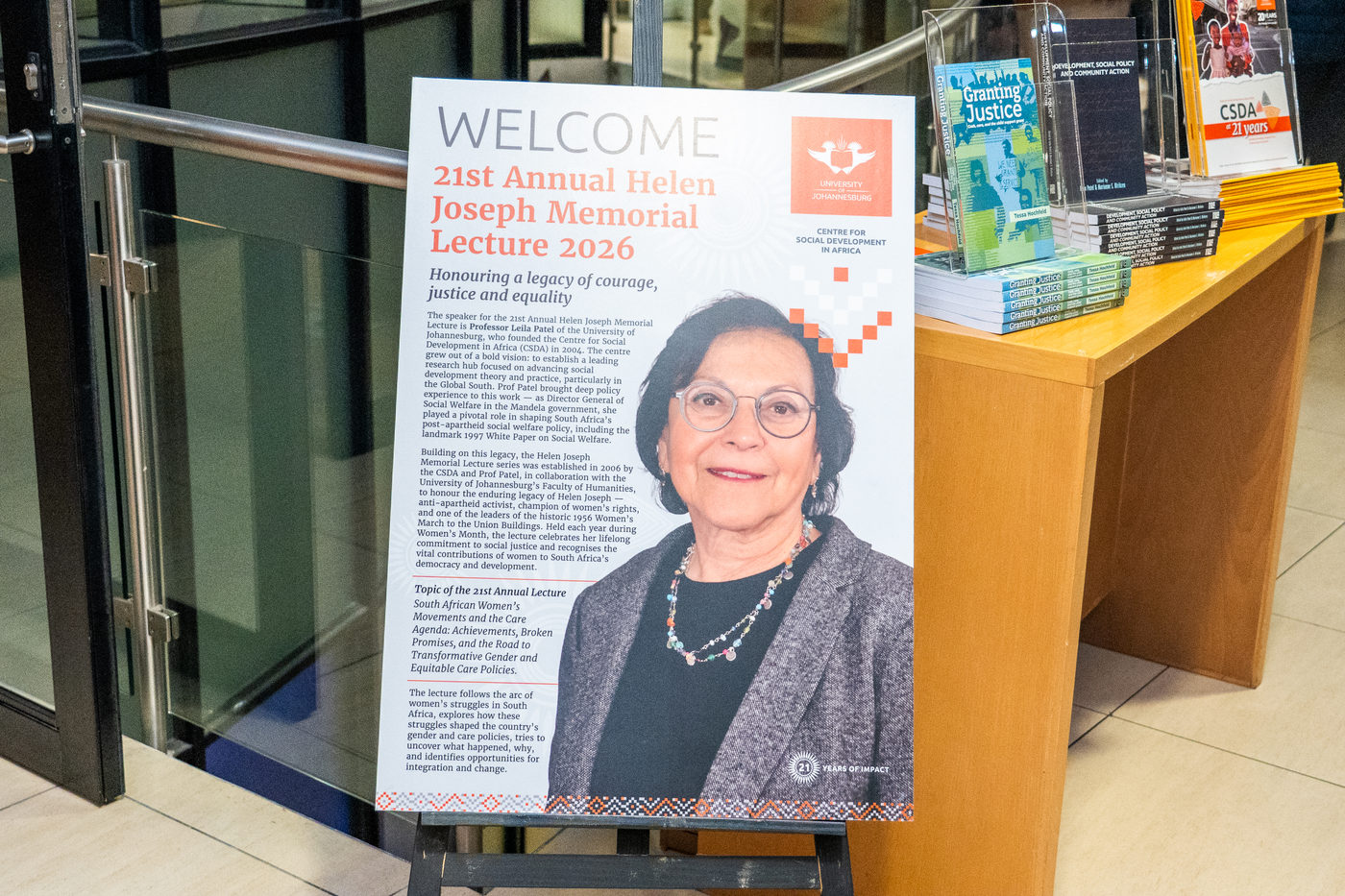
“South African women’s movements succeeded in placing gender equality, social justice and care at the heart of the democratic project. Their struggles helped secure one of the world’s most progressive constitutional frameworks for gender equality and social rights. Yet the promise of a more equitable care society remains only partially fulfilled.”
This was the central argument Professor Emeritus Leila Patel, founder of the University of Johannesburg’s (UJ) Centre for Social Development in Africa (CSDA), presented as she delivered the keynote address for the Helen Joseph Memorial Lecture held on Monday, 09 November 2026 at the Ubuntu Chambers, Auckland Park Kingsway Campus.
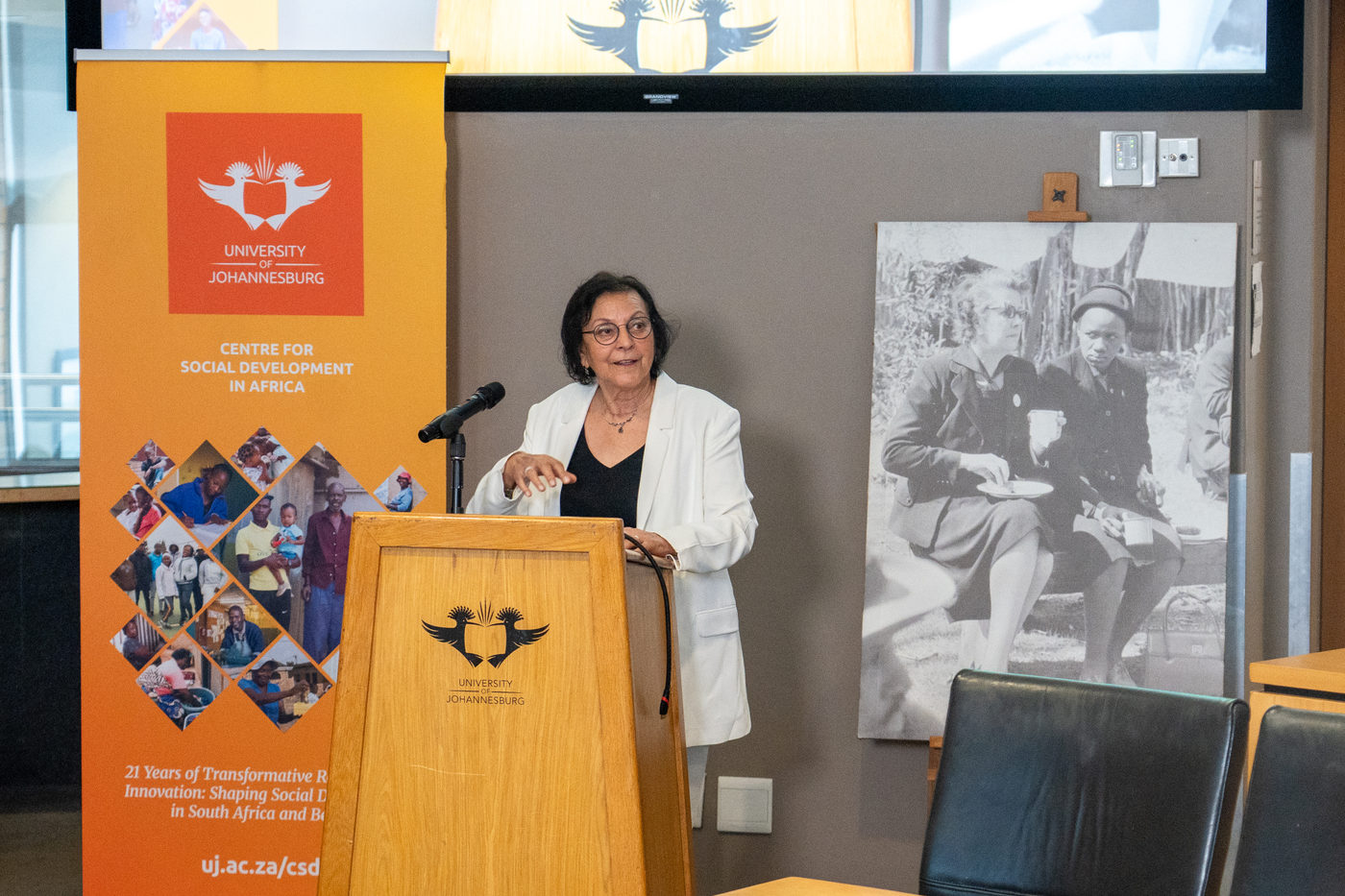
This year marked a special milestone – the 21st Annual Helen Joseph Memorial Lecture, and 21 years of UJ advancing knowledge, innovation, and social transformation.
The lecture was established in 2006 to honour the legacy of Helen Joseph, an anti-apartheid activist, champion of women’s rights, and one of the leaders of the historic 1956 Women’s March to the Union Buildings. The lecture celebrates her lifelong commitment to social justice and recognises the vital contributions of women to South Africa’s democracy and development.
Speaking to an audience of academics, civil society leaders, family, staff and students, under the theme South African Women’s Movements and the Care Agenda: Achievements, Broken Promises, and the Road to Transformative Gender and Equitable Care Policies, Prof Patel emphasised that the measure of justice lies not in designing ideal institutions but in reducing real-world injustices.
“It is in that spirit that I ask three questions: What have South African women’s movements achieved? Why have so many constitutional and policy commitments to gender equality and care remained only partially realised? And what would it take to build a genuinely transformative care agenda for the future?”
Prof Patel explained that women’s unpaid and underpaid care work continues to underpin families and the economy, yet remains insufficiently recognised, valued, and supported.
“Constitutional recognition is only the beginning of social transformation. Women continue to shoulder a disproportionate share of unpaid care work while confronting persistent poverty, unemployment, gender-based violence and failing public services.”
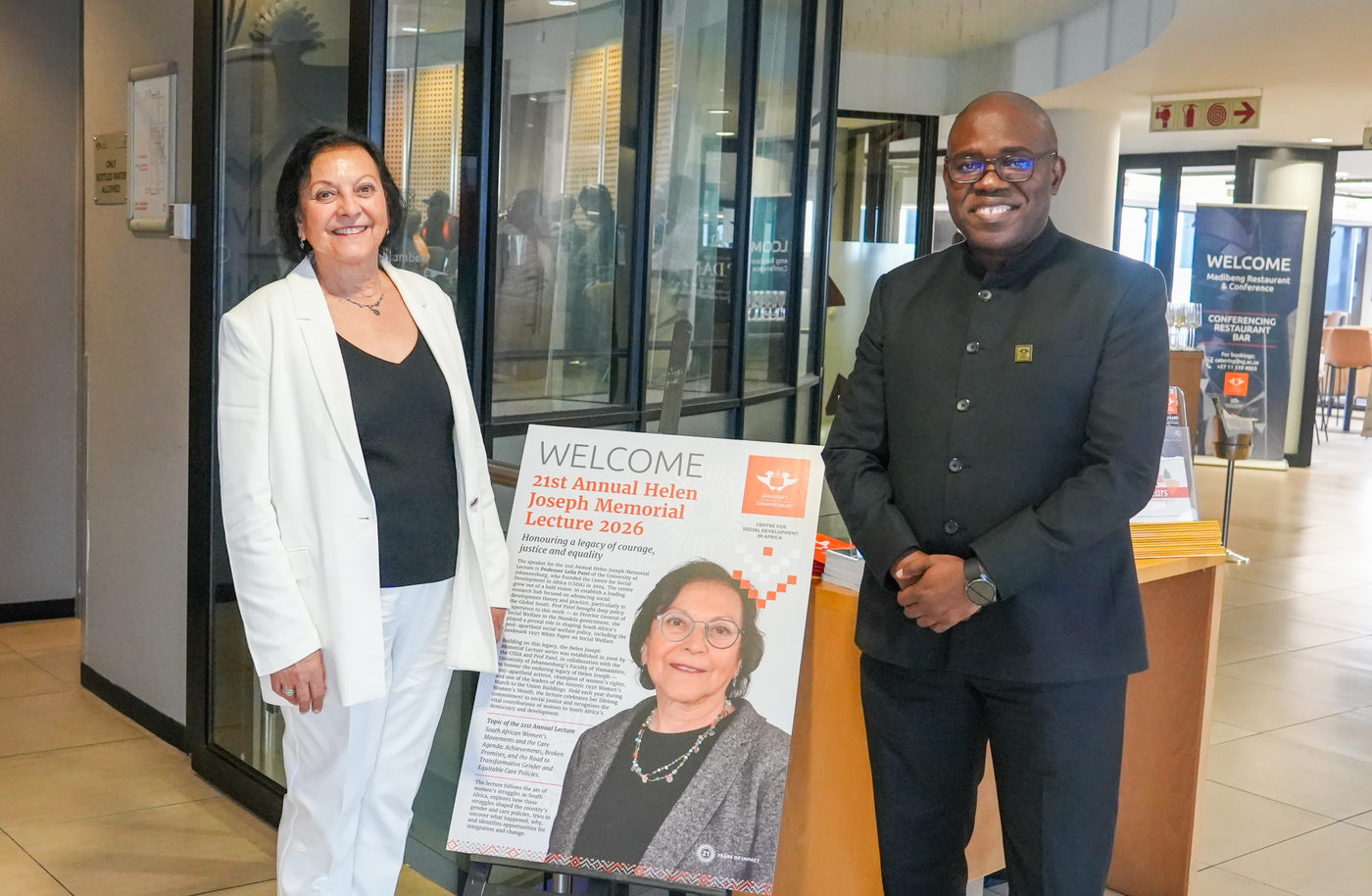
Highlighting the 70th anniversary of the historic 1956 Women’s March, Prof Patel emphasised that the struggle for social care cannot be separated from the broader pursuit of social justice and economic transformation.
Prof Patel reflected on post-apartheid welfare and care policies, highlighting the expansion of social grants and how they now reach almost two-thirds of South African households and remain one of the most effective poverty-reduction instruments in the Global South.
She also noted that while grants have substantially reduced poverty, they have not transformed the structural inequalities experienced by women. Prof Patel also noted that cash transfers alone cannot fulfil the promise of a comprehensive welfare system. “Social grants should, I believe, remain the backbone of South Africa’s welfare system, but income support must be linked to employment opportunities, psychosocial services, family support and community development.”
“Transformative gender policy rests on four mutually reinforcing pillars: progressive laws, capable institutions, sustained public investment and autonomous women’s mobilisation. South Africa has made remarkable progress in establishing the first. The remaining three have proved much more difficult.”
Prof Patel said bringing the four pillars together would require reimagining the care economy – not as a residual welfare concern, but as integral to a developmental welfare approach and as productive social and economic investment capable of advancing gender equality, creating employment and strengthening social cohesion.
“If we are serious about building a more equal, caring and inclusive South Africa, then investing in the care economy is not simply one policy option among many. It is one of the most powerful ways of realising our constitutional promise and our gender social contract. I can think of no more fitting way to honour Helen Joseph’s legacy than to continue the work to which she devoted her life: building a society in which justice is measured not only by the rights we enshrine, but by the care we extend to one another.”
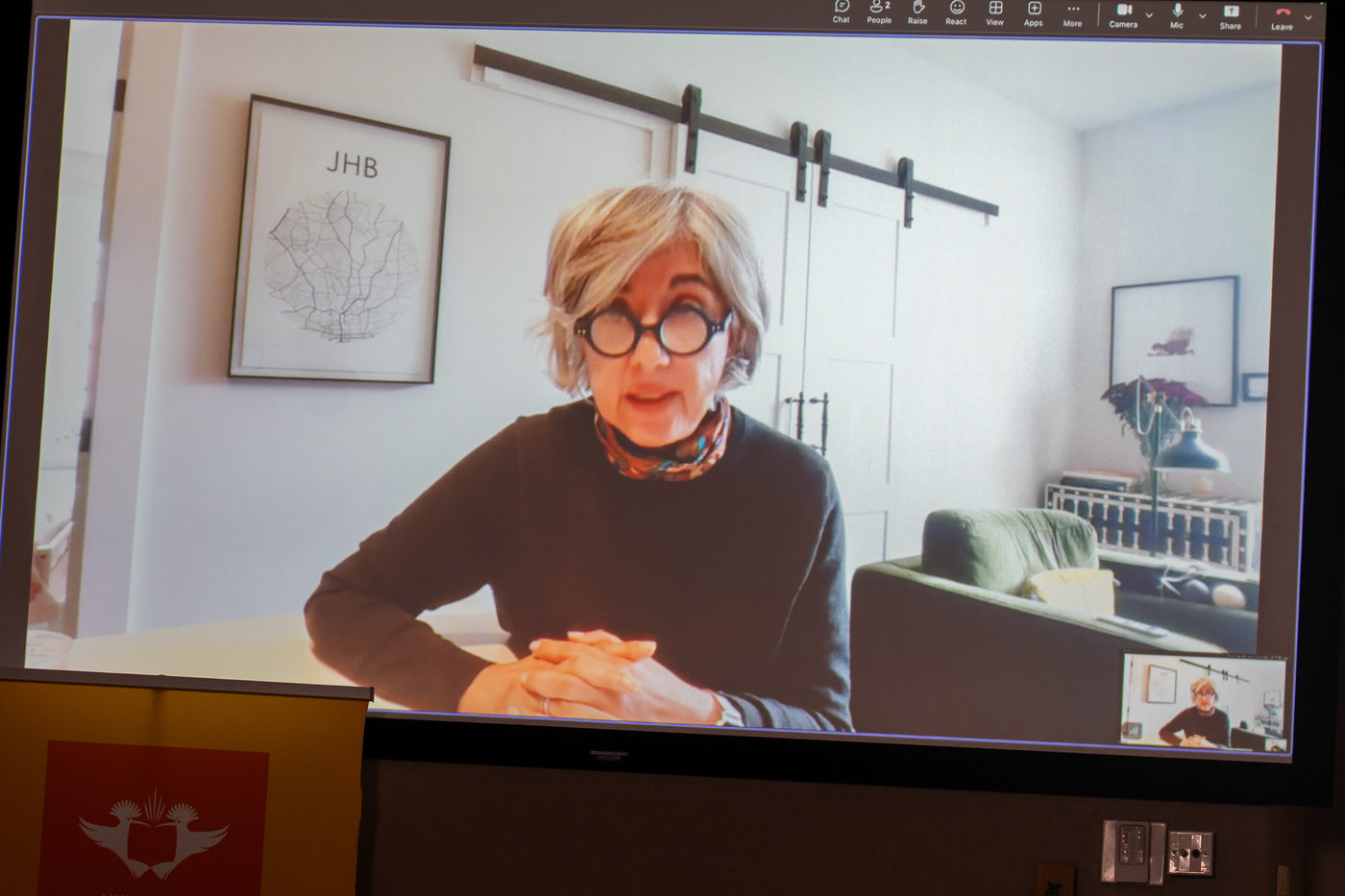
In her response to the lecture, Prof Shireen Hassim, Canada 150 Research Chair in Gender and African Politics at Carlton University, honoured Prof Patel as a leading scholar whose research connected social justice with practical social-policy transformation, especially in South Africa.
Prof Hassim echoed the keynote, saying grants reduced poverty, but cash support alone could not replace a comprehensive welfare system or adequately funded care services. Unpaid care work and conservative gender norms have reinforced inequality, while austerity has shifted more responsibility onto women and communities.
Prof Hassim called for making care central to public policy and budgets, and for collective mobilisation to advance a genuinely caring society.