Dear UJ community,
A lot of great things worth celebrating have happened at the University of Johannesburg (UJ) over the years, but nothing is bigger than being recognised as one of the leading universities both in South Africa and on the African continent. Time and again, global rankings have recognised the excellence of our impactful research, placing UJ at the top across many disciplines in Africa.
UJ leads Africa in eight subjects in the latest global rankings

It was with immense pride that I learned that eight UJ subjects have been ranked #1 in Africa in the 2026 Shanghai Ranking’s Global Ranking of Academic Subjects (GRAS). The eight subjects are Hospitality and Tourism Management, Earth Sciences, Political Sciences, Education, Business Administration, Management, Electrical and Electronic Engineering, and Telecommunication Engineering. These are among the 10 subjects in which UJ is ranked number 1 in South Africa. The other two subjects are Food Science and Technology and Biotechnology. This means UJ remains one of the best universities in Africa and South Africa. Overall, the Shanghai Ranking lists UJ among the ranked universities in 15 subjects in the 2026 GRAS, spanning engineering, natural sciences, education, business, management and the social sciences.
The ranking results further demonstrate our University’s growing research strength and international standing across a diverse range of disciplines. This is quite profound because the rankings use indicators related to research output, research quality, research impact, international collaboration, and the strength of academic faculty. These results reflect a deliberate and sustained institutional investment in research excellence, high-quality academics and the capacity to produce research that is internationally recognised, impactful and relevant to Africa and the world. The results also show the robustness of our Strategic Plan 2035, which places research, innovation, societal impact and global partnerships at the heart of UJ’s future. To read more about this exciting news, click here.
A Decade of Transformative Progress in Inclusive Education
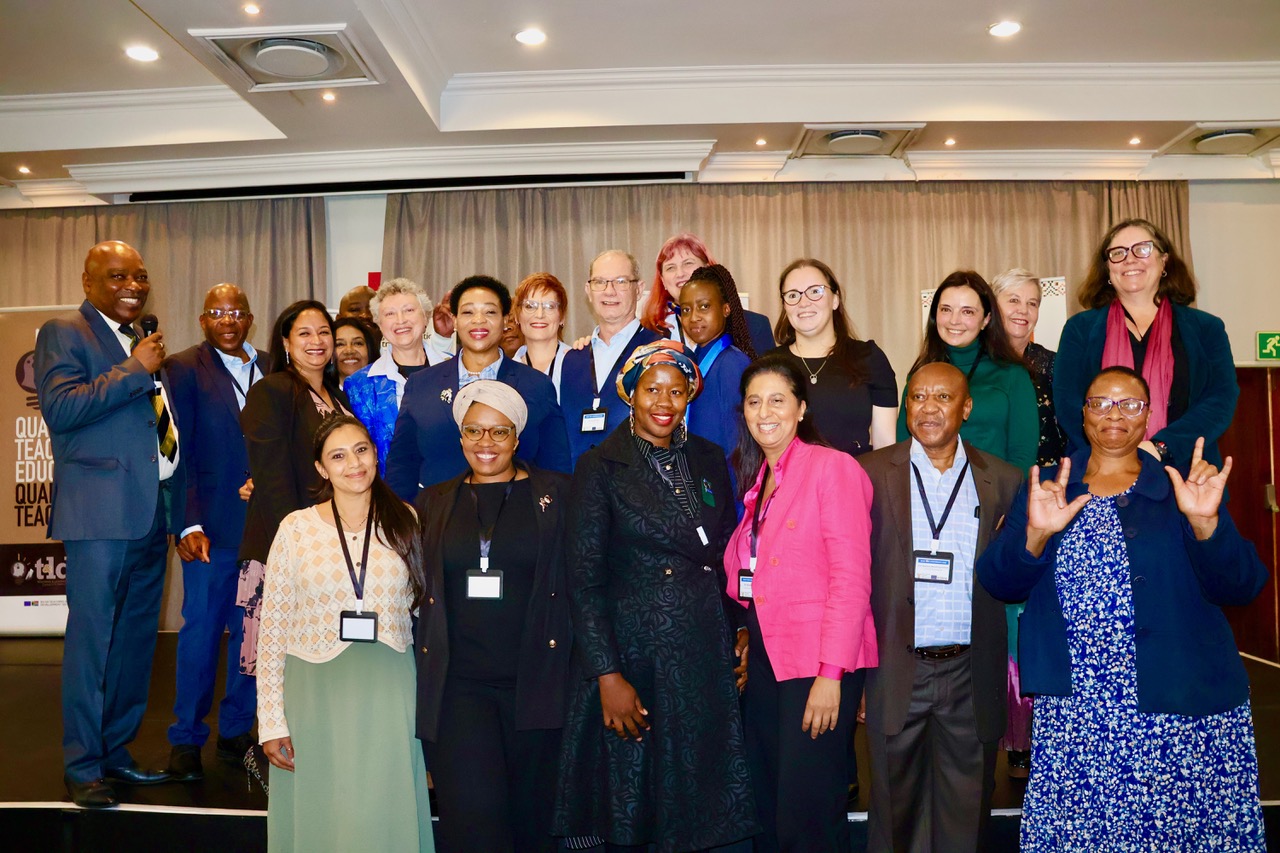
Last week, UJ hosted an important event to showcase a decade of transformative progress in inclusive education in South Africa. The Teacher Education for Inclusive Teaching (TEfIT) project close-out conference, held on 9–10 September 2026, showcased advancements in local research and specialised human capital over the last 10 years. Funded by the Department of Higher Education and Training (DHET) with support from the European Union, the event brought together the UJ, the University of Pretoria and the University of the Witwatersrand. Together, the three university-based Centres of Specialisation produced 23 accredited journal articles, two book chapters, and extensive disability-friendly learning resources.
Crucially, the initiative funded and supported the graduation of 19 PhD and 38 master’s candidates, fundamentally expanding the nation’s academic and pedagogical capacity for inclusive education. Deputy Minister of Higher Education and Training, Dr Nomusa Dube-Ncube, delivered a keynote address. She urged the sector to move inclusive teaching from a niche special-needs function into a core professional competency for every educator. Echoing the reality that 25 years after Education White Paper 6, the system remains incomplete, she stated that no education system can be more inclusive than the teachers it prepares, develops, and supports. The Minister also called for TEfIT’s outcomes to be embedded directly into ongoing national qualification reviews. Click here to read more about this.
UJ’s Soweto Campus at the Forefront of Neurodiversity
At the Teacher Education for Inclusive Teaching (TEfIT) conference, UJ showcased the outstanding work that is being done at the Centre for Neurodiversity. Dr Jean Fourie, co-founder of the centre, presented the University’s decade of pioneering work. As is now common knowledge, the Centre’s academic footprint has been strengthened by the Mpedi Family Scholarship. Eight PhD graduates and Master’s scholars from UJ presented breakthrough studies on topics ranging from Resilience and Parenting, Psychometrics and Inclusion, Classroom and Special Needs Interventions, and Policy and Creative Innovations. To read more about the conference, click here.
Meanwhile, I am pleased to announce that applications for the Mpedi Family Scholarship for Neurodiversity Studies 2027 are now open. As usual, the scholarship will be awarded to five (5) full- time Research Master’s students, with a once-off allocation of R50 000.00 to each student. Students must be registered at UJ for a full-time Master’s degree (by research) with a focus on neurodiversity among children and youth. The closing date for applications is 26 February 2027. Applicants should submit the following documents via email to neuroadmin@uj.ac.za. To familiarise yourself with the application process, click here.
Spring Graduations and Honorary Doctorates
Yesterday marked the start of the Spring graduation, which will continue until 30 September 2026. We will have seven ceremonies, with more than 1000 graduands walking across the stage to receive their qualifications. Three hundred and fifteen (315) of the graduands will graduate with Master’s qualifications, while 83 will receive their doctoral degrees. Each crossing represents years of perseverance, intellectual growth and determination, transforming UJ’s campuses into vibrant spaces of celebration and achievement. This is more than a milestone moment for thousands of graduates. It is a season that reflects the expanding depth of UJ’s academic excellence and its growing contribution to society, industry and the continent.
Additionally, UJ will confer honorary doctorates on Her Highness Sheikha Moza bin Nasser Al-Khalifa and Justice Sisi Khampepe.
Professorial Inauguration
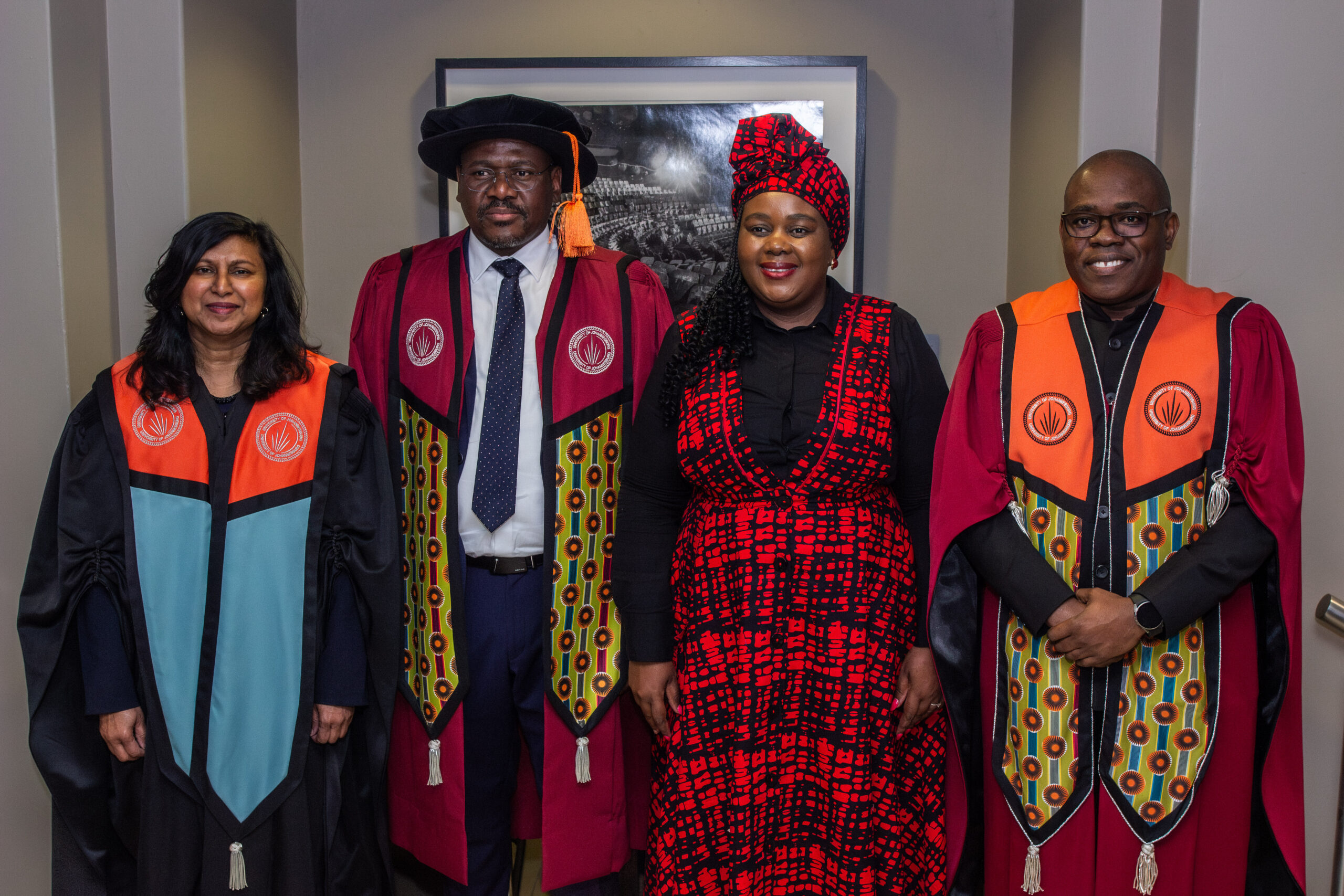
Please join me in congratulating Professor Mandla Radebe, a professor in the Department of Strategic Communications and the founding director of the Centre for Data and Digital Communication, within the UJ Faculty of Humanities, on his professorial inauguration on Tuesday this week. Professorial inaugurations are a major milestone, as universities formally celebrate a newly promoted full professor. At these events, newly minted professors present their academic journey to colleagues and the community. In his lecture, titled From the National Question to the Digital Question: Strategic Communication, Power and South Africa’s Unfinished Democratic Project, Prof Radebe shared how his earliest experiences of communication were shaped by oral traditions, storytelling, struggle narratives and community life.
He propagates a decolonial critical political economy of strategic communication as a framework for understanding communication, power and democracy in the Global South. He argued that strategic communication theory has largely been shaped by advanced industrial democracies, while societies such as South Africa confront coloniality, racial capitalism, profound inequality and unfinished democratic transformation. He argued that while digital platforms and artificial intelligence promise to amplify citizen voices, opportunities to participate remain unequal, shaped by income, education, geography, language and digital access. Therefore, African scholarship must produce concepts grounded in its own historical experiences rather than supply data for theories generated elsewhere. Click here to read more about this.
UJSRC 2027 Elections Outcome
In other news, I am pleased to share that, following the completion of the 2026 UJ Student Representative Council (UJSRC) election last Friday, the newly elected SRC members will participate in an induction programme from 24 to 26 November 2026. The formal inauguration of the 2026/27 UJSRC is expected in 2027, marking the commencement of the new council’s term of office. The 2026 UJSRC election process commenced on 13 July 2026, with a call for nominations from students interested in contesting the SRC. To qualify as a candidate, students were required to be registered in a state-subsidised programme, have passed 100% of their modules in the previous academic year, and be returning students. Additionally, they must have been registered at the campus they intended to represent and not have a disciplinary record.
A total of 144 students stood for election across all four campuses, contesting 48 available positions. Voting was conducted online from 9 to 11 September 2026, with voter turnout increasing from 36% in the previous election to 41% in 2026. The results saw the South African Student Congress (SASCO) secure all available seats at the Auckland Park Bunting (APB) campus, Auckland Park Kingsway (APK) campus, and Soweto Campus (SWC), while the Economic Freedom Fighters Youth Congress (EFFYC) secured seats at the Doornfontein DFC campus. The election process will formally conclude on 23 September 2026, when the elected candidates will vote among themselves to determine the various campus-level and central-level portfolios.
Hotstix Mabuse Burns it Out at UJ

On Tuesday, the Chinua Achebe Auditorium at the UJ Library, APK Campus, was bristling with energy as audiences of all ages gathered to listen to legendary musician Sipho “Hotstix” Mabuse reflect on his remarkable musical journey. Mabuse was joined by Prof Siphiwo Mahala, Acting Director of the Johannesburg Institute of Advanced Study (JIAS) and a multi-award-winning author, who is currently writing his biography. Prof Mahala presented a paper titled, Sounds of Soweto: The Decolonial Rhythms and Multicultural Roots of Sipho ‘Hotstix’ Mabuse’s Music. In his presentation, he described Mabuse as one of South Africa’s most versatile and enduring musical icons. With a long and vibrant career spanning more than six decades, Mabuse continues to perform regularly at festivals and music events. Prof Mahala also highlighted Mabuse’s deliberate incorporation of sounds, languages, dances, and performance traditions associated with historically marginalised communities.
Prof Mahala further announced that the biography, provisionally titled Jive Soweto: The Musical Journey of Sipho “Hotstix” Mabuse, forms part of the African Biographies Project, an initiative of the UJ Vice-Chancellor. The book explores crucial moments in Mabuse’s life, including his decision to leave school in 1969 to pursue music, and his return to education decades later to complete his matric in 2012. It is pleasing to know that Prof Mahala sees the opportunity to write Mabuse’s long-overdue biography as an immense honour, one that he does not take lightly. Mabuse’s continuing presence on the stage is a testament to his enduring artistic vitality. After six decades in the music industry, he remains committed to keeping audiences jiving, because he never seems to burn out. To read more about this, click here.
Media and Publicity
I invite you to read my read my opinion article titled, Polishing mirrors: China and South Africa can strengthen their collaboration for the responsible development and governance of AI, that appeared in the China Daily newspaper yesterday. In the article, I argue, amongst other issues, that as artificial intelligence has become a transformative technology, the question of who gets to shape this technology and the rules governing it is becoming increasingly important for countries in the Global South. For South Africa, closer engagement with China is emerging as an avenue to strengthen its technological capabilities while asserting a more active role in the international AI landscape. You can read the full article here.
2026 UJ Staff Day
After months of preparations, the 2026 edition of UJ Staff Day is finally here today! The event has become one of the University’s flagship employee engagement occasions, bringing together colleagues from across the institution to celebrate our people, achievements and culture. It also provides faculties and divisions with an opportunity to showcase their creativity, identity and contribution to the UJ community. This year’s event will be held under the theme “21 Years of Impact,” celebrating two decades of institutional excellence and recognising the people whose dedication continues to shape the University’s future.
As usual, each faculty and division will participate in two competition categories: a stage performance on the main stage and a field performance (exhibitions). Field exhibitions will remain on display throughout this morning, allowing staff and judges to interact with the displays during the event. I look forward to a fun-filled event with exhibitions, musical performances, and dance. I encourage every Faculty and Division to embrace the theme, celebrate our shared history, and create an unforgettable experience that reflects 21 Years of Impact. Do not miss this opportunity to connect, engage, and celebrate our unity and diversity. Together, let us honour our past, celebrate our present, and inspire our future.
Celebrating Sport Achievements
As the academic year winds down, our student-athletes continue to elevate the University’s name across national and continental arenas. The Senior Netball Team clinched a commanding 49-41 victory over Nelson Mandela Metropolitan University (NMU-Madibaz) in Round 7. This means the team capped off a stellar group stage campaign to secure a Varsity Netball semifinal clash against UFS-Kovsies in Bloemfontein on Monday, 21 September. Joining them in championship contention, the Men’s Football Team has earned a highly anticipated home semifinal match set for Friday, 25 September. We extend our warmest congratulations to both teams and their management for their discipline and excellence that have brought them to the pinnacle of Varsity Sports this season!
Beyond our borders, UJ’s sporting prowess has shone brilliantly on the continental stage at the 12th All Africa University Games in Cairo, Egypt. Our Track and Field contingent delivered a masterclass in athletic endurance, climbing onto the podium over fifteen times to haul in an extraordinary tally of more than eleven gold, three silver, and two bronze medals. As the delegation prepares to travel back home this weekend, we applaud the UJ Sport Division, our dedicated staff, and our phenomenal student-athletes for representing both our institution and South Africa with world-class distinction.
Kea leboha, ngiyabonga, baie dankie, thank you!
Professor Letlhokwa Mpedi: Vice-Chancellor and Principal
Times mentioned in this newsletter refer to the South African time-zone.