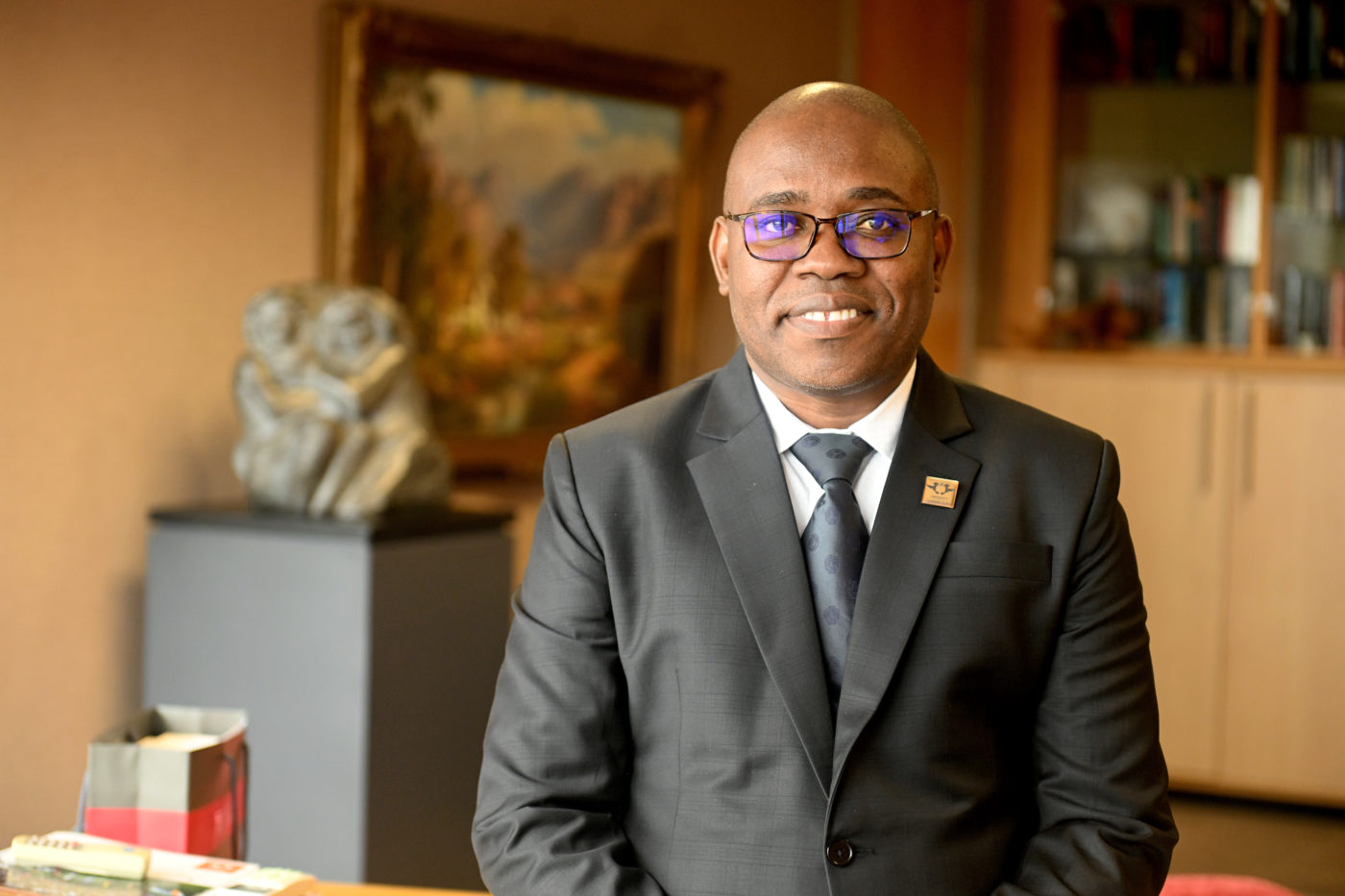
Professor June Bam is Director of the Centre for Education Rights and Transformation (CERT), University of Johannesburg.
She recently published an opinion article that first appeared in the News24 on 13 May 2026.
The government, through the Department of Basic Education, recently announced plans for a new Africa-focused history curriculum for grades four to twelve. According to the department, the revised curriculum aims to encourage critical thinking, engagement with multiple sources of evidence and methodologies, and for better understanding of South Africa’s history from an African vantage point in a global context.
While this may be a sensible, logical and long-due decision, curriculum development and transformation processes are not that straightforward. South Africa has a long-established African oral tradition that includes a people’s intellectual and historiographical written tradition. The latter tradition goes back to at least the late 1800s such as in the first Xhosa newspaper owned by John Tengo Jabavu, the work of the early 1900s of the literature of Sol Plaatje, and, amongst others, the contributions of the Unity Movement Cape intellectuals (Cissie Gool and others), Fatima Meer, and the iconic Steve Biko – to name but a few.
Therefore, it would be unscholarly to entrench political bias in who is mentioned or not in South Africa’s long and diverse black intellectual tradition. In addition, we have a long-established tradition of indigenous knowledge in our communities (of rock paintings, languages, proverbs, rituals as data, oral tradition, landscape, soil, ecologies, fauna, flora and medicinal plants). Such a diverse knowledge heritage challenges limited frameworks of the long past far beyond the frontiers of what was called ‘total history’ and ‘environmental history’ in twentieth century western historiography.
Given the expansive wealth and diversity of the black historiographical tradition and knowledge capital in South Africa, why did it then take so long to develop and present a new decolonial Africa-centered schools history curriculum in 2026? The answer is a little more complicated because school history curriculum making is a complex, difficult, highly contested and politically charged area in school education on the continent and worldwide. As a case in point, it was a significant battle to getthe study of Apartheid into the curriculum in South Africa during our initial work on the history curriculum in Pretoria more than 25 years ago.
One of the fiercely disputed debates at the time was whether school learners should study the distant and ‘safer’ European Holocaust instead of Apartheid as the curriculum making process (which went through a number of review and revision processes involving many role players and stakeholders) both paralleled and followed so shortly after South Africa’s Truth and Reconciliation Commission (TRC). Then there were the publishers and their predominantly white history textbook authors who wanted to keep the content largely unchanged (with the Afrikaner nationalist content bias and rote learning as assessment method removed). The new emphasis was on developing critical skills in history and source-based learning (including oral) – notwithstanding a very liberal political and financially opportunistic agenda, this made an important pedagogical contribution to school history in the transition from banal, oppressive and propagandistic Apartheid education. The existent curriculum has its strengths (history as a discipline skills focus) and weaknesses (the content is almost unsurprisingly still very Eurocentric).
Turning to the new draft curriculum for public comment: there seems outcry in the media that the French Revolution of 1789, the U.S. Civil Rights Movement and ‘Biko’ are ’out’. Firstly, to claim that ‘Van Riebeeck’ and ‘Biko’ are ‘out’ immediately succeeds in polarising the South African public into the already aggrieved minority white Afrikaner right wing nationalists versus (especially) the poor and economically excluded black majority. Secondly, to claim that the U.S. Civil Rights Movement and the French Revolution are ‘out’ triggers deep and justified intellectual alarm.
These claims are anomalous because as gained from a closer reading of the curriculum statements across grades R to 12 the following becomes clear: first, the curriculum presents a clear connection with the knowledge traditions of the deep pasts and their interconnectedness with the world. One recognises the decolonial intellectual traditions of the 1800s through to the foundational decolonial work in historical scholarship of some two decades ago building further innovative inclusive research done in the 70s, 80s and 90s at the History Workshop (Wits) and the radical scholarship of the Mayibuye Centre at the University of the Western Cape amongst others.
For example, drawing on these traditions, in the proposed draft curriculum Steve Biko is historically contextualized for better comprehension as is the case with the previously ‘unthinkable’ Haitian Revolution contextualized with the French Revolution and the much later U.S. Civil Rights Movement; two, it is a pedagogically rigorous curriculum in terms of practical guidance for educators on the development of key history education and historical analytical skills in understanding the ‘interconnected conceptual constructs of history’; and three, it is grounded in up-to-date interdisciplinary historical scholarship and historiography (the long past as a ‘knowable’ past).
Ensuring that school history is aligned with historical scholarship and historiographical developments is key for quality education – although not easily attainable. The school curriculum was always behind in this regard given the nature of systemic structures, school education bureaucracies, a myriad of administrative burdens, teachers’ workloads (all of this leading to lack of ongoing education and training), and the pressures from school textbook publishers to keep what is ‘in’ for as long as it is economically viable etc.
About the ‘in’ and ‘out’ debates: world history is not erased, and the ‘unthinkable’ Haitian Revolution (often invisibilised in Eurocentric history) is given its place within the contextual historical epoch of the French Revolution of the late eighteenth century. The notion of ‘sources’ is decolonised and expanded to the visual, landscape, clan names etc. The Holocaust in Europe perpetrated by Nazi Germany no longer enjoys exclusive pedagogical privilege, as learners will study more comprehensively than before the earlier genocides in Africa of the San and indigenous Namibians and within a global context. The curriculum foregrounds inclusivity, intellectual rigour, multiperspectivity and multiple methodologies in the recognition that historical knowledge is an ongoing construct.
At the end of the day, it is good to see that the history curriculum has come to be aligned more closely with decolonial historiographical developments and interdisciplinary historical research notwithstanding that as with any curriculum it is not perfect. There are some content gaps within the existent framework which can’t all be discussed here (intellectual traditions and the treatment of the nationalquestion, for example) which South Africans should critically engage with and the question of a more streamlined curriculum especially in the younger grades.
But the historians, archaeologists and history educators on this Ministerial Task Team should be commended for steering through a very challenging national task over a number of years and delivering a reasonably comprehensive, much improved and inclusive curriculum (which includes key aspects of world history such as ancient African and other civilisations, and the Berlin Conference of 1884 -1885, the British Industrial Revolution, and the study of race and racism). The South African War (called the Anglo-Boer War in the old days) is also firmly covered as a crucial period for understanding the war as a major regional historical event in itself, but also as the foundation for the land and national questions and how racial capitalism was entrenched.
Whether school history should be compulsory up to grade 12 remains a fierce debate, and how much content to cover and the feasible pedagogical methods to implement we can only learn from ongoing insights provided by practicing teachers in real classrooms especially in poorly resourced schools. For this reason, history teachers should therefore be constantly trained by historians, archaeologists and history educators, and remain centrally included and constantly consulted and heard in their critically reflective practice in real classrooms when the new curriculum is finally adopted and implemented.
*The views expressed in this article are that of the author/s and do not necessarily reflect that of the University of Johannesburg.