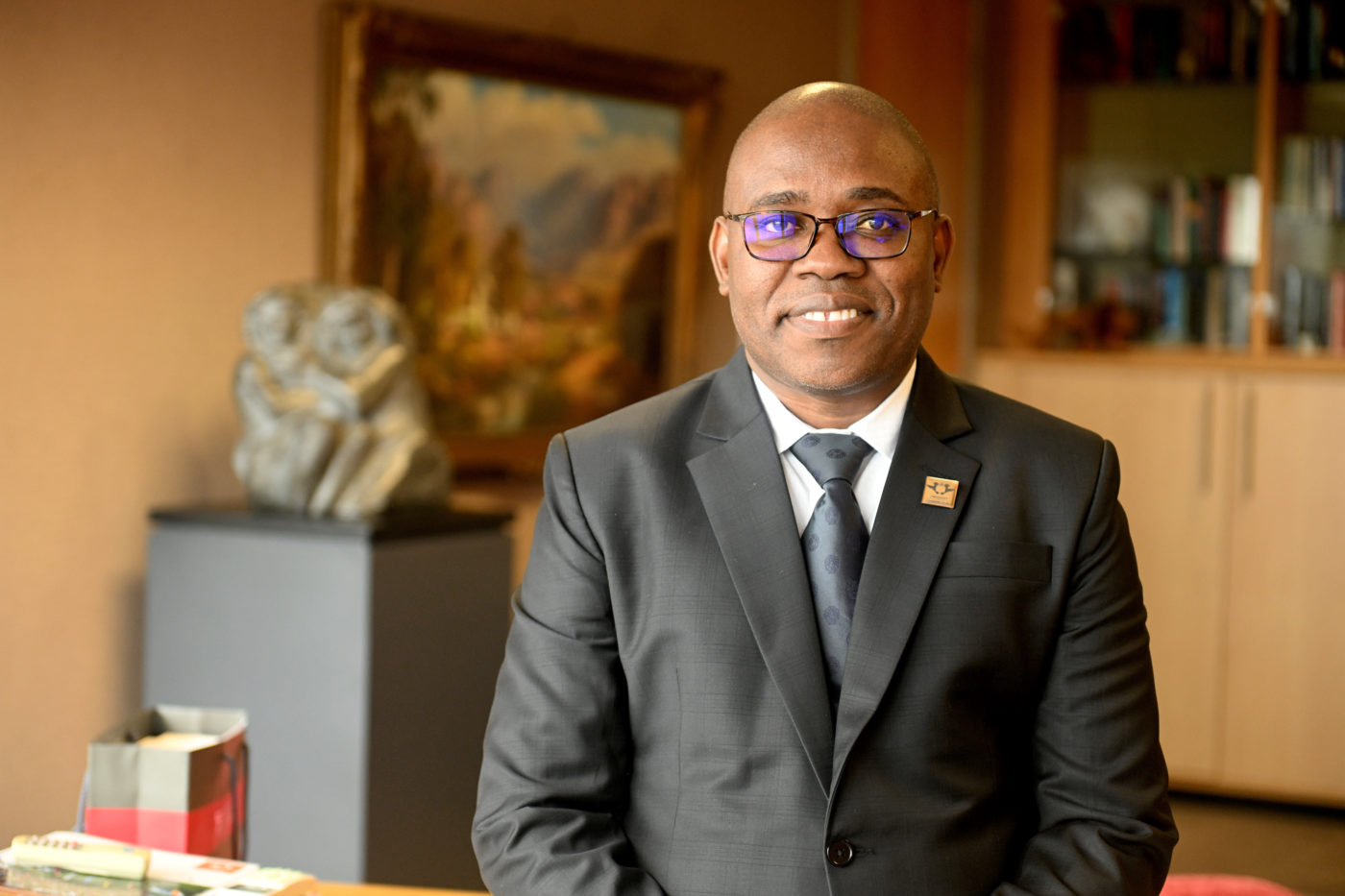
Professor Stella Bvuma is a Director in the School of Consumer Intelligence and Information Systems (SCiiS). She is the winner of the 2026 Wired4Women Trailblazing Career in ICT Award.
She recently published an opinion article that first appeared in the IOL on 02 November 2026.
On some weekends, I visit my rural home in Limpopo. Having grown up in both township and rural communities, I treasure these visits and the opportunity to catch up with friends from my ancestral home, my ’homies‘. Our conversations keep me connected to their daily lives in a manner that is different from most of my urban folks.
Lately, artificial intelligence (AI) has come up a lot. Suddenly, people want to understand all the talk about “this thing” that seems alien to them but which permeates their lives. The concern is what it means to them. Will it take their jobs? Some point to the sunburnt yellow container at the street corner that once served as a public phone but is now obsolete. Now I must field a flurry of questions, but it all points to two main issues: Will AI help them find work, and in what ways? Will it make government services easier to use?
These conversations are rewarding, but challenging to answer in plain language. It is one thing to discuss technology at a conference and another to explain what it means to someone worried about putting food on the table. The questions I had to respond to reminded me that citizens must be part of this journey from the beginning. People must have a say in decisions that will affect their lives.
Much of what the officialdom says about AI swings between big promises and big fears. Some speak as if it will fix every problem. Others make it sound as if people have no say in what happens next. Instead of telling people how AI can assist them, where it can go wrong, and how we can make it work for them, the conversation veers into fearmongering.
This only serves to increase anxieties about AI. In that state, they miss even the most basic information about the tool. They do not know that AI is software that is trained on examples to carry out certain tasks. Neither do they know that depending on the tool, AI can help write a letter, translate words, sort records, or spot something unusual. Nor the fact that a small business might use AI to help plan stock. For instance, a nurse might use it to reduce paperwork and spend more time with patients.
These are useful possibilities that may be foreign to many people. However, there are flaws that are worth knowing too. For instance, some AI tools can give an answer that sounds right while making up facts. They can misunderstand a question or struggle with a local language. They may repeat unfair ideas found in the material they learned from. Think of someone giving directions with confidence, even though they do not know the road. Following them could leave you lost. AI can do something similar. Important answers still need checking. This matters even more when decisions affect a person’s health, income, or access to services.
There is the downside of AI that is also worth knowing. Imagine a family that has paid its municipal account, but the payment is missing from the records. If an AI system uses those records without proper checks, it could help send the wrong bill faster. The family still has a problem. Now many more households could face the same mistake. A faster mistake is still a mistake.
We need correct records, clear responsibilities, and someone willing to fix what goes wrong. Buying a clever system cannot replace that work. Leaders must keep records accurate, answer complaints and correct mistakes. The same applies to an office that ignores complaints. An automatic reply saying, “Your concern is important to us,” means little if nobody helps. Citizens need an answer, a fair explanation, and a way to correct an error. “The system said no” should never be the end of the conversation. Someone must remain responsible.
Jobs deserve the same honesty. AI may change work and reduce the need for certain tasks. It may also help people work better and open new opportunities. We need to prepare people for these changes. We cannot promise that everyone will benefit, but we can make choices that support workers and create opportunities. Employers should explain changes early and involve workers. Government, businesses and universities should help people gain useful skills. Training should give a person a better chance to earn a living, improve their work, or grow a business.
Access matters as much. A service may work well on an expensive smartphone but offer little help to someone who cannot afford data. If it cannot understand the language a person speaks, it creates another hurdle. A grandmother in a village and a young job seeker in a township should both be able to get help. Services must remain open to people who need assistance in person. We must also protect personal information. Before putting identity numbers, medical records, or private documents into an AI tool, those responsible should know who can see them and how they may be used.
For all decision makers around AI, three questions should guide any major AI proposal: What problem will it solve? How do we know it works? Who will answer if it goes wrong? Start with a clear need. Test the idea on a small scale. Listen to the people using it. Check the results and full costs before expanding it. Sometimes a simpler change may solve the problem better.
These conversations belong in community halls, villages, schools and workplaces too. People who use public services every day often know where things go wrong. Their experience should help shape the solutions. Invite them to test new services and give feedback. A plan that looks good in a meeting may feel different to someone using it.
When I return home, I want our conversations about AI to focus on whether it helps bring changes people can see: a shorter queue, a correct bill, a stronger small business, or more time for a nurse to care for patients. That is a promise worth working towards.
South Africa should explore AI with hope, ask questions without fear, and judge progress by how people’s lives improve. Good leadership, honest work and care for others remain essential. No machine can take those responsibilities away from us.
*The views expressed in this article are that of the author/s and do not necessarily reflect that of the University of Johannesburg.