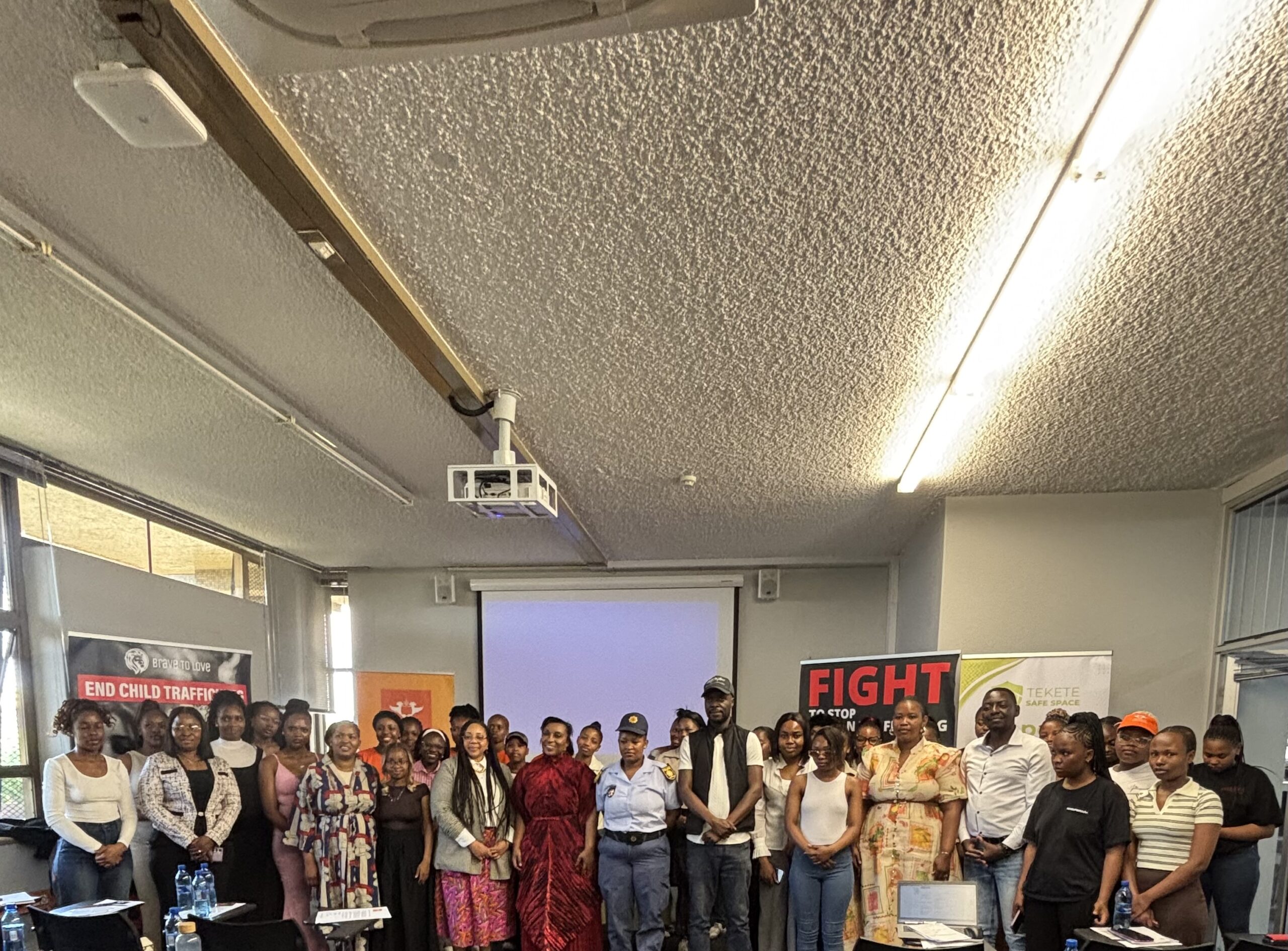
The Johannesburg Business School (JBS) at the University of Johannesburg (UJ), in partnership with The Presidency and the B-BBEE Commission, convened at JBS Park for a timely symposium titled ‘Black Economic Empowerment and Its Discontents.’
The one-day symposium was marked by robust presentations and panel discussions that aimed to answer a vital question: Is this policy achieving the transformation initially set out? The panel discussions were structured in a breakaway format, with each including three groups, each with three speakers.
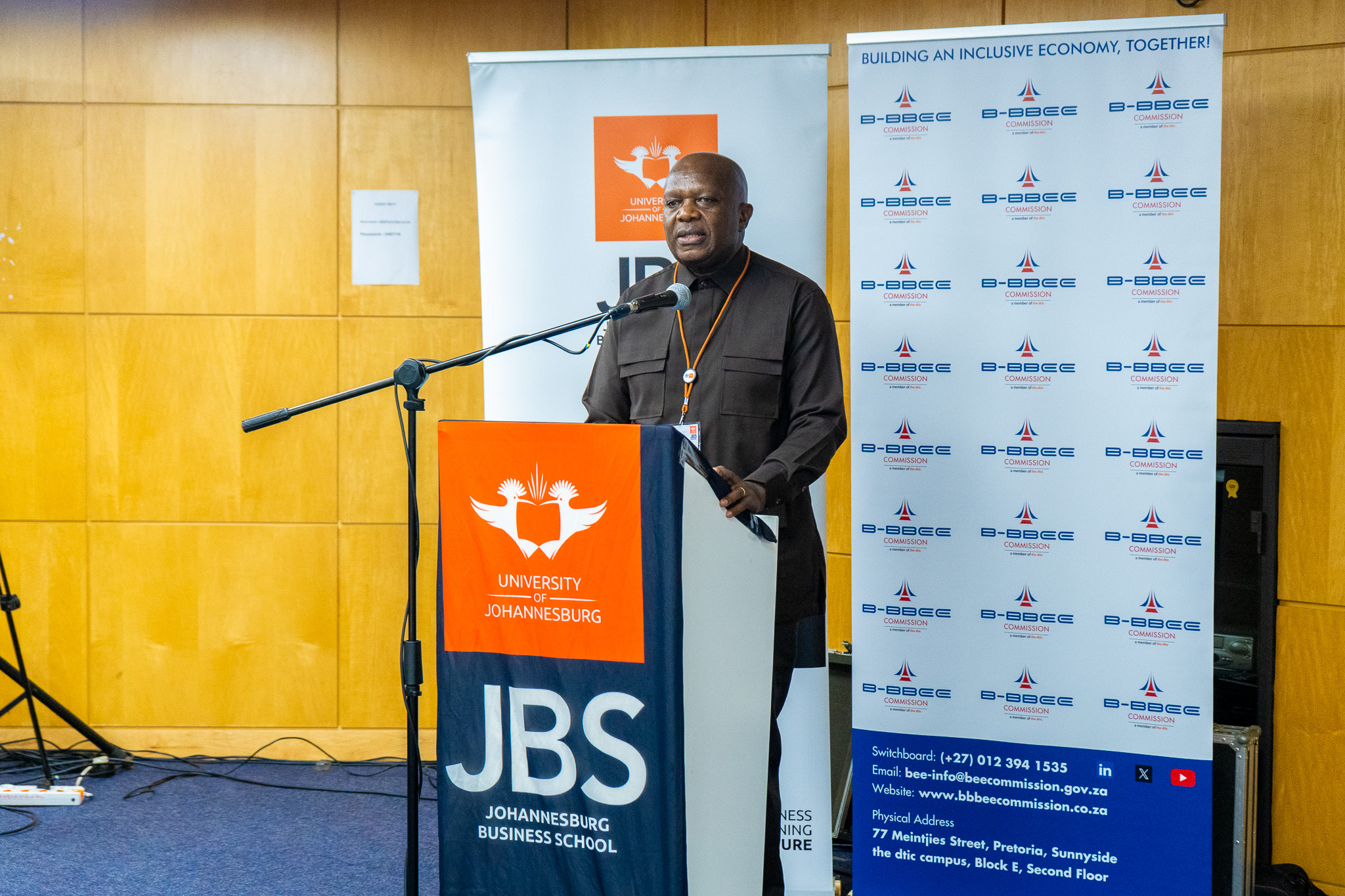
In his opening remarks, Mr Seiso Mohai, Deputy Minister in the Presidency, grounded the discussion with a powerful reminder: “Political liberation without economic inclusion is incomplete,” he said, cautioning that progress cannot be mistaken for justice. His message was clear: “The real challenge of B-BBEE lies not in its existence but in whether South Africa has been bold, effective, and honest enough in its implementation”, he highlighted. Mohai then quoted President Cyril Ramaphosa’s plea not to abandon the policy but to make it effective.
As the first speaker in the panel, Mr Tshediso Matona, B-BBEE Commissioner, discussed the evolution of the policy, noting that it has helped to change the income landscape in South Africa. He explained that the B‑BBEE has driven investment into poor and rural areas that would not otherwise have received it, observing that “investments in rural areas, underprivileged communities are investments that wouldn’t happen if it wasn’t for the B‑BBEE.”
Mr Kuben Naidoo, Presidential Economic Advisory Council, noted that “South Africa is adept at policy creation but struggles with implementation,” he said, highlighting the need for those in charge to reshape the structure. Building on this, Professor Thando Vilakazi, acting director at the School of Economics at UJ, challenged a narrow focus on compliance, arguing that true empowerment must be measured by whether black-owned firms are meaningfully integrated into value chains. Adding that, without this, we risk designing systems that appear transformative on paper but fail to deliver real economic power.
Mr Duma Gqubule, Political Economist, discussed the concerns around fronting, distorted ownership reporting, and what some described as ‘smoke and mirrors’ empowerment models, highlighting systemic weaknesses that undermine the intent of B-BBEE.
Ms Karishma Govender, General Counsel, National Empowerment Fund, spoke about gatekeeping and limited market access, further revealing that participation in the economy remains uneven, with real value often concentrated away from the very beneficiaries this empowerment seeks to support.
Alongside critique, there was also a clear call for renewal rather than retreat. As several speakers emphasised, the future of B-BBEE lies not in abandoning the policy, but in strengthening it through transparency, accountability, and evidence-based reform. This includes rethinking how empowerment is financed, how impact is measured, and how opportunities are unlocked for emerging businesses.

Professor Alistair Mokoena, Executive Dean at JBS, reframed the debate by cautioning against treating transformation as a ‘zero-sum game.’ “For B-BBEE to achieve a broad-based impact, it must be anchored in economic growth,” he said. He noted that the focus should not only be on how the pie is divided, but on how it is expanded, through digital transformation, improved connectivity, and future-ready skills that enable businesses to scale and compete in a modern economy.
Ms Ann Bernstein, in her closing statement, stands for a properly constituted, evidence-based public review of BEE and procurement, insisting that the research “must be made public, debated openly, and informed by diverse perspectives so that it becomes policy for the whole country, not a closed internal exercise.”
“South Africa does not need less transformation; it needs transformation that works.” As resonated throughout the discussions. The overwhelming sense at the symposium was that history will not judge the country by the policies it introduces, but by the structural outcomes it achieves.
One of the attendants asked what strategy would be used to address all the concerns raised in this seminar, an important question indeed, as the reason for such dialogue is not only to discuss these pressing matters but to implement policies and make them effective.
Mr Busani Ngcaweni, Director of the Centre for Public Policy and African Studies at JBS, closed the symposium by reaffirming the JBS’s commitment to continuing such important conversations and ensuring continued engagement on issues that truly matter.