As part of South Africa’s Africa Month commemorations and ahead of Africa Day celebrations, the University of Johannesburg (UJ) hosted a historic commemoration of the 223rd Anniversary of the Haitian Flag on 18 May 2026, advancing dialogue on Pan African unity, diaspora identity and the future of partnerships between Africa and the Global South. The commemoration followed the signing of a Memorandum of Understanding on 14 May 2026 between UJ and the Embassy of the Republic of Haiti to South Africa aimed at strengthening academic cooperation, innovation and international engagement.
Haitian Flag Day, observed annually on 18 May commemorates a moment during the Haitian Revolution in 1803, at the Congress of Arcahaie, when revolutionary leader Jean-Jacques Dessalines tore the white stripe from the French tricolour as a deliberate and defiant rejection of colonial rule and handed the remaining blue and red bands to his goddaughter, the seamstress Catherine Flon, who sewed them together to birth a new flag. This act is widely recognised as having ushered in the birth of Haiti, a new nation. That flag became the banner of the first free Black republic in the world and the first independent state in the Caribbean.
Held under the theme Lòt Bò Dlo meaning “On the Other Side of the Water,” this year’s commemoration by the embassy brought together diplomats, academics, students and cultural leaders in a programme that blended history, scholarship and cultural diplomacy. The event highlighted the growing role of universities in reconnecting Africa with its diaspora through higher education, intellectual exchange and collaborative development rooted in shared histories and futures.
The Memorandum of Understanding signed on 14 May established a framework for collaboration between UJ and universities in Haiti through student and staff exchanges, collaborative research, innovation partnerships and knowledge-sharing initiatives aligned to development priorities across Africa and the Caribbean.
Speaking following the signing, His Excellency Mr Jean Robert Pillard, Ambassador of the Republic of Haiti to South Africa, said bilateral cooperation should extend beyond traditional government agreements and include universities as institutions shaping future generations.
“Universities are the bloodline of society, preparing the youth of tomorrow, who remain the heartbeat of any society,” said Pillard, describing the agreement as “the beginning of a new relationship” between Haiti and South Africa through education, innovation and academic exchange.
The partnership aligns with UJ’s Vision 2035 aspiration of being “an international university of choice, anchored in Africa and the global south, dynamically shaping a sustainable future.”

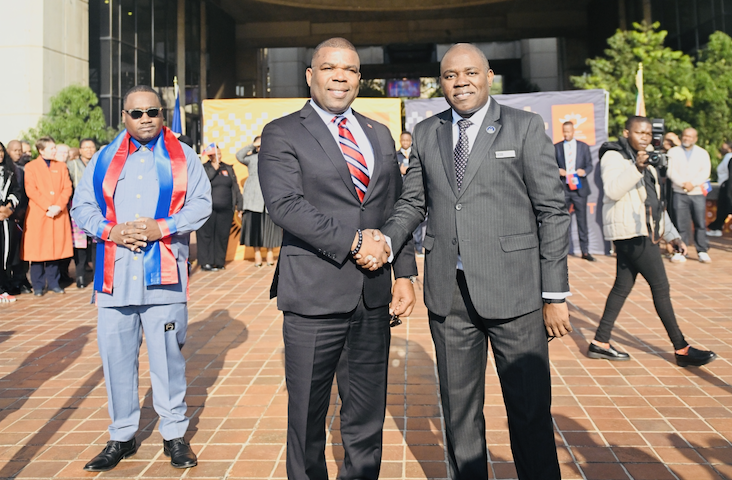
Led by UJ Vice Chancellor and Principal Professor Letlhokwa George Mpedi together with Ambassador Pillard, the commemoration formed part of the University’s broader focus on strengthening partnerships across Africa and the Global South while advancing dialogue on Pan Africanism, identity, decolonisation and inclusive development.
Addressing the significance of the occasion, Prof Mpedi said the relationship between Haiti and South Africa extends beyond diplomacy and reflects a deeper reconnection between Africa and its diaspora.
“We believe that Africa’s story cannot be told without acknowledging the courage of her children, wherever in the world they may be. And the story of Haiti is an African story. At UJ, we have made a simple but demanding promise: that everything we do must matter beyond our walls. Our Strategic Plan 2035 is built on societal impact, global partnership, and technology in service of people. Haiti’s story belongs in that promise. A nation that has faced so many challenges and still produces artists, scholars, and revolutionaries deserves our curiosity and our partnership”.
He said universities have a critical role to play in advancing scholarship, innovation and collaborative solutions to shared global challenges while deepening partnerships across Africa and the Global South in ways that create meaningful impact for communities and future generations.
“That is precisely what we intend to offer. A university that only looks inward is not really a university at all. We are here to build bridges between the Global South and the rest of the world but also between the knowledge that already lives inside communities and the institutions powerful enough to amplify it. Technology is how we do that as a mode of access, the kind that lets a student in Soweto collaborate with a researcher in Haiti, that ensures Catherine Flon’s story is taught, debated, and celebrated.”
Reaffirming the University’s internationalisation vision, Prof Mpedi said UJ remains committed; “not to be the best university in the world, but the best university for the world, a commitment that continues to shape our approach to responsive higher education, global engagement and societal impact.”
Speaking on Haiti’s enduring connection to Africa, Ambassador Pillard said the commemoration reflected a renewed commitment to deeper cooperation between Africa and the Caribbean.
“We use the phrase Lòt Bò Dlo ’ but the ocean does not separate us,” said Pillard. “We did not voluntarily leave Africa. We were taken but Africa never left us.”
The event also provided a platform to advance practical academic collaborations between UJ and universities in Haiti, including discussions on disaster management, digital education, sustainable infrastructure and innovation. Among the initiatives highlighted were collaborations linked to the UJ Rescue Simulation Centre, which contributed expertise following Haiti’s devastating 2010 earthquake, as well as sustainable building technologies including hempcrete and 3D printed housing solutions.
Professor Mpedi said the partnership reflects UJ’s broader commitment to research and innovation that deliver meaningful societal impact beyond the classroom.
“This collaboration is not simply about agreements on paper. It is about co-creating solutions that respond to the realities faced by societies across Africa and the Global South,” said Prof Mpedi, as the commemoration concluded with a symbolic display of unity between Haiti and South Africa that reflected the shared histories, struggles and aspirations linking Africa and its diaspora during Africa Month.