The University of Johannesburg’s Qatar–South Africa Centre for Peace and Intercultural Understanding (CPIU) convened a high-level webinar on 7 April 2026 to examine the causes, power dynamics, and global implications of the escalating conflict involving the United States, Israel, and Iran.
The discussion followed large-scale United States–Israeli airstrikes on Iran on 28 February 2026, which resulted in the deaths of Supreme Leader Ali Khamenei and several senior officials. The strikes have significantly intensified tensions in an already volatile region, where conflict has escalated sharply since October 2023, particularly in Gaza and Lebanon.
A Turning point for War and Peace
Opening the discussion, Professor Erin McCandless framed the moment as a critical inflection point in both the conduct of war and the governance of peace. She argued that the strikes on Iran should not be viewed as an isolated escalation, but rather as part of a broader shift in global security dynamics.
According to McCandless, the increasing reliance on military force—often in ways that challenge international legal frameworks—is displacing diplomacy and normalising impunity. This trend, she noted, is particularly concerning given that it is unfolding alongside ongoing diplomatic engagement.
Beyond the region, the conflict is already generating global ripple effects, including disruptions to energy markets, rising economic instability, and deepening human insecurity. These pressures contribute to what she described as an expanding “polycrisis,” with disproportionate consequences for vulnerable regions, including parts of Africa.
Strategic choices, not inevitable escalation
Panellists emphasised that the current war reflects deliberate political and strategic decisions rather than an unavoidable escalation.
Dr Ali Alsayegh argued that diplomacy had been actively undermined despite progress in negotiations, with the decision to strike influenced more by domestic political considerations in the United States than by immediate strategic necessity. He also highlighted Iran’s adaptive response, particularly in economic and infrastructural domains.
Professor Sultan Barakat situated the conflict within a longer regional trajectory, suggesting that confrontation with Iran aligns with an enduring strategic logic within Israel’s security framework, reinforced by broader regional power dynamics.
Director Thembisa Fakude extended this analysis, pointing to the weakening of United States–anchored security arrangements in the Gulf. He suggested the crisis could accelerate a shift towards more regionally driven security frameworks, with potential implications for global actors, including emerging roles for African states.
Humanitarian risks and systemic breakdown
The humanitarian and institutional consequences of the conflict were a central concern.
Professor Marie-Joëlle Zahar used Lebanon as a case study to illustrate the erosion of state sovereignty and the weakening of international institutions. She highlighted the risks of mass displacement, infrastructure destruction, and renewed internal conflict, noting that mediation efforts remain ineffective without enforcement mechanisms and mutual trust.
Dr Abdulla Moaswes reinforced this perspective, pointing to the fluid and often incoherent objectives driving the conflict. He warned of continued escalation, particularly targeting critical infrastructure and civilian populations, and argued that the war is sustained by broader geopolitical and economic systems tied to energy and strategic trade routes.
Eroding norms and expanding conflict
A key theme across the discussion was the erosion of international norms and institutions.
Panellists noted that diplomacy is increasingly constrained by power asymmetries and a lack of political will. The timing of the airstrikes—during an active negotiation period—was seen as particularly damaging to trust, especially in relation to the United States’ role as a diplomatic actor.
As a result, the conflict is evolving along an open-ended escalation trajectory, extending beyond military confrontation into economic and infrastructural warfare. This has significant implications for global systems, including energy flows and trade routes.
At the same time, selective enforcement of international law and political hedging by global and regional actors continue to undermine the credibility of multilateral institutions such as the United Nations.
Global power, regional shifts
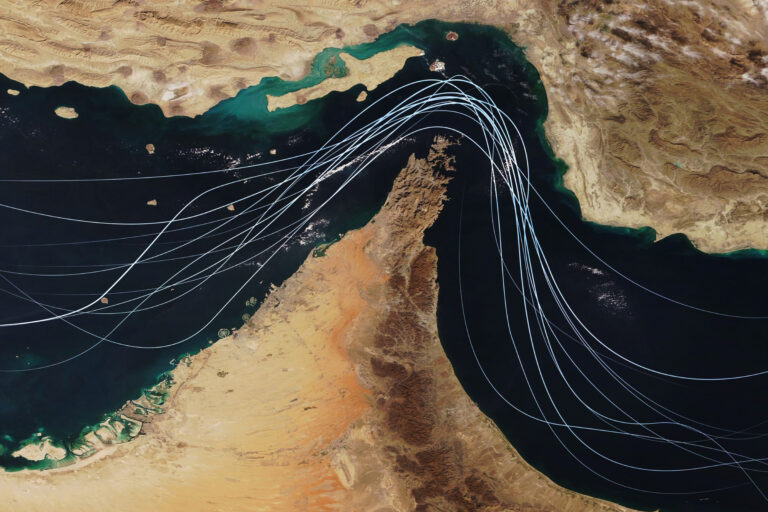
The discussion also highlighted the role of entrenched geopolitical and economic interests in sustaining the conflict. Competition over energy resources, control of strategic maritime routes, and the stability of global financial systems continue to shape state behaviour and prolong instability.
Regional security arrangements, particularly in the Gulf, are increasingly contested. While there are growing calls for greater regional coordination, internal divisions remain a significant barrier.
Panellists also noted the potential role of external actors such as China, given its economic interests and potential capacity to act as a stabilising force, although its willingness to do so remains uncertain.
A crisis of governance
Ultimately, the webinar underscored that the Iran war is not an isolated crisis, but a manifestation of deeper structural changes in the international system.
The convergence of weakened diplomatic mechanisms, selective adherence to international law, and the increasing dominance of coercive power signals a broader erosion of the frameworks that have traditionally underpinned global peace and security.
While non-state actors—including civil society and academic networks—continue to play a role in shaping discourse and influencing long-term outcomes, their impact remains limited in the absence of cohesive political will among major powers.
The discussion concluded on a sobering note: the current moment represents not only a crisis of conflict, but a crisis of governance. Addressing it will require more than ending hostilities—it will demand a rethinking of how sovereignty, peace, and justice are negotiated and sustained in an increasingly fragmented global order.
WATCH: