The voices in the Global South need to be amplified and meaningful collaboration and inclusive perspectives are the only way to enrich global knowledge and practice.
This was the powerful message the University of Johannesburg (UJ)’s Professor Erika Kraemer-Mbula welcomed attendees to the three-day International Globelics Conference.
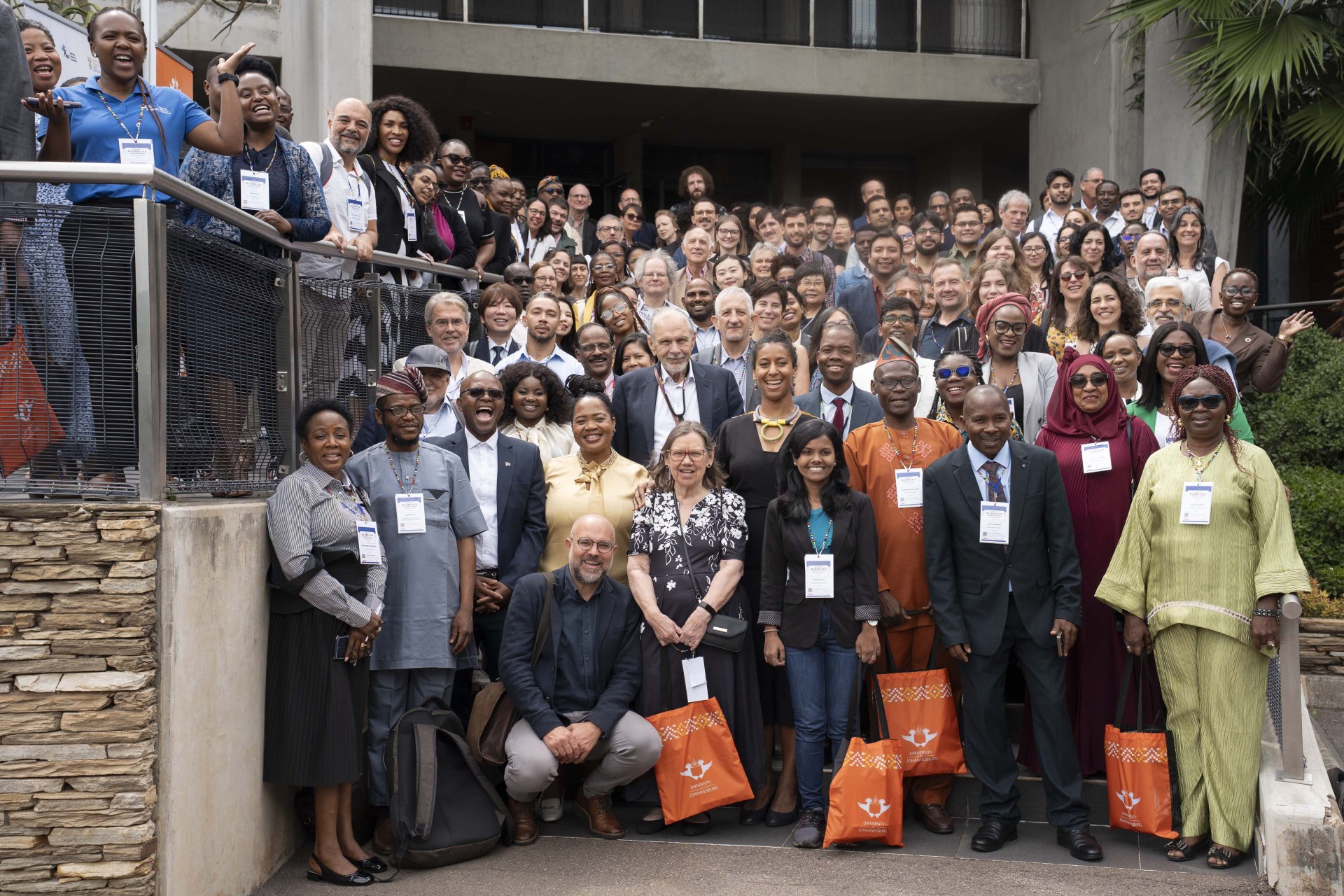
The conference, which started on Monday 24 November and runs until Wednesday 26 November 2025, takes place every two years and brings together established academics, early-career researchers, development partners, government actors and innovation practitioners from across the world to confront some of the most pressing global challenges, from widening inequality and climate disruption to geopolitical instability and fragile economic growth.
“We gather as a global community committed to understanding and shaping the role of learning, innovation and capability building in development. This conference reminds us how important our shared mission is. This year in particular the world needs more thoughtful evidence-based, rigorous, scientific and inclusive perspectives brought by Globelics,” said Prof Kraemer-Mbula who serves as the President of Globelics and UJ’s DSI/NRF Trilateral Research Chair in Transformative Innovation.
Globelics has over the past two decades nurtured ideas into a thriving intellectual community that continues to challenge dominant narratives, expand theoretical horizons and inform policy in meaningful ways.
Prof Kraemer-Mbula added that the discussions will speak to themes that speak to challenges and opportunities of our time from digital transformation to sustainability, informality, inequality, new forms of innovation, governance and cooperation.
The conference hosted parallel special sessions under the theme ‘Innovation for sustainable and inclusive development to build resilience’.
The event is co-hosted by UJ in partnership with the National Research Foundation (NRF). Through keynote addresses, plenaries, paper sessions and policy dialogues, participants will share cutting-edge research and debate the models, tools and governance approaches that can deliver more inclusive and sustainable development outcomes.
UJ Vice-Chancellor and Principal Professor Letlhokwa Mpedi said the university was deeply committed to advancing knowledge that responded to society’s most pressing challenges.
“Our partnership with Globelics reflects our belief that innovation must serve development, inclusion and sustainability and insights generated by our research communities should help shape better futures particularly for the Global South.”
He added this conference served as a powerful platform where cutting edge interdisciplinary research meets real world policy dialogue and where new ideas for transformative and equitable innovation systems emerge.
With participants from over 50 countries representing diverse perspectives, Prof Mpedi added that the themes discussed were at the heart of UJ’s academic mission – climate change, sustainability and resilience, digital transformation, inequality reduction and the future of science and innovation governance.
Professor Tankiso Moloi, Executive Dean: College of Business and Economics, emphasised that the conference was taking place at a crucial and historic moment with the country hosting the first ever G20 summit in Africa.
He highlighted how the G20 placed the developmental priorities of the Global South and the African continent at the centre of economic dialogue.
“The collective work focusing on innovation for sustainable and inclusive development to build resilience for global challenges perfectly aligns with and will reach the objectives of this G20 presidency. He described the Globelics gathering as a key contributor to shaping a more equitable and sustainable world.
“The work is of a critical nature, providing the intellectual framework needed to translate global policy discussions into local transformative actions. As an institution dedicated to societal impact and the advancement of the Global South, hosting Globelics underscores our commitment to fostering global conversation that drives real world solutions.”
Dr Thandiswa Mgwebi, Group Executive: Business Advancement, National Research Foundation reiterated Prof Kraemer-Mbula’s words.
“Globelics has been a global intellectual movement over the years rooted in the belief that innovation is not a luxury, it is a necessity for development and context matters especially where we are. Learning systems, capabilities and institutions form the back bone of sustainable transformation.”
She added that the conference was a reflection point and call to action. “For South Africa and institutions such as the NRF, it is our commitment and education to strengthen innovation capabilities across our universities, research infrastructures and communities. It’s also a call for us to advance science diplomacy and build bridges between nations and champion the voice in global knowledge production.”
Dr Mlungisi Cele, Director-General for the Department of Science, Technology and Innovation stated that Africa deserved to be recognised and allowed to be fully independent intellectually, technologically, culturally, economically, politically and environmentally.
“Africa is calling for interdependence and not overdependence, Africa must be allowed to set its own research, knowledge and innovation and determine its priorities. This requires a different approach to the way we think about policy, rooted firmly in cooperation in the Global South.”
He reaffirmed the department’s commitment to open science, saying innovation without inclusion, discovery without ethics and growth without sustainability threaten to deepen existing inequalities and generate new risk.
“The message is clear, science, technology and innovation must serve not only progress but purpose.The path forward requires integrating diverse knowledge systems, building resilient institutions and fostering a new social contract between science and society.”
He encouraged the conference attendees to answer some of the questions that will be of value to policy makers and the global community.
The programme also includes a keynote address ‘AI and us: Will AI change what the Globelics community does and how we do it?’ that will be given by Professor Joanna Chataway, Professor of Science and Technology Policy at University College London’s Science, Technology, Engineering and Public Policy (STEaPP) Department. The Globelics Conference Gala Dinner will also take place to present the best papers.
The three day conference is hosted alongside strategic partners Tshwane University of Technology (TUT), the University of the Witwatersrand (Wits) and the Human Sciences Research Council (HSRC).